
Est. 1903 · Madrid, Spain · Los Colchoneros
Atlético de Madrid
Founded in 1903, Atlético de Madrid have built their identity on resilience, passion, and an unshakeable bond with their supporters. The red and white stripes, Los Colchoneros, stand for a different Madrid: harder, more intense, and never willing to bow to the establishment. 267 Atlético kits catalogued on ShirtSociety.
Los Colchoneros
The other Madrid
The nickname Los Colchoneros, the mattress makers, comes from the red and white stripes of the old Camas Latas mattress factory in Madrid, whose workers wore the same colours. It stuck. Atlético have always been the working class side of the city, the club of the south, the one that fights for what it has rather than buying it.
The original colours weren't red and white at all. The founding Basque students wore blue and white stripes, inspired by Blackburn Rovers. The switch came in 1911: student and player Juan Elorduy went to England in December 1909 to buy Blackburn kits, couldn't find enough, and bought Southampton's red and white shirts from the harbour instead. The club wore them for the first time on 22 January 1911. A happy accident that became one of the most iconic identities in world football.
Europa League: three titles
vs Fulham · Hamburg
Forlán scored both goals and was named man of the match. Won the FIFA World Cup Golden Ball that same summer. Manager: Quique Sánchez Flores.
vs Athletic Bilbao · Bucharest
Falcao scored twice. Simeone's first full season, his first trophy. The start of everything.
vs Olympique de Marseille · Lyon
Griezmann scored twice. A statement final in front of 55,000 supporters in Lyon.
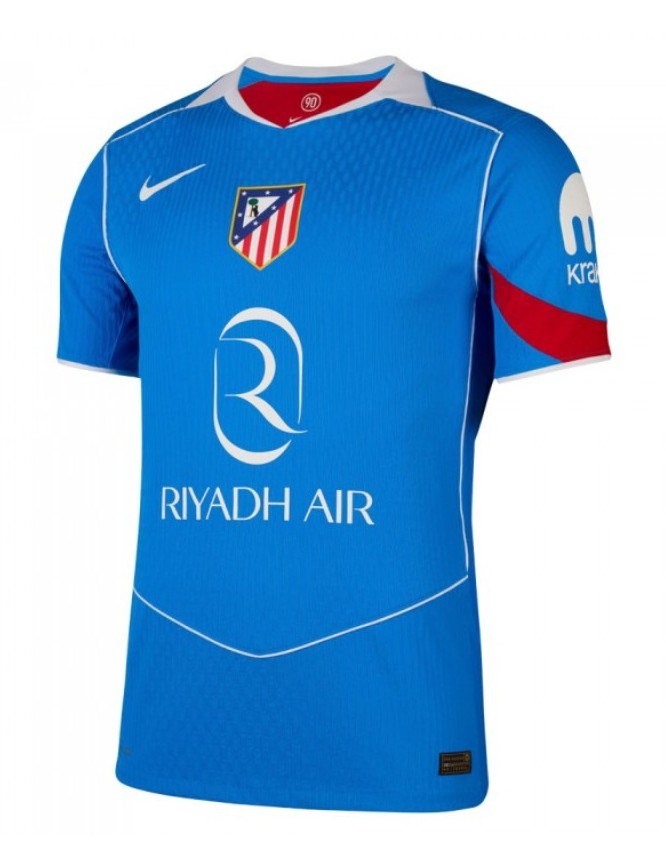
2026-27 kit
2026-27
The red and white vertical stripes remain one of the most distinctive kits in world football. Nike have supplied Atlético since 2001, a partnership now running over two decades with a contract extended to 2035.
Most collected kits
Atlético kits most added to collections on ShirtSociety.
Iconic Atlético kits
The red and white stripes through the decades, the most significant in the club's history.
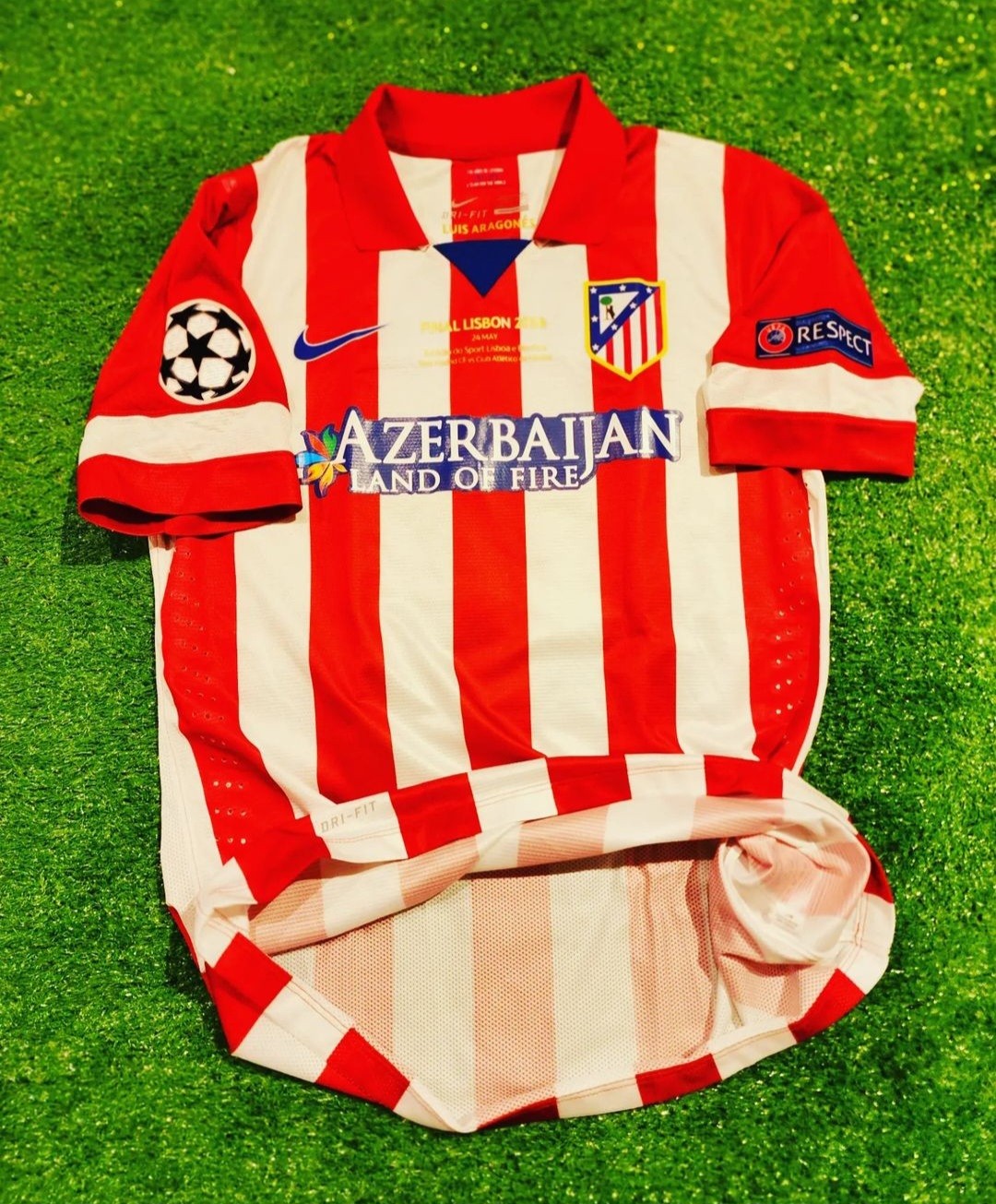
Worn in the 2014 Champions League final and the La Liga title-winning season. Diego Godín's header gave them a 1–0 lead they held until the 93rd minute. The defining shirt of the Simeone era.
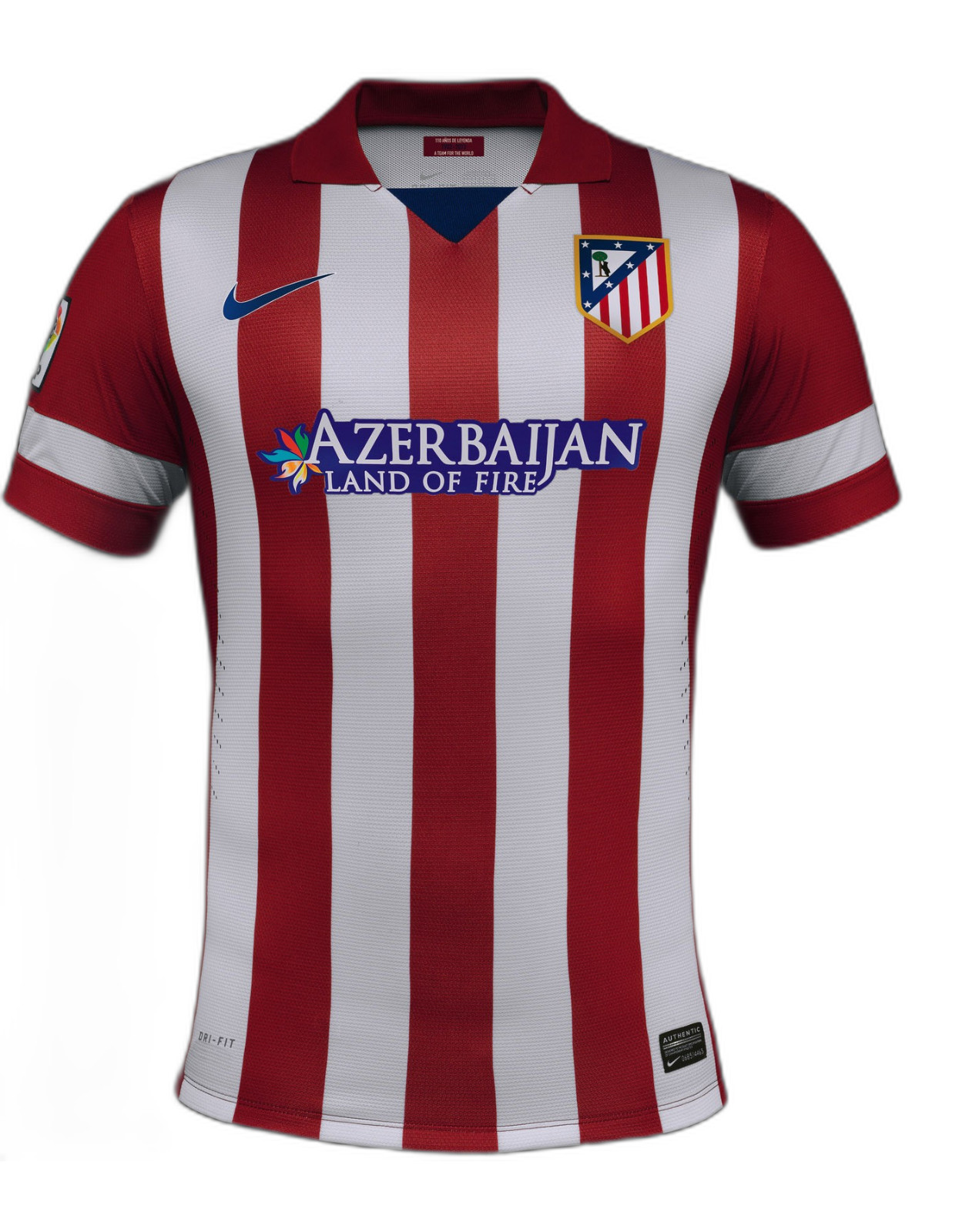
The shirt worn when Atlético ended an 18-year wait for the Spanish title, with Diego Costa as their talismanic striker. Griezmann arrived the summer after, in 2014, going on to become the club's all-time top scorer.
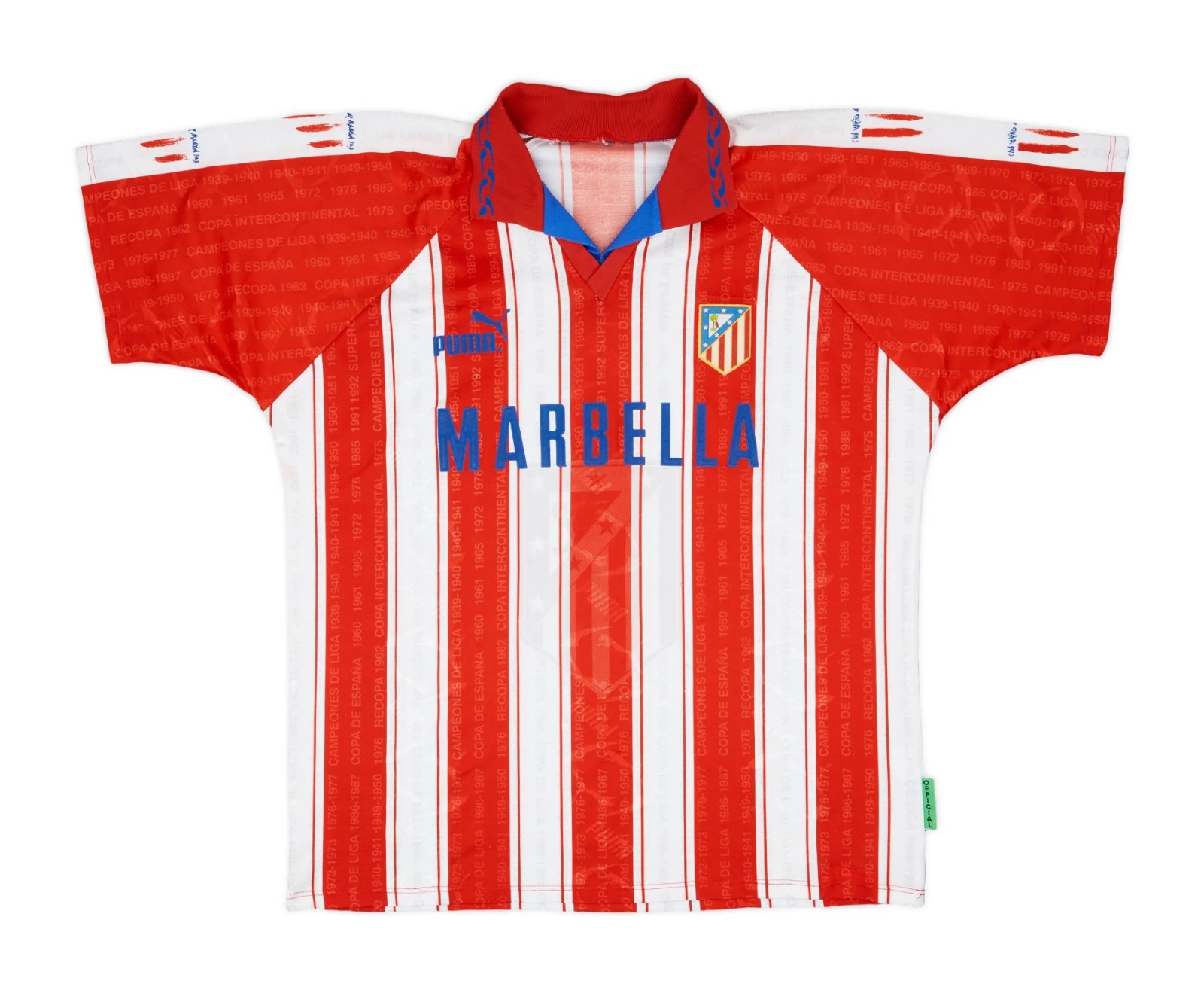
La Liga and Copa del Rey in the same year, the last time a club outside the big two won the Spanish league for 18 years. A Puma-era classic that collectors still hunt down.
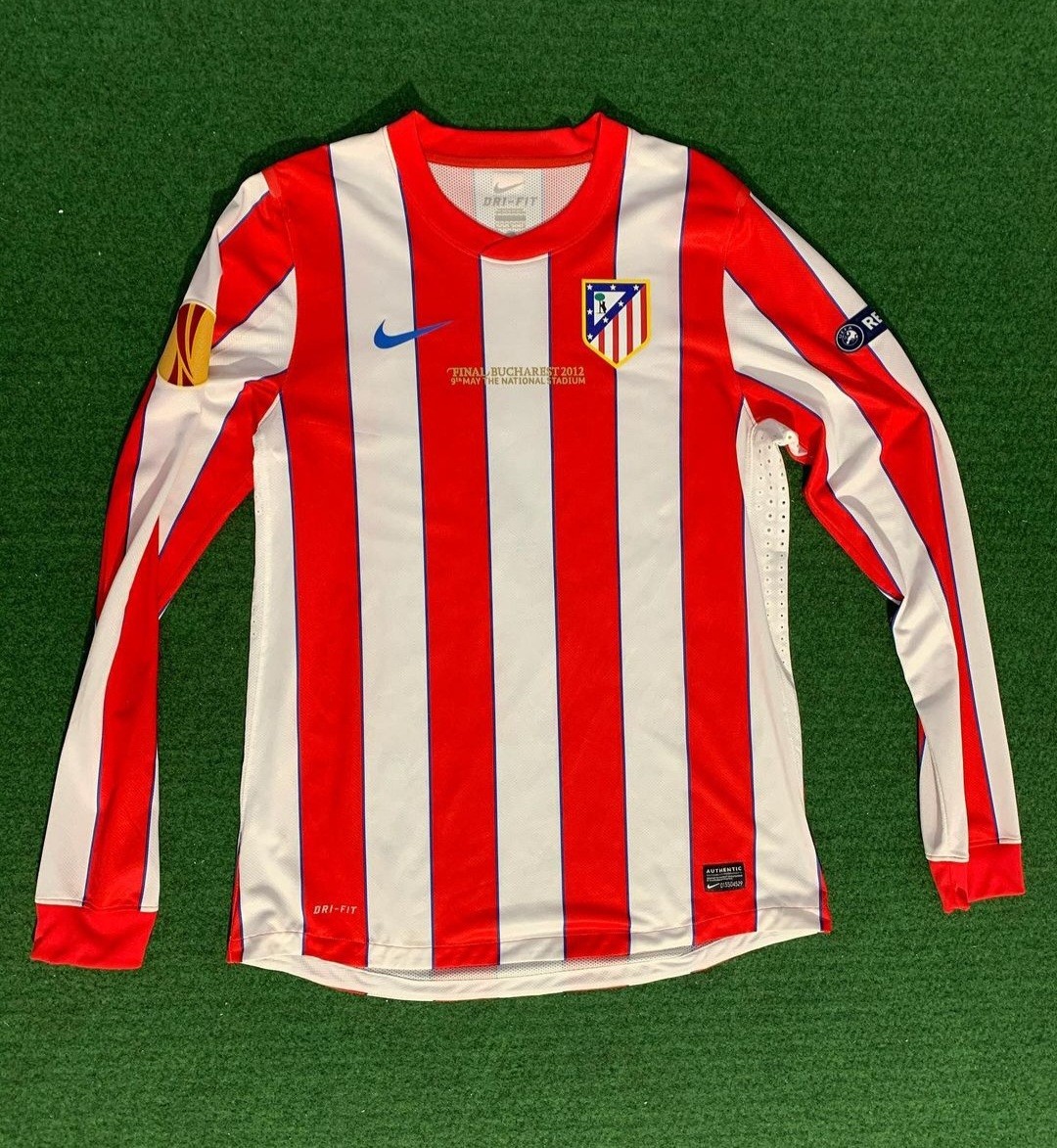
The Europa League Final in Bucharest. Atlético beat Athletic Bilbao 3–0. The beginning of an era. A special-edition shirt from the night the Colchoneros announced themselves back at the top.
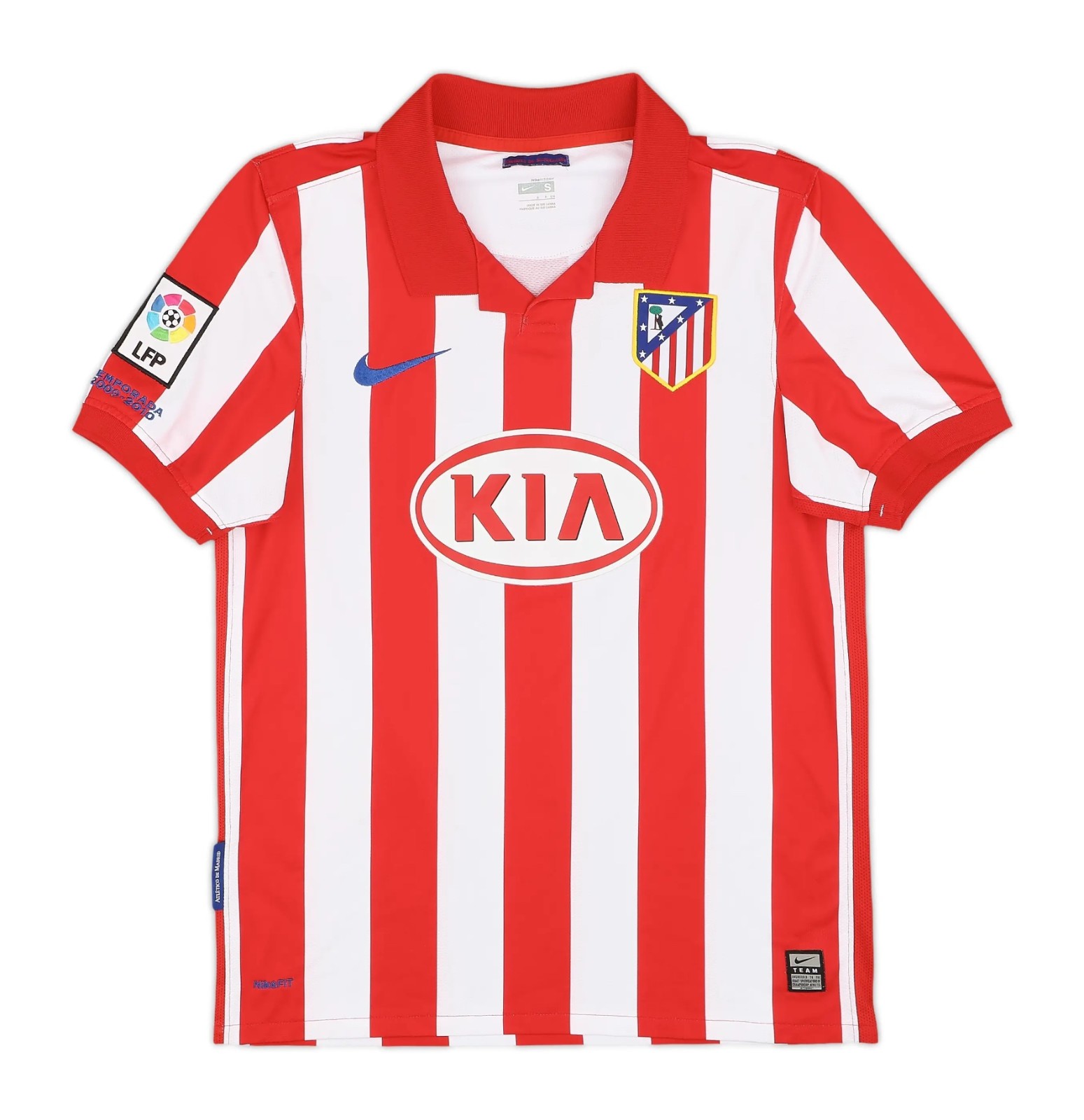
Diego Forlán: tournament top scorer, final man of the match, World Cup Golden Ball. The shirt of one of the greatest individual seasons by any Atlético player.
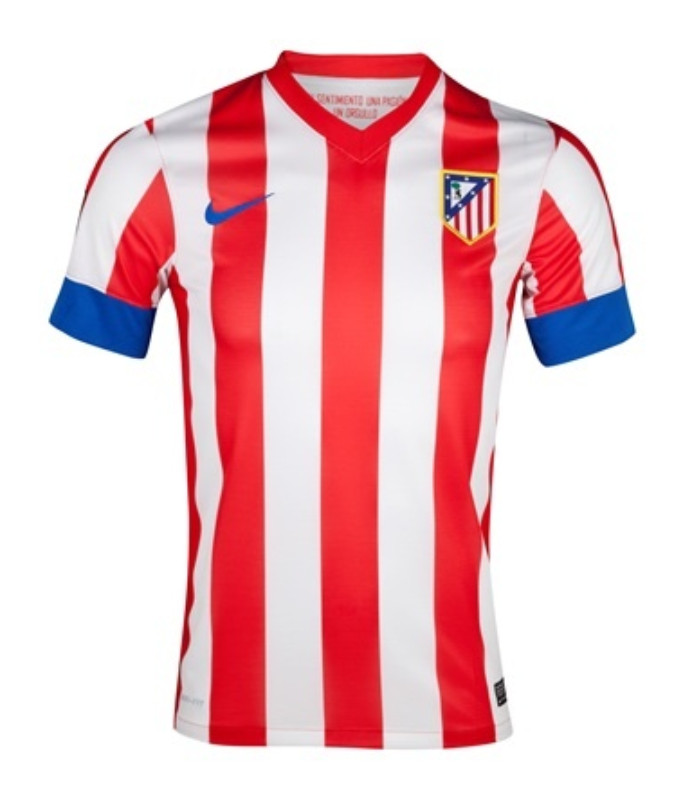
A 2–1 win over Real Madrid in the Copa del Rey final. The moment the balance of power in Madrid began to shift. Griezmann arrived a year later, in the summer of 2014.
La Liga: 11 títulos
Only Real Madrid and Barcelona have won more. Each title arrived through a different story.
11
La Liga titles
10
Copa del Rey
3
Europa League
The Simeone era
December 2011 to presentWhen Diego Simeone was appointed in December 2011, Atlético were a mid-table club with no clear direction. What followed is one of the great managerial transformations in European football. Partido a partido. Game by game. Defend deep, press hard, never give up.
Two La Liga titles, two Europa Leagues as manager, a Copa del Rey, and two Champions League finals. All at a club that had been in the second division just a decade earlier.
UEFA Europa League
3–0 vs Athletic Bilbao
UEFA Super Cup
4–1 vs Chelsea
Copa del Rey
2–1 vs Real Madrid
La Liga
First league title in 18 years
UEFA Europa League
3–0 vs Olympique de Marseille
UEFA Super Cup
4–2 vs Real Madrid (AET)
La Liga
Secured on the final day
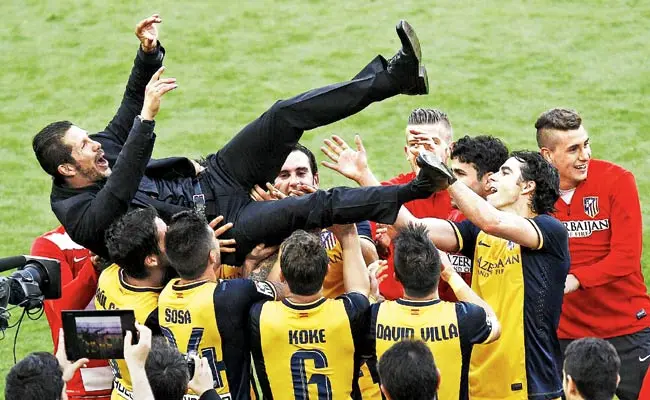
The golden era
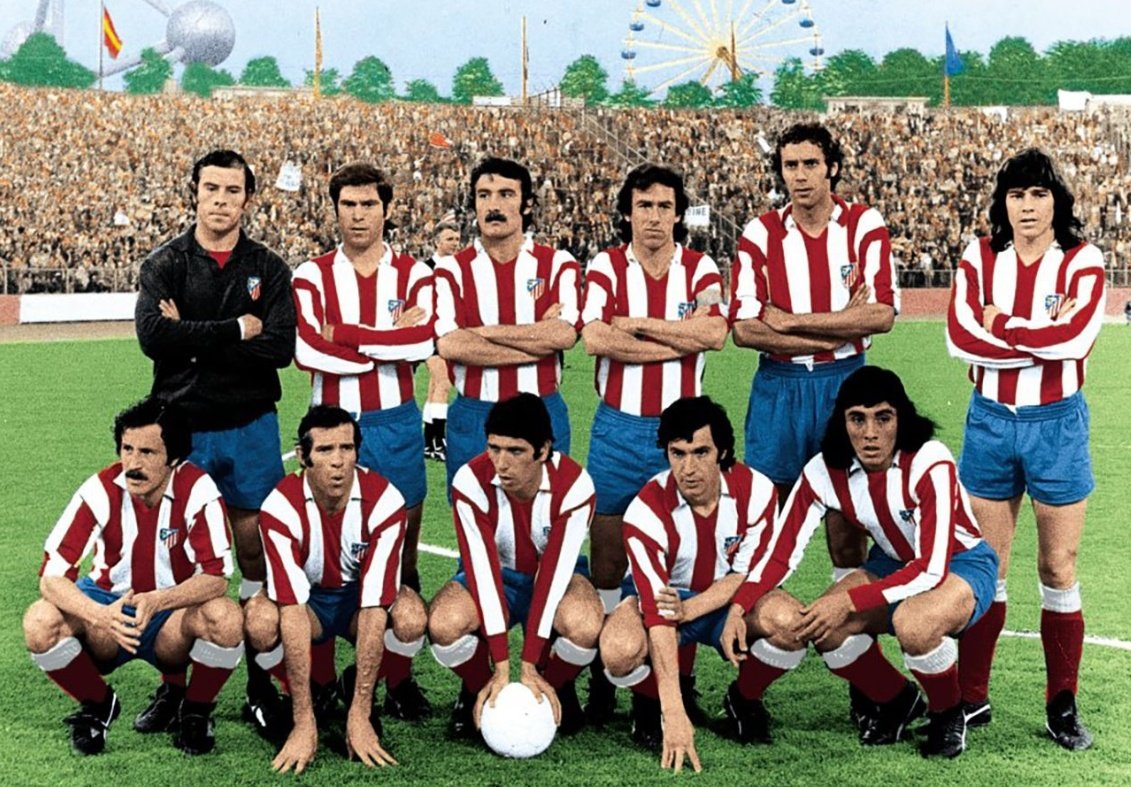
1960s – 1970s
Four league titles. One agonising final.
In the decade between 1966 and 1977, Atlético won four La Liga titles, five Copa del Rey trophies, and the UEFA Cup Winners' Cup. The era produced club legends like Luis Aragonés, Adelardo Rodríguez, and José Eulogio Gárate, who won three consecutive Pichichi awards as La Liga's top scorer in 1969, 1970 and 1971.
The peak, and the great wound, was the 1974 European Cup Final in Brussels. Atlético led Bayern Munich with seconds remaining. A Schwarzenbeck long-range shot in the 119th minute forced a replay. Two days later, Bayern won 4–0. It remains the only European Cup final ever decided by a replay, and the injustice still resonates in Madrid.
2009–10 · Europa League
Diego Forlán's greatest season
Diego Forlán scored the two goals that beat Fulham in the Europa League Final in Hamburg. He finished as the tournament's top scorer, was named man of the match in the final, and then went to the 2010 FIFA World Cup and won the Golden Ball as the tournament's best player.
No Atlético player has had a year quite like it. The 2009–10 home shirt he wore that season is one of the most sought-after in the club's history.
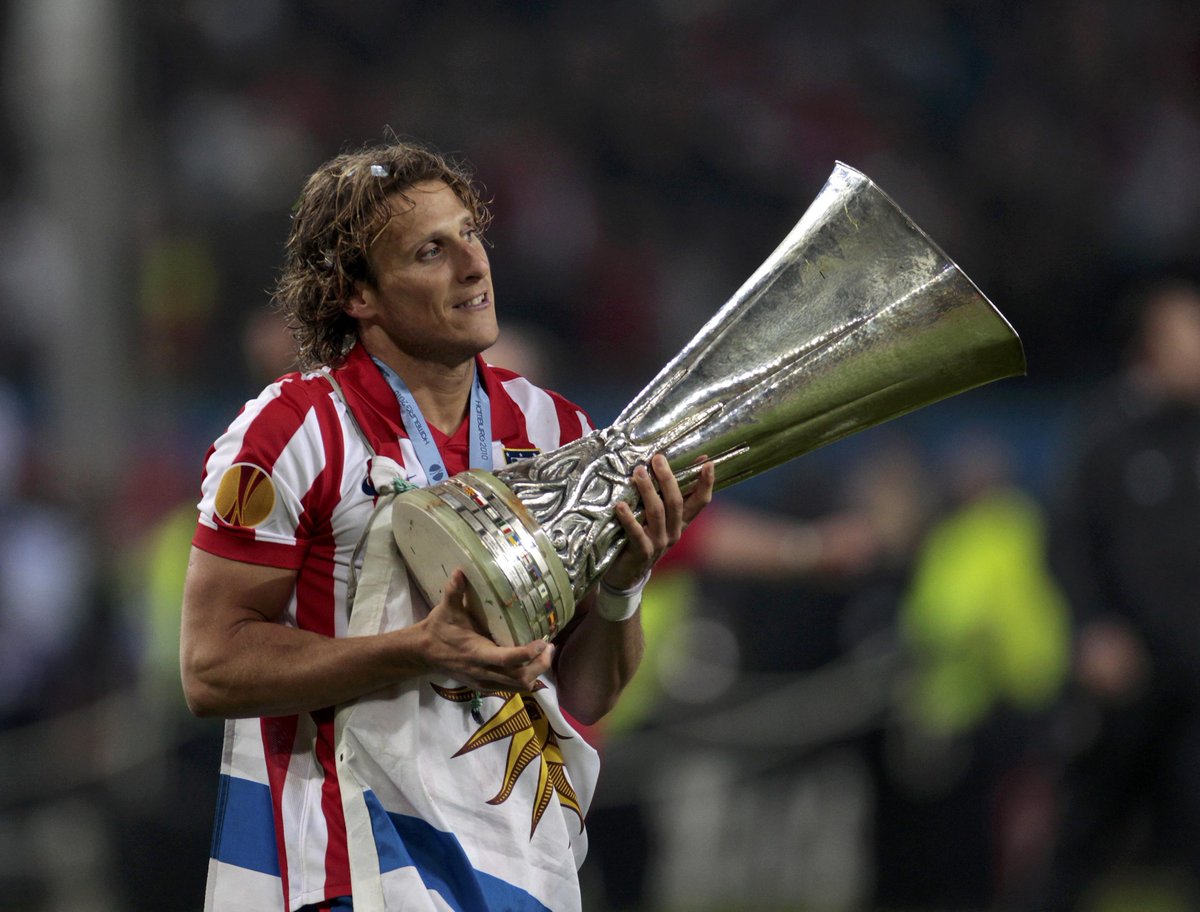
Champions League finals
Three finals, zero titles. No club embodies European heartbreak quite like Atlético de Madrid.
1974
Brussels
1–1 vs Bayern Munich, lost the replay 4–0
Luis Aragonés scored a free kick in the 114th minute to put Atlético ahead. Bayern equalised in the 119th minute with a Schwarzenbeck long-range shot. The first match ended 1–1 after extra time, the only European Cup final ever replayed. Two days later, Bayern won 4–0.
2014
Lisbon
1–4 vs Real Madrid (AET), Ramos header in the 93rd minute
Diego Godín headed Atlético into the lead. They held it until the 93rd minute, when Sergio Ramos equalised from a corner. Real Madrid scored three more in extra time. One of the cruelest endings in the history of the competition. The 2013–14 UCL Final kit is among the most collected Atlético shirts on ShirtSociety.
2016
Milan
1–1 vs Real Madrid, lost on penalties 3–5
Griezmann missed a penalty that struck the crossbar. Yannick Carrasco equalised in extra time. In the shootout, Juanfran\'s kick also hit the post. Real Madrid won 5–3 on penalties. Two finals against the same opponents. Two heartbreaks in the same red and white.
All-time top scorers
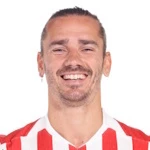
Antoine Griezmann
2014–2019, 2021–2025
174
367 apps
Luis Aragonés
1964–1974
173
384 apps
Adrián Escudero
1945–1958
169
330 apps
Paco Campos
1938–1950
146
252 apps
José Eulogio Gárate
1962–1974
136
265 apps
267
Kits in ShirtSociety
11
La Liga titles
3
Europa League
1903
Founded
Badge history
The bear and strawberry tree, Madrid's coat of arms, has anchored the badge since 1917. The stripes and crown have evolved around it.
1909
Blue and white stripes on the shield, inspired by the original Athletic Bilbao connection.
1912
Switch to red and white, influenced by Southampton FC. The Colchoneros identity begins.
1969
The bear and tree crest fully established. A golden era on the pitch, with four La Liga titles in eleven years.
1997
Modernised lines, the crown made more prominent. The double year (1996) had just passed.
2000
A cleaner, rounder design. Used through the entire first Simeone era and the 2014 Champions League final.
2017
Redesigned for the move to the new Metropolitano. Bolder bear, sharper lines.
2024–now
The current crest. Subtle refinements to the bear and lettering, retaining the classic rojiblanco identity.
Legends
The players who wore the red and white stripes with distinction.
Luis Aragonés
1964–1974173 goals in 384 appearances. Three La Liga titles as a player. Scored the dramatic free kick in the 1974 European Cup final. Later won Euro 2008 as Spain manager. One of the most important figures in the club's history.
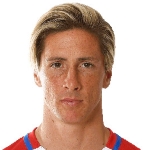
Fernando Torres
1995–2007, 2015–2016129 goals across two spells. Joined the academy aged 11. Left for Liverpool in 2007 at the peak of his powers and returned a decade later to say goodbye at the Calderón. A boyhood fan through and through.
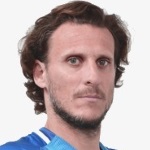
Diego Forlán
2004–2011Two Pichichi awards, Europa League 2010, FIFA World Cup Golden Ball in the same year. 74 goals in 230 games. One of the most beloved foreign players in the club's history.
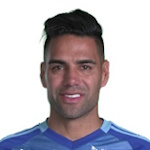
Radamel Falcao
2011–201370 goals in 91 games, one of the most devastating two-year spells by any striker in European football. Won the Copa del Rey and Europa League before leaving for Monaco.
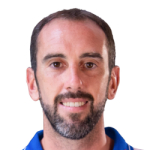
Diego Godín
2010–2019The defensive cornerstone of the Simeone era. Scored the goal that effectively won La Liga in 2014. His header in the UCL final that year remains one of the defining images of the decade. Nine seasons as the unmovable heart of the backline.
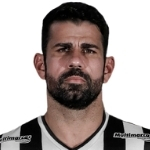
Diego Costa
2010–2014, 2017–2021Physical, aggressive, essential to the 2013–14 title. Two La Liga titles across two spells. The perfect Simeone striker: won free kicks, scored goals, and made defenders' lives difficult.
Antoine Griezmann
2014–2019, 2021–2025All-time top scorer with 174 goals. Won Euro 2016 Golden Boot while at the club. Left for Barcelona in 2019 and returned in 2021. The faithful forgave him. The goals kept coming.
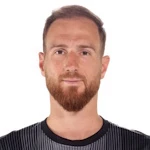
Jan Oblak
2014–presentSix Zamora trophies (fewest La Liga goals conceded). The foundation on which the entire Simeone defensive structure rests. Consistently ranked among the best goalkeepers in the world.
Kit manufacturers
Nike have supplied Atlético since 2001, but before that, Puma put the stripes on for fifteen years.
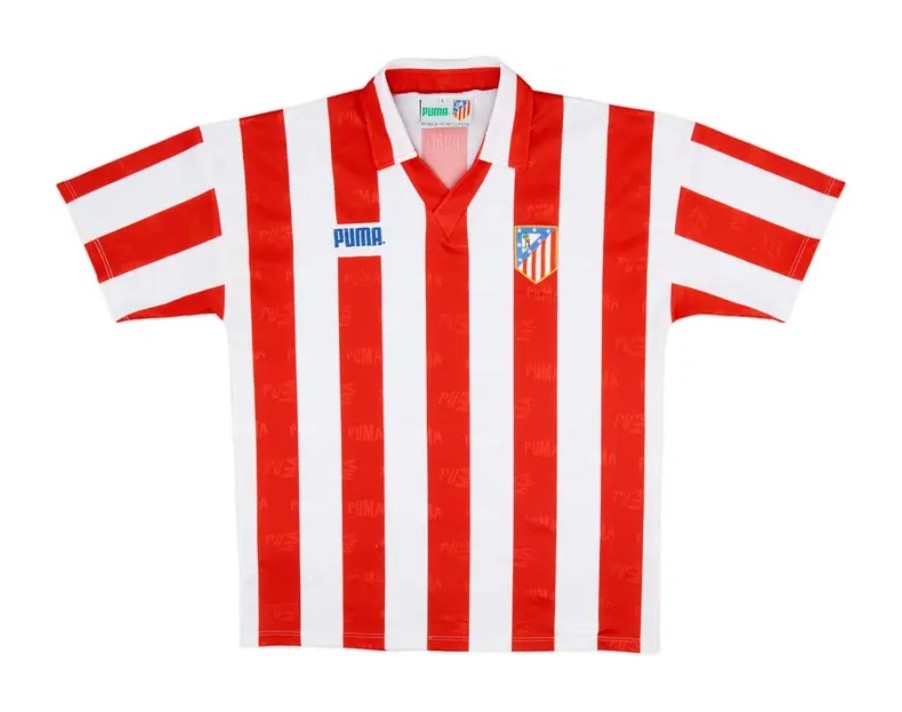
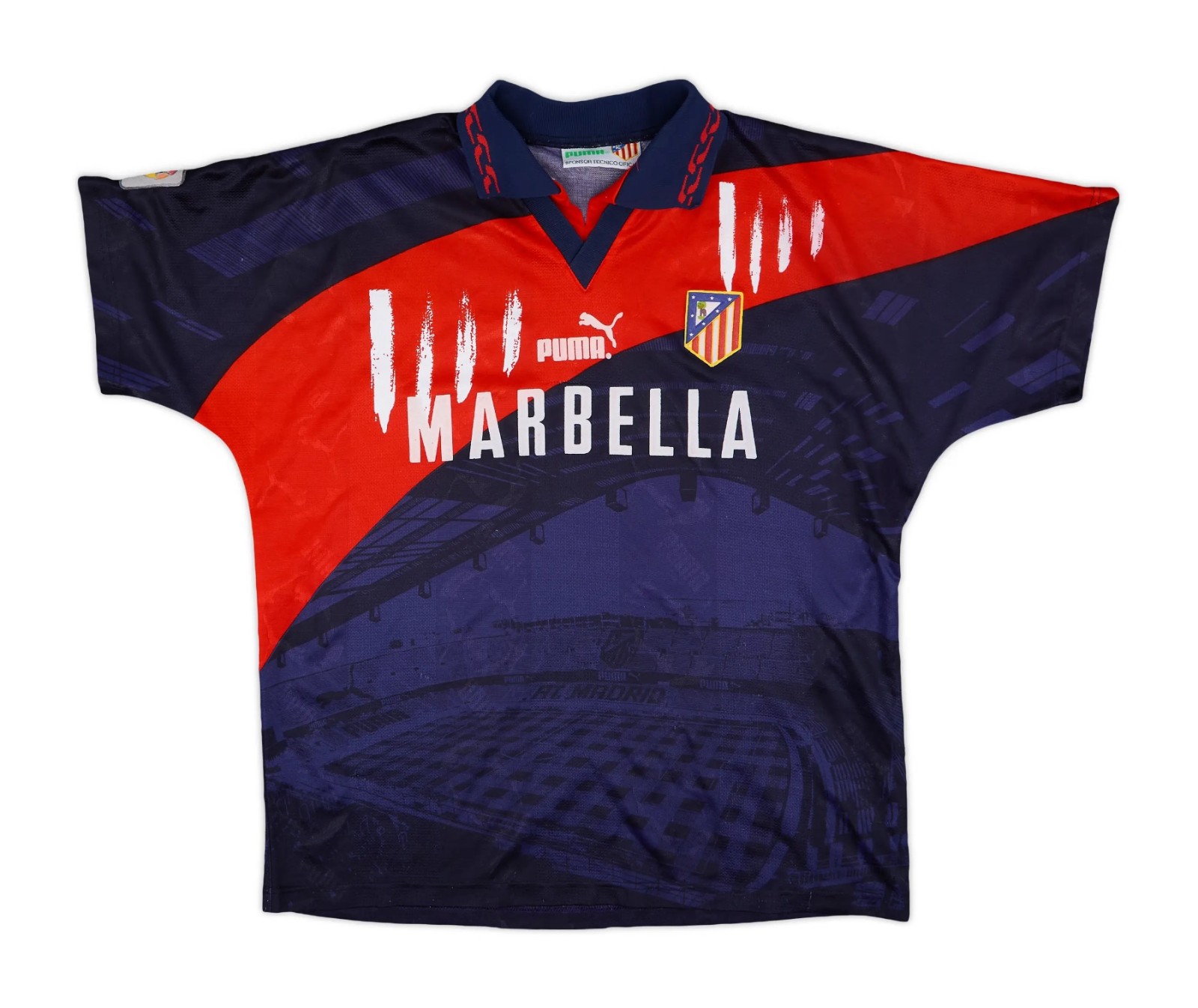
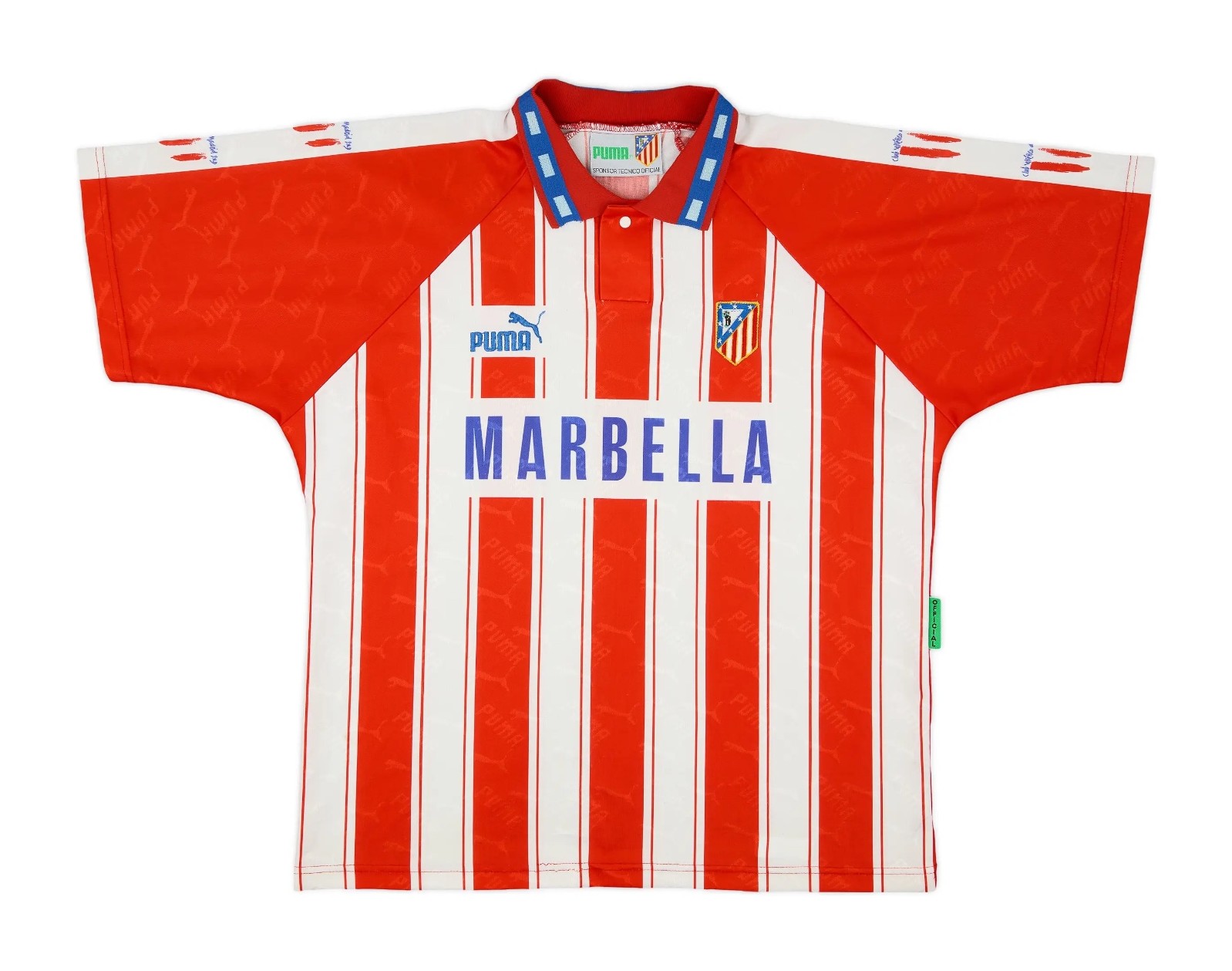
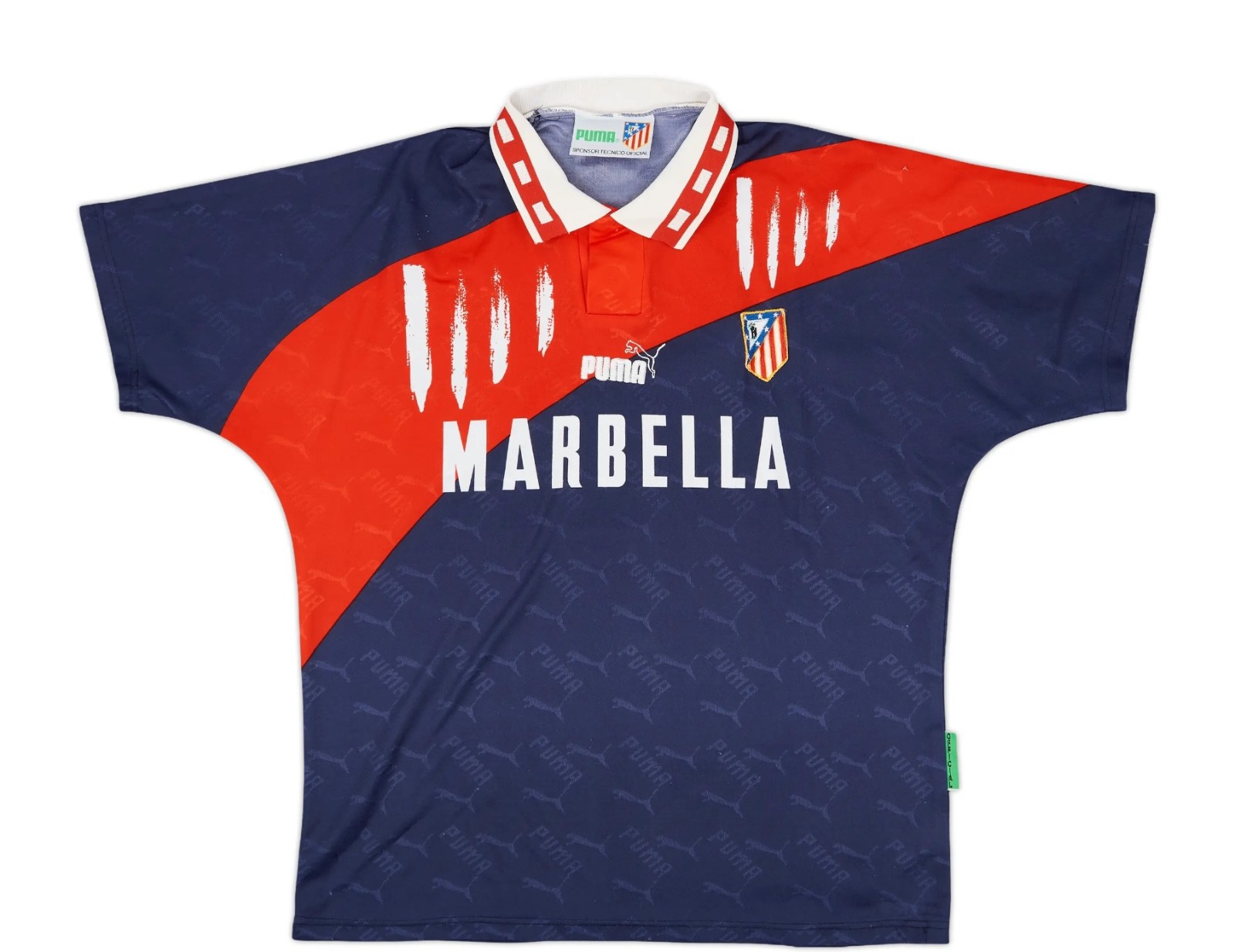
The longest pre-Nike supplier, around 15 years. Puma-era kits, including the 1995–96 double season, are among the most sought-after in the club's history.
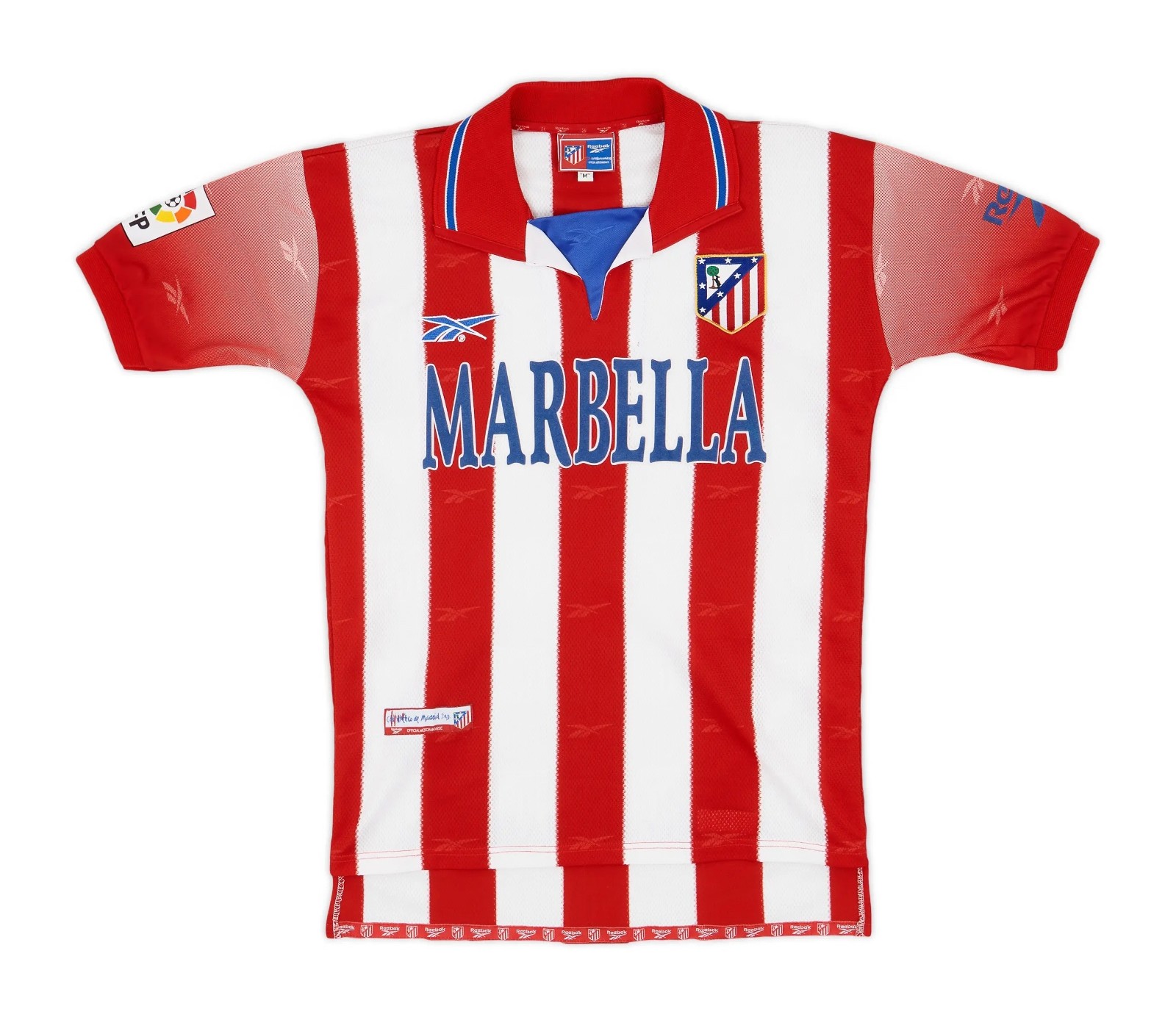
A brief three-year window before Nike arrived. Reebok supplied the club during a turbulent period that ended in relegation to the Segunda División in 2000.
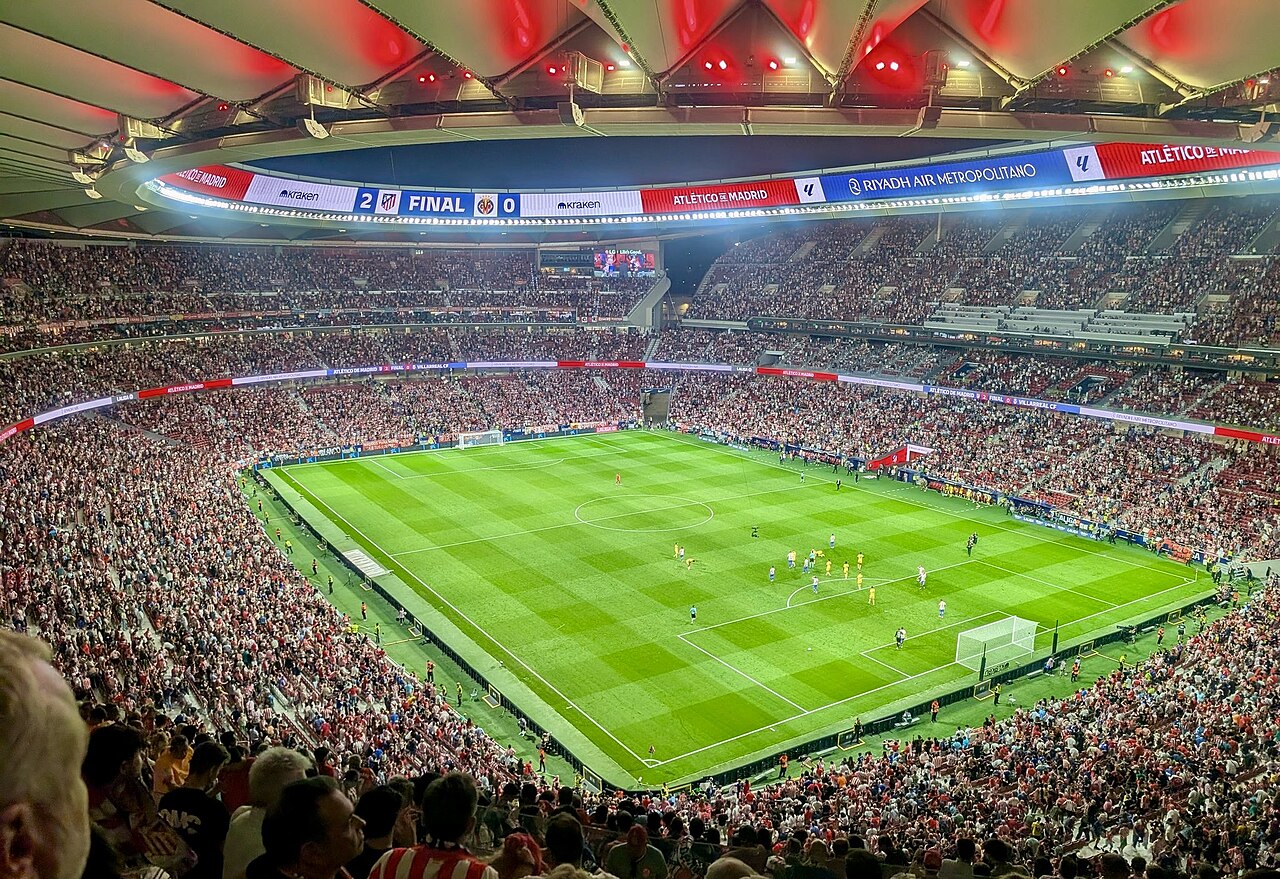
From the Calderón to the Metropolitano
Vicente Calderón · 1966–2017
For 51 years the Calderón stood on the banks of the Manzanares river in the south of Madrid. Named after club president Vicente Calderón in 1972 and holding over 54,000 at its peak. It was demolished after the move and the site became a riverside park.
The noise it generated on European nights made it one of the most intimidating grounds in Spain.
Riyadh Air Metropolitano · 2017 to present
Opened on 16 September 2017 as the Wanda Metropolitano. Renamed Cívitas Metropolitano in 2022 and Riyadh Air Metropolitano in 2023. Capacity of 68,456, one of the largest in Europe. Hosted the 2019 UEFA Champions League Final between Liverpool and Tottenham.
2017
Opened
68,456
Capacity
2019
UCL Final
Wanda Met
Orig. name
Featured in
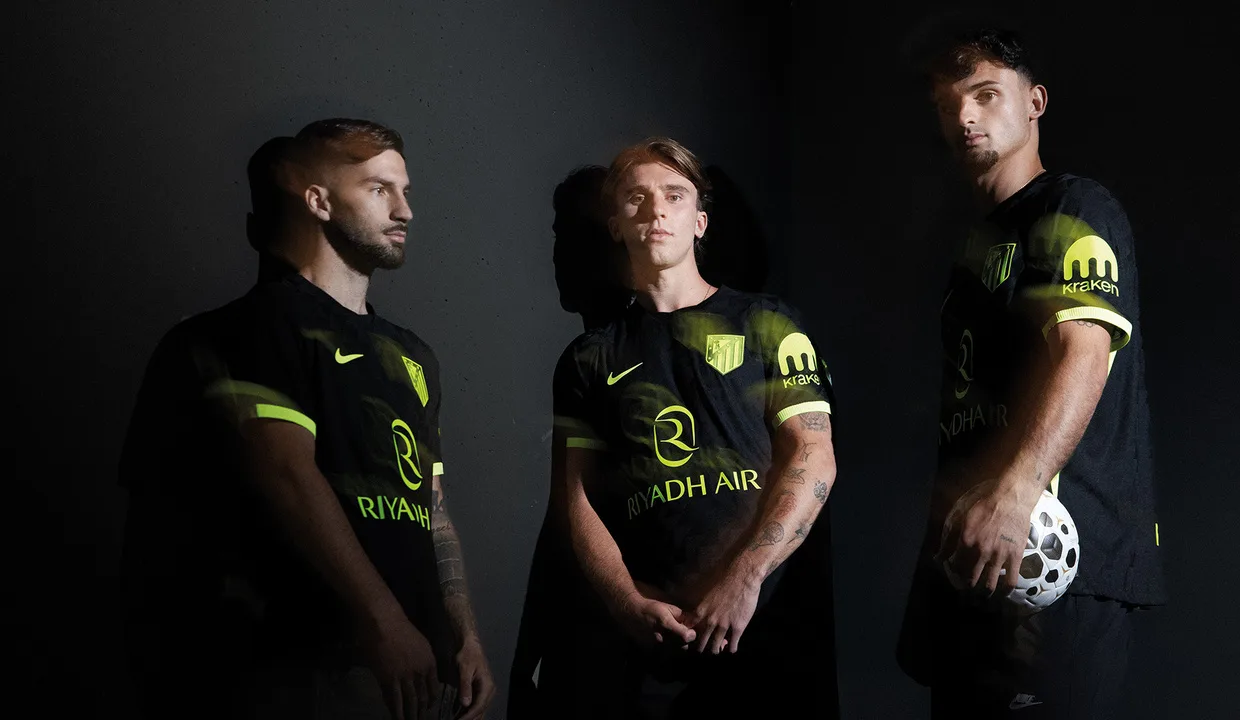
2026/27
LiveHome
Away
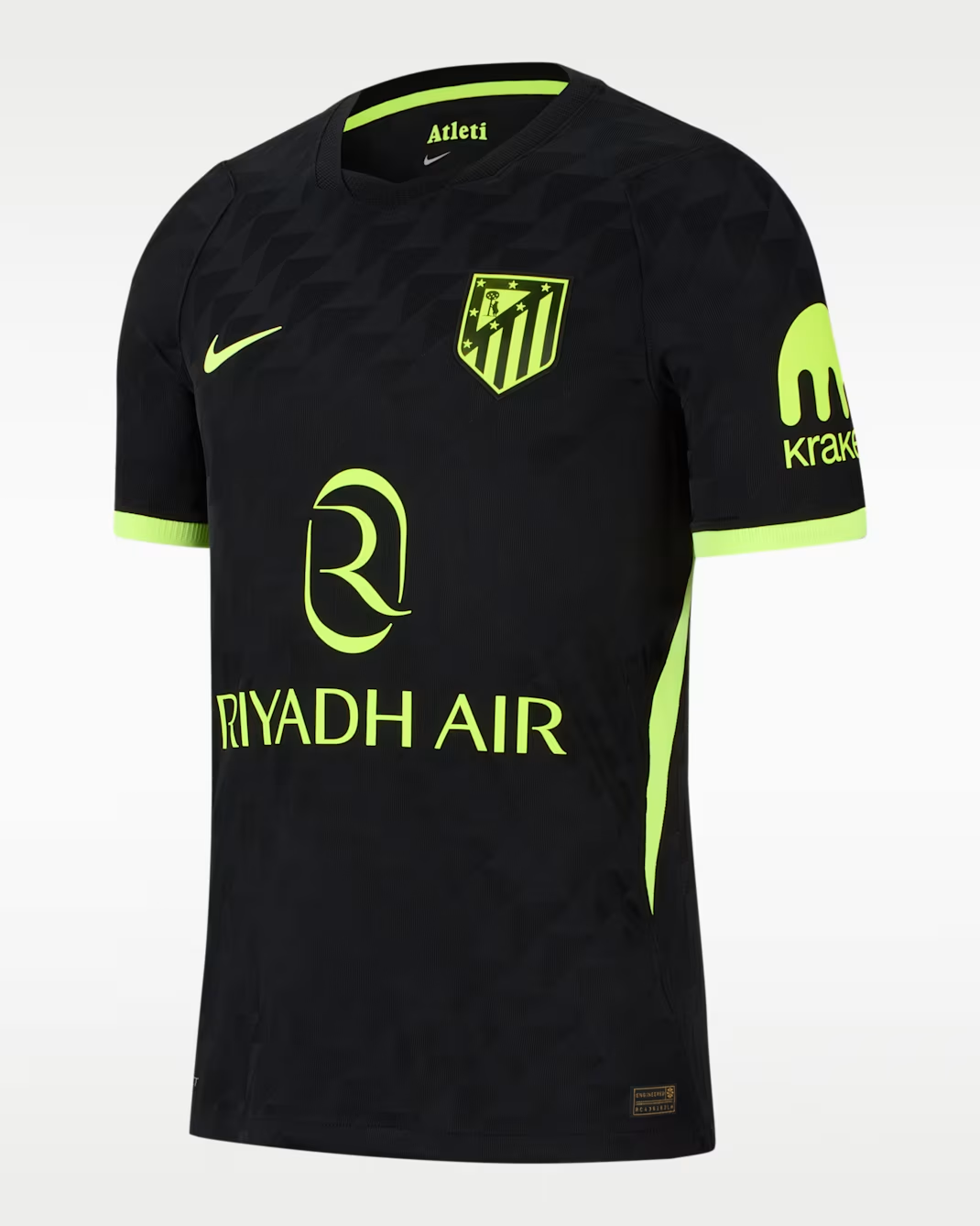
2025/26
FinishedAug 2025 – May 2026
Home
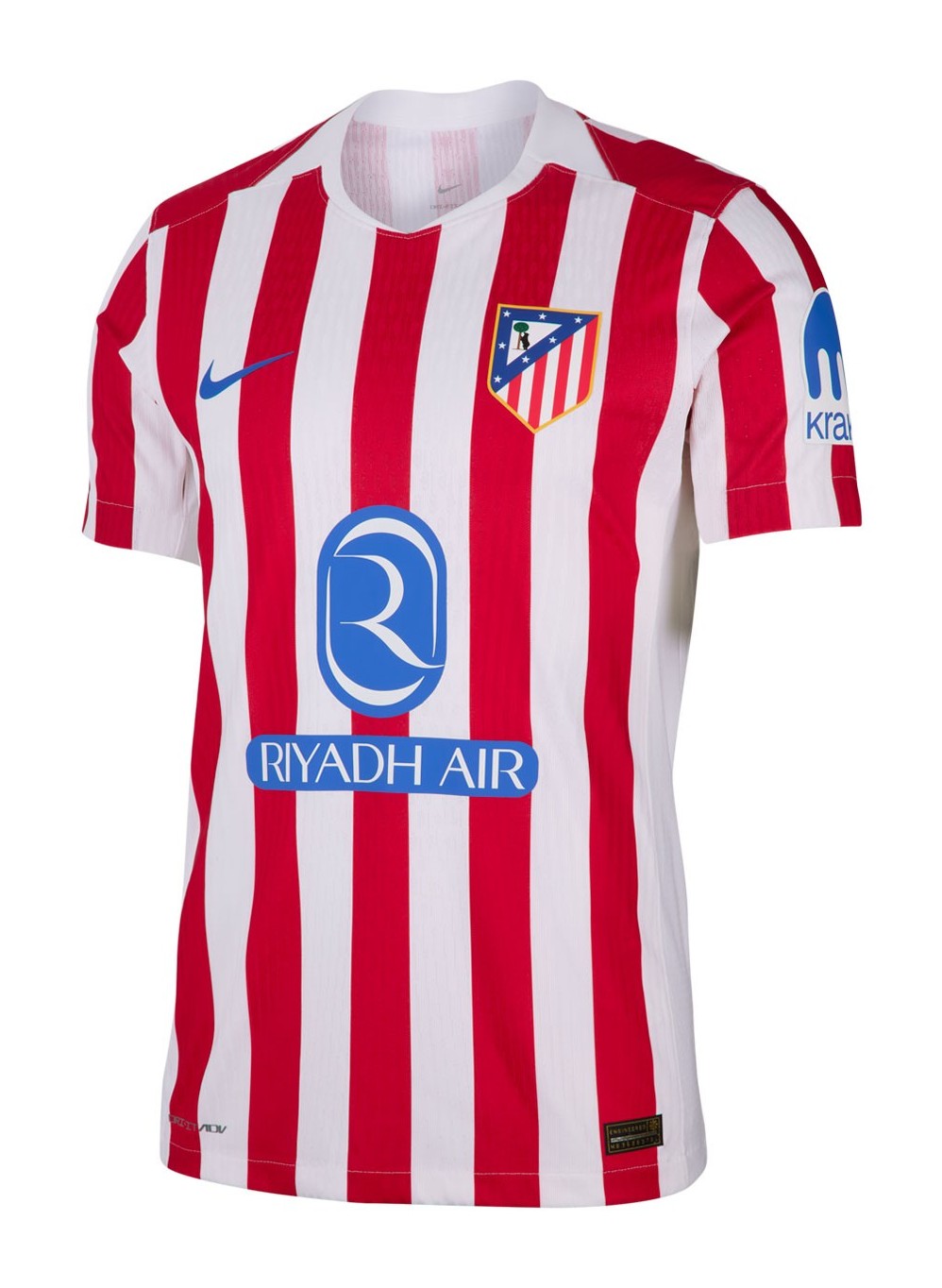
Away
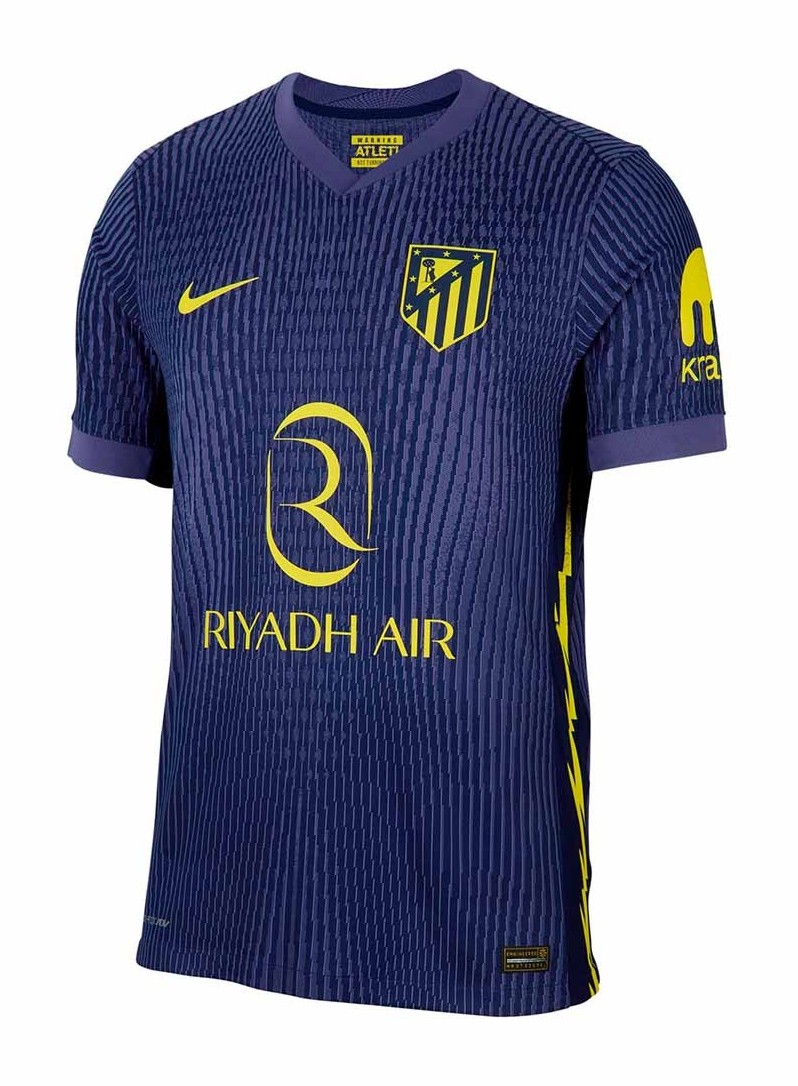
place
2024/25
FinishedJul 2024 – May 2025
Home
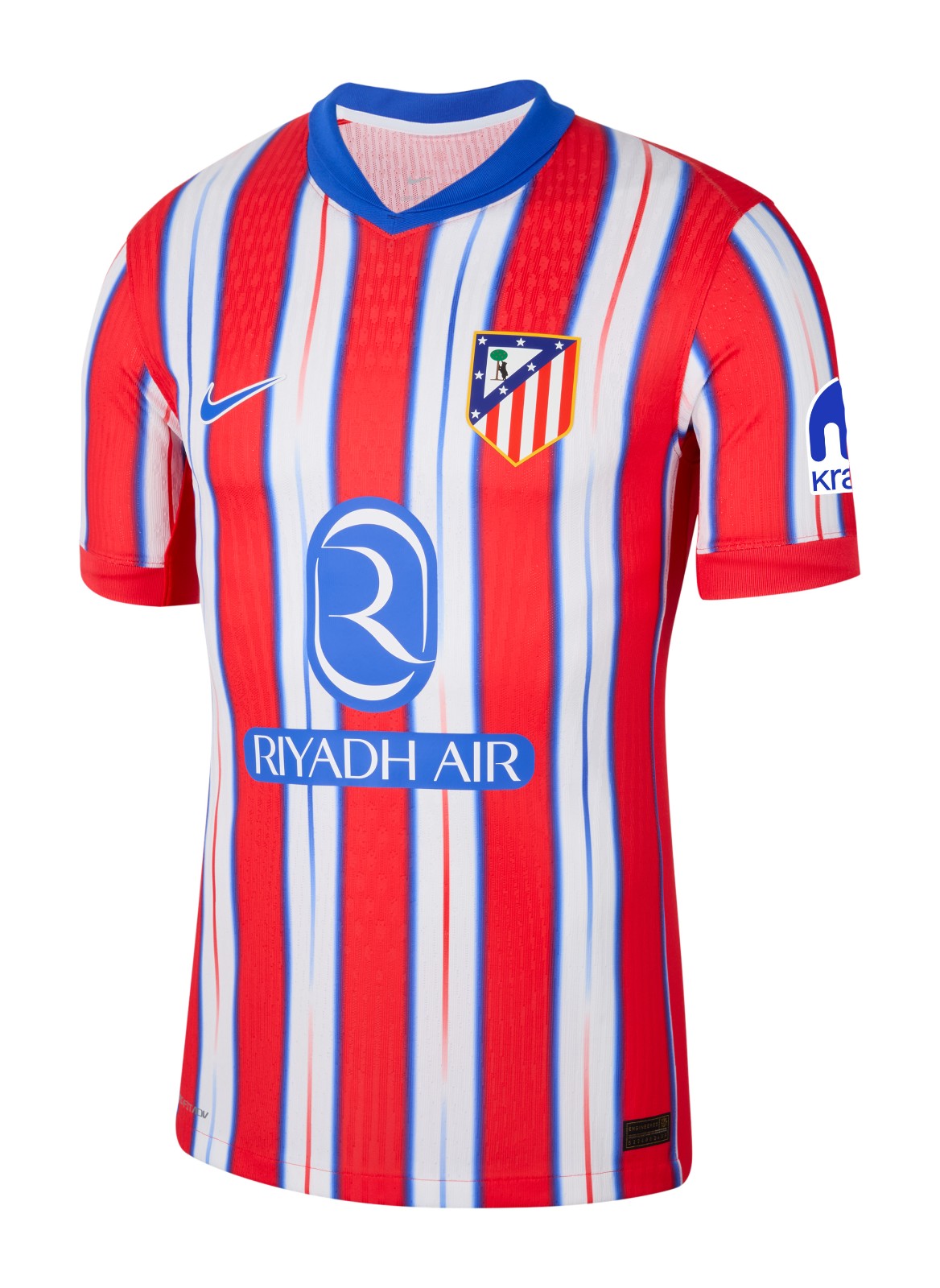
Away
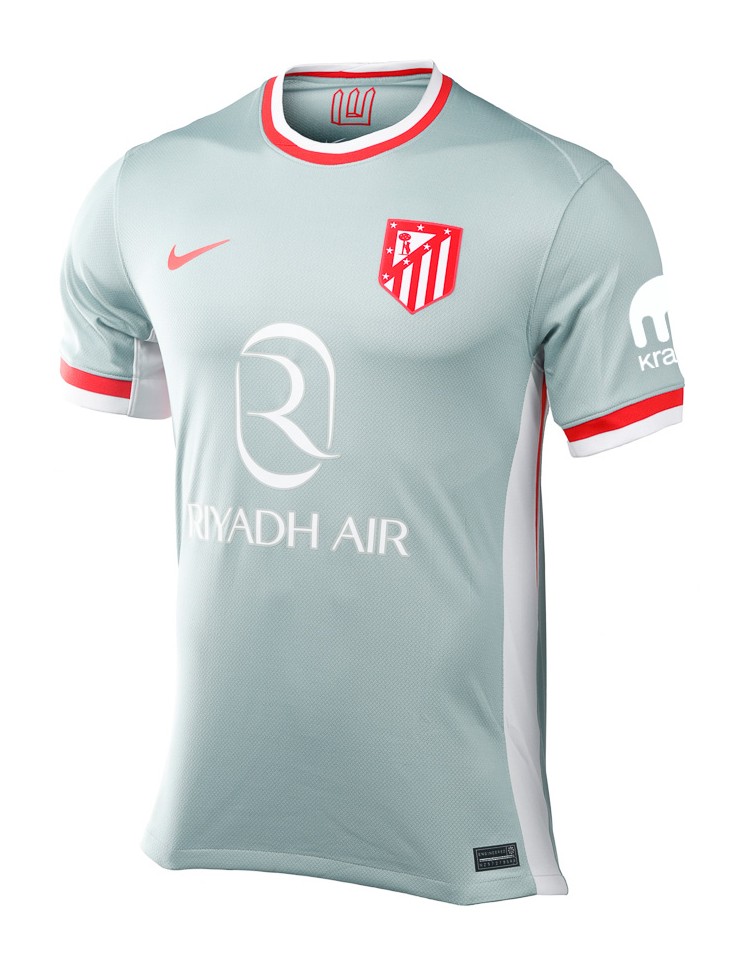
place
2023/24
FinishedJul 2023 – May 2024
Home
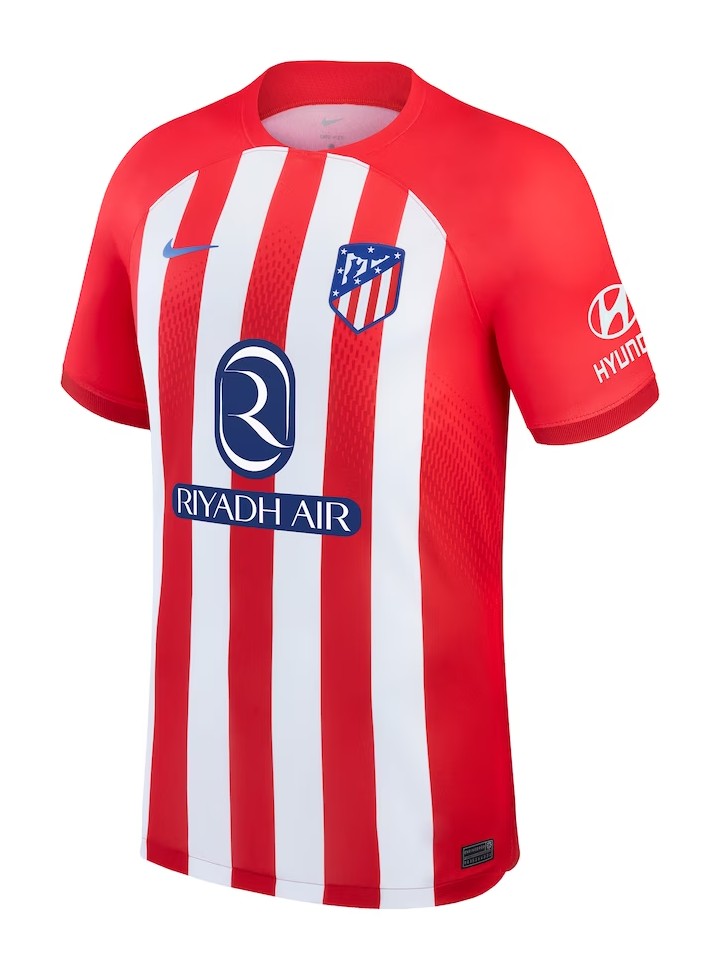
Away
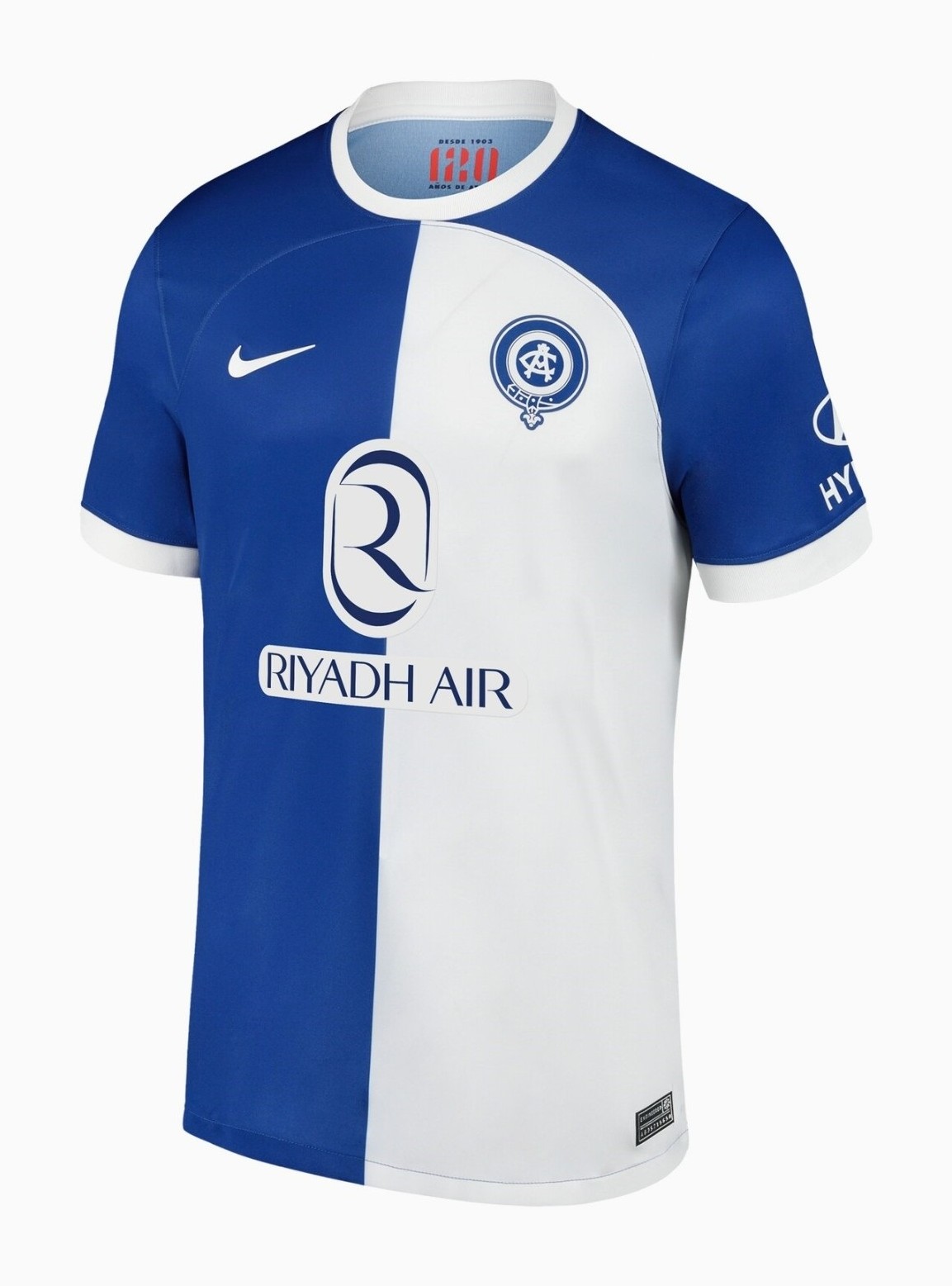
place
2022/23
FinishedJul 2022 – Jun 2023
Home
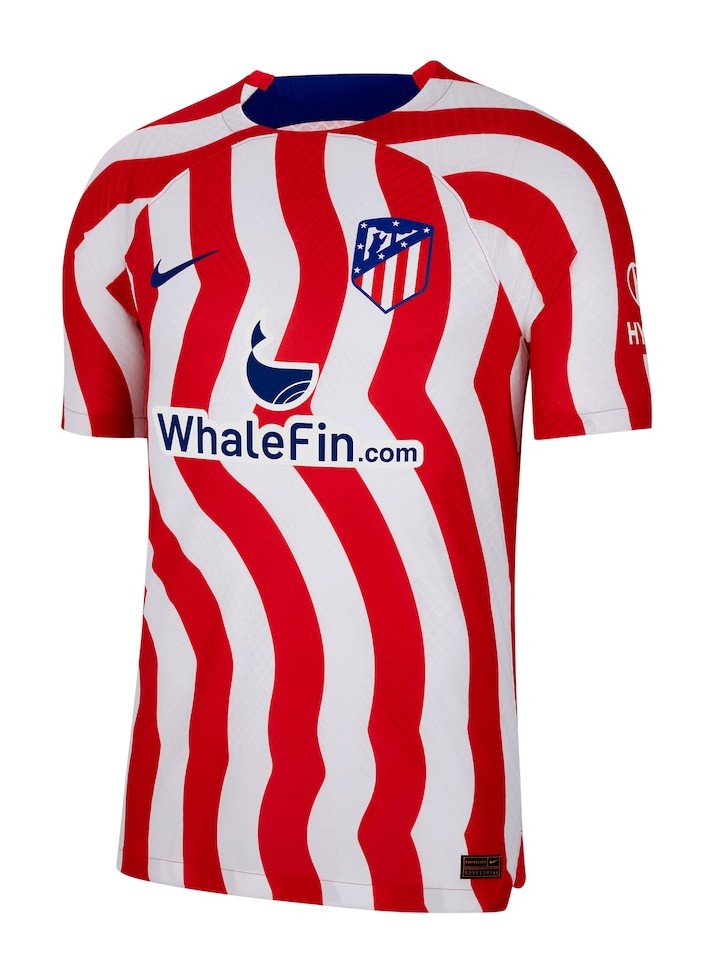
Away
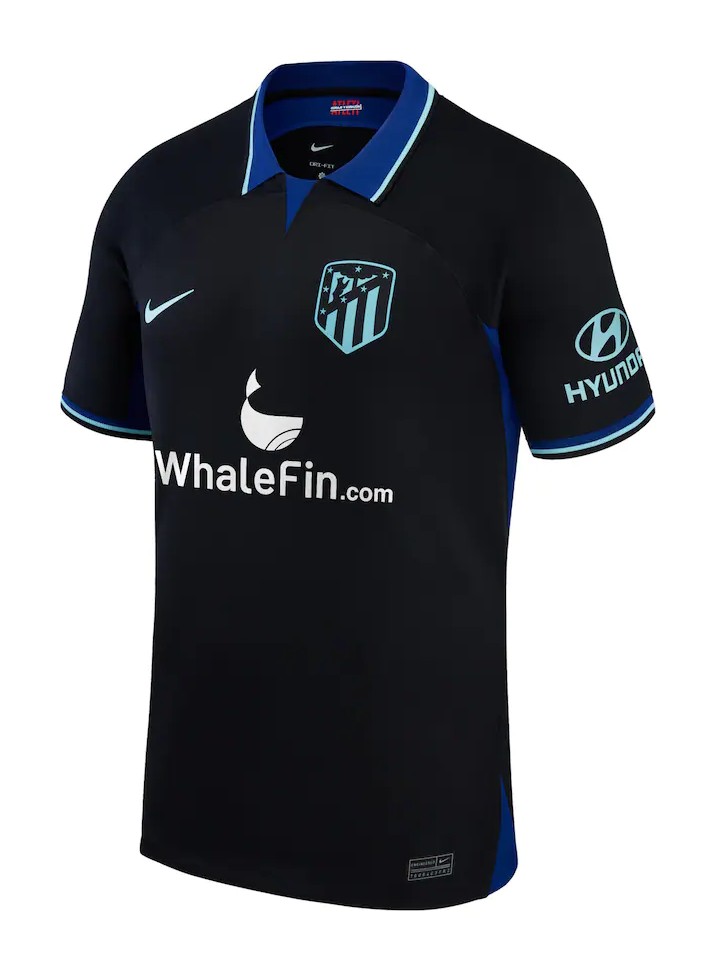
place
2021/22
FinishedJul 2021 – May 2022
Home
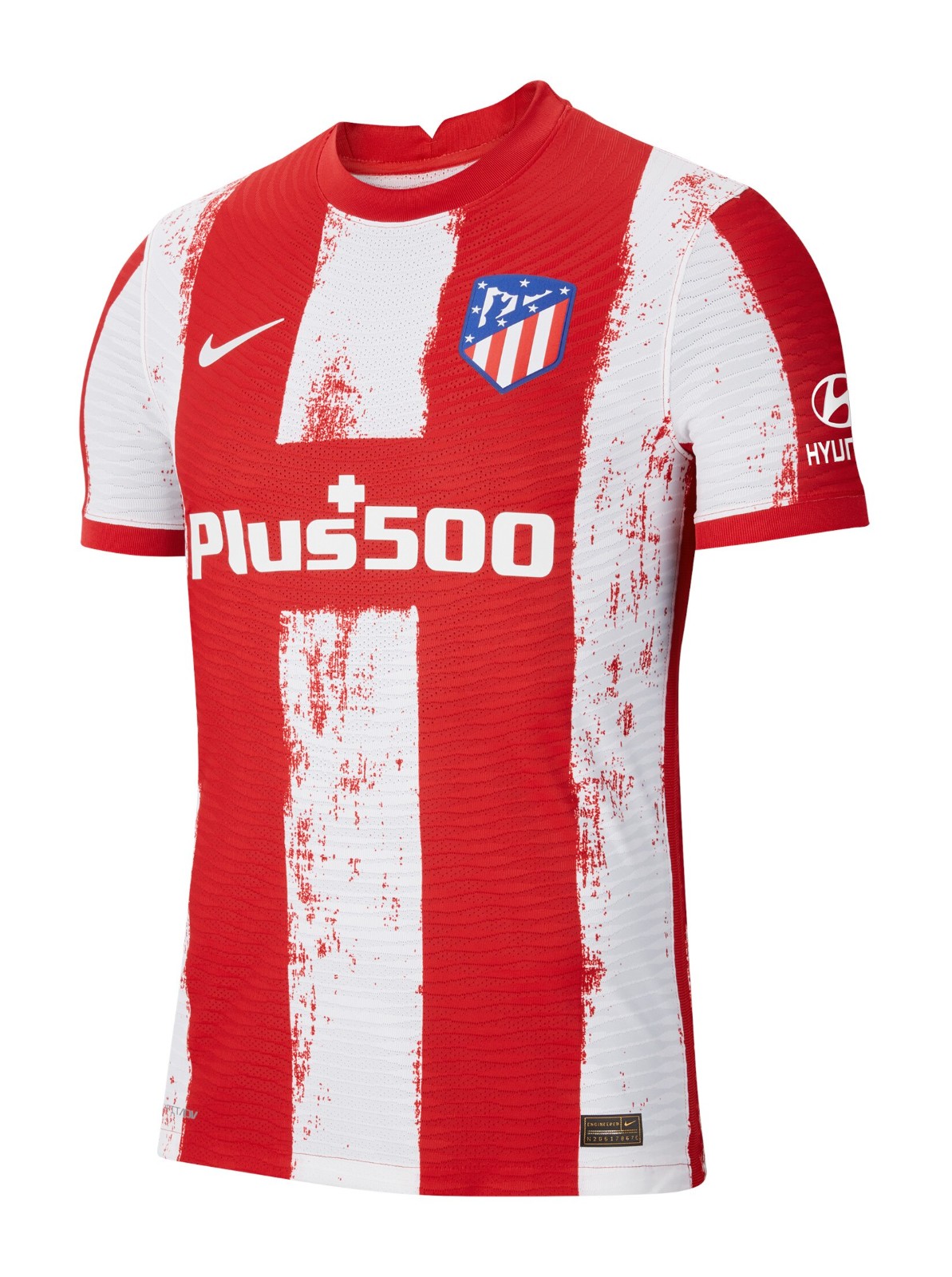
Away
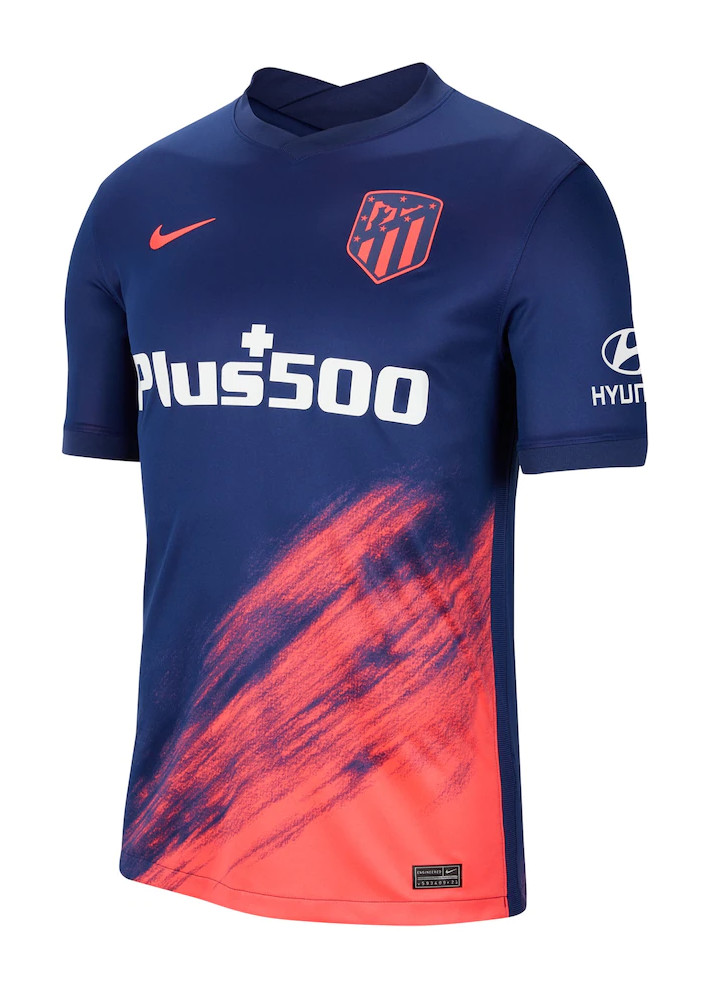
place
2020/21
FinishedAug 2020 – May 2021
Home
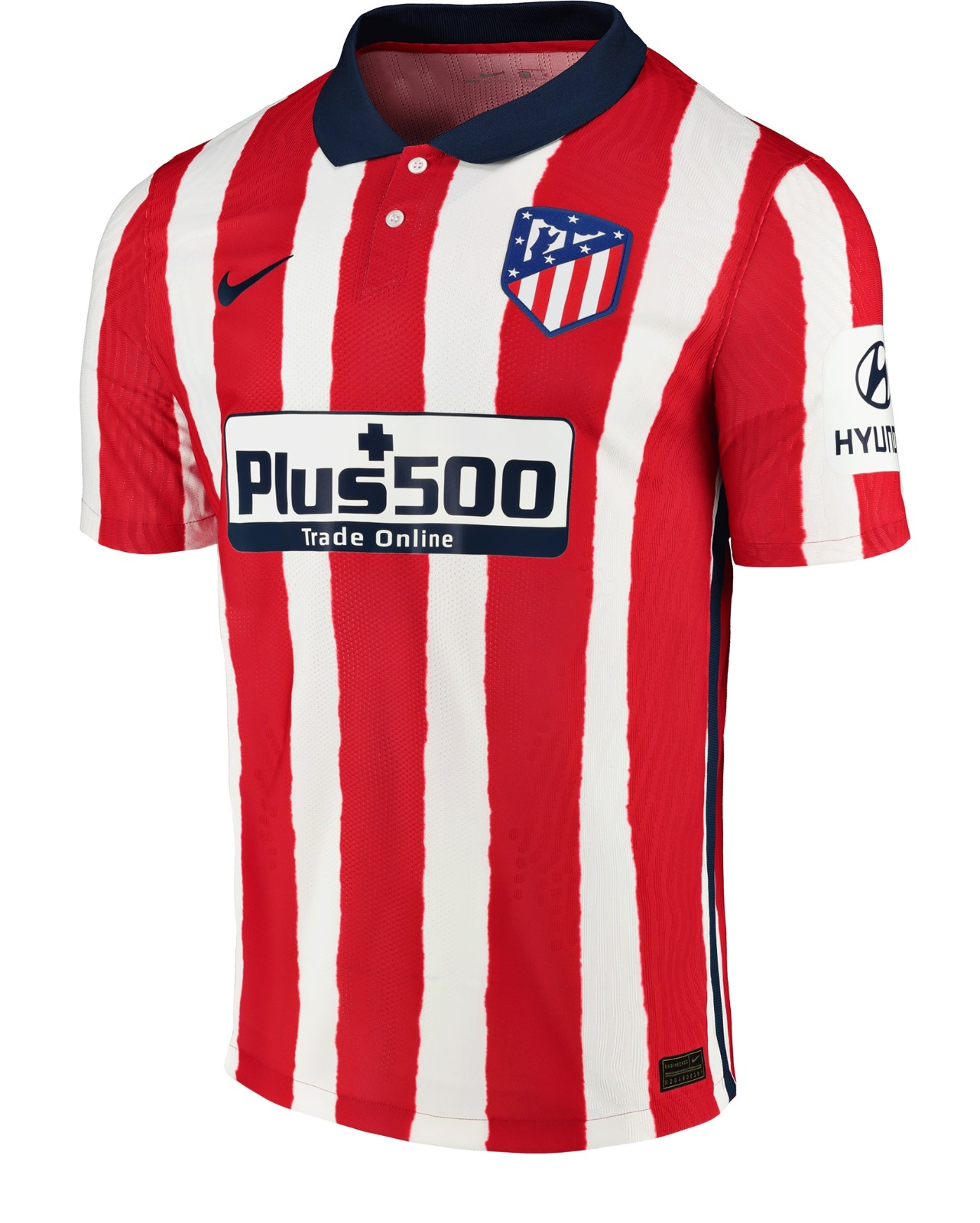
Away
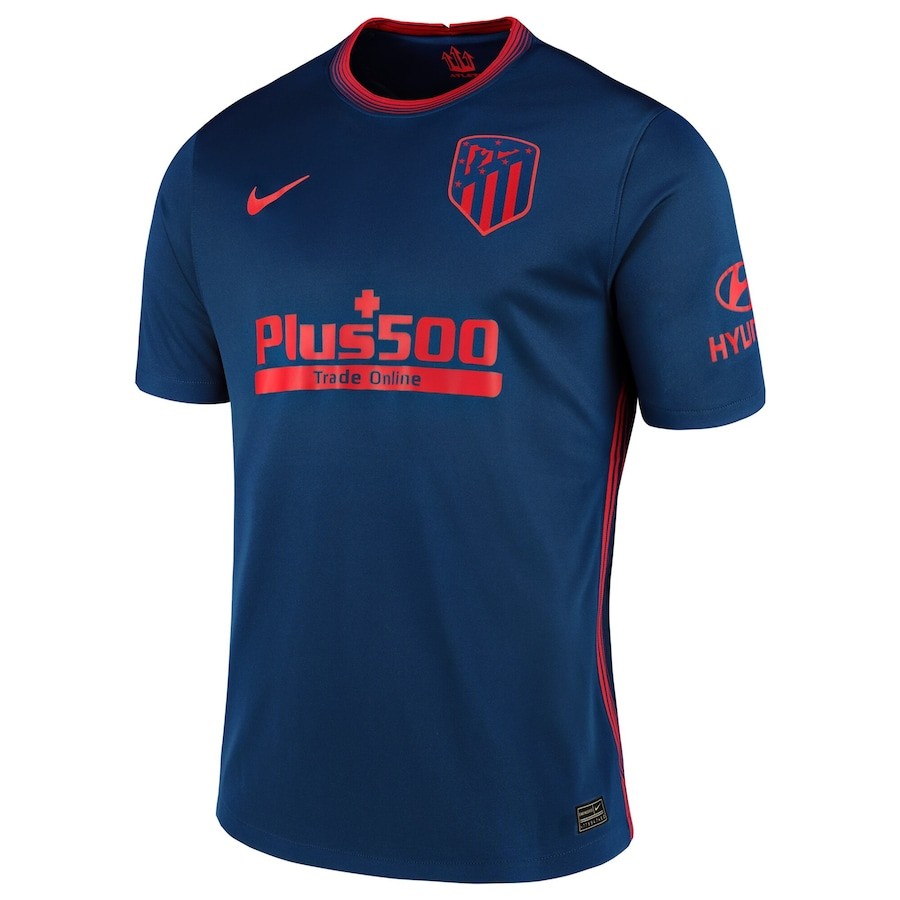
Champions
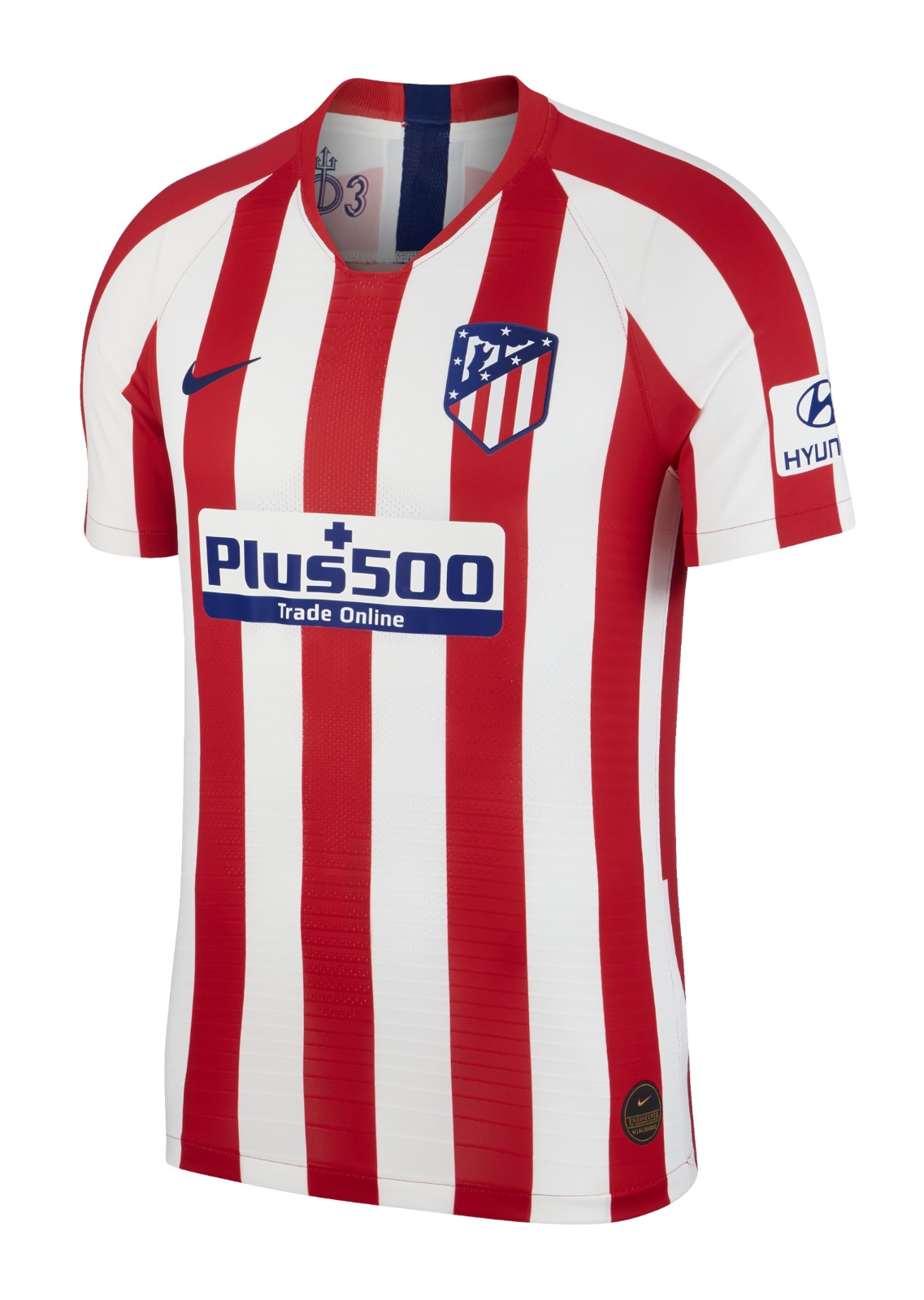
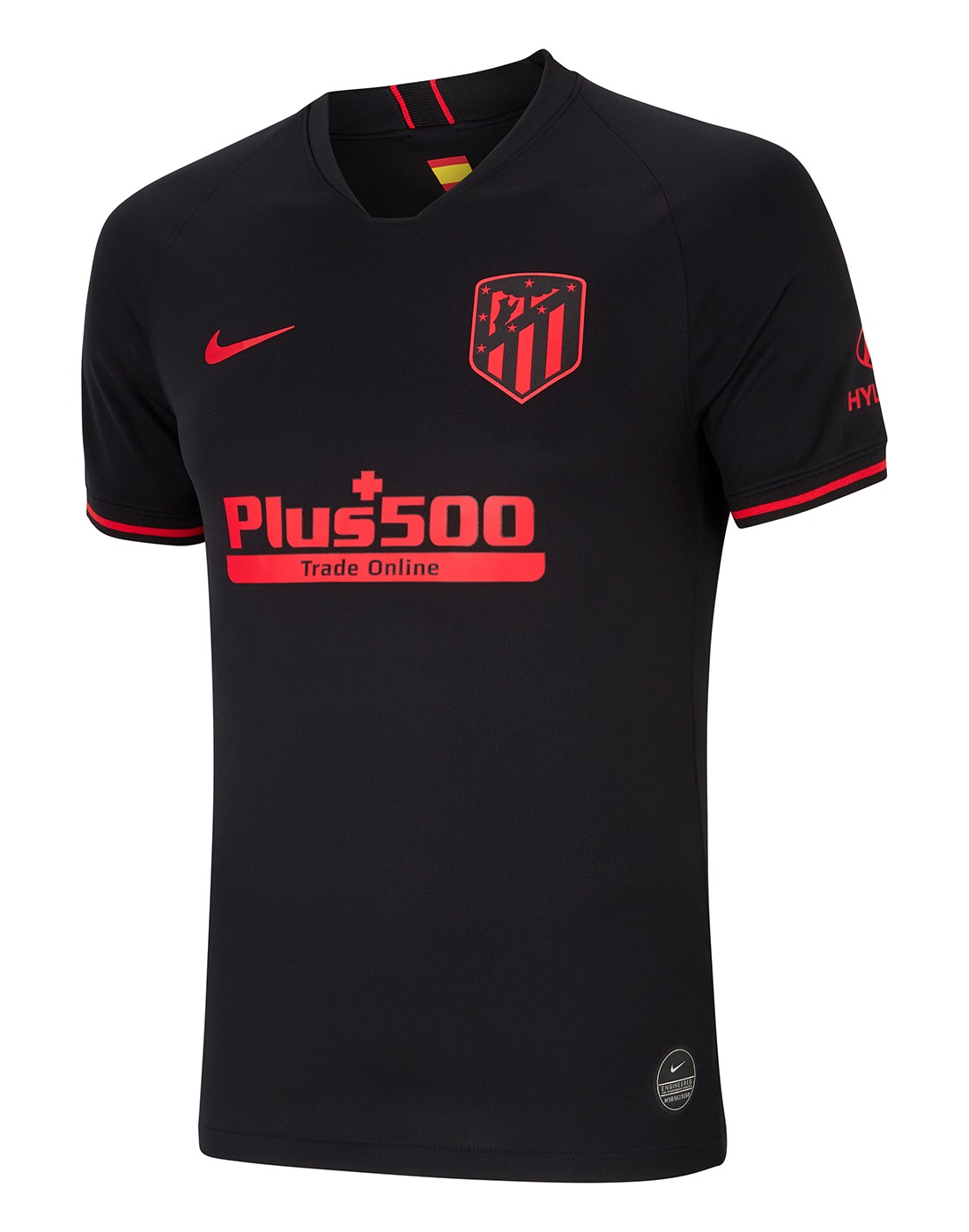
2019/20
FinishedJul 2019 – Jul 2020
Home
Away
place
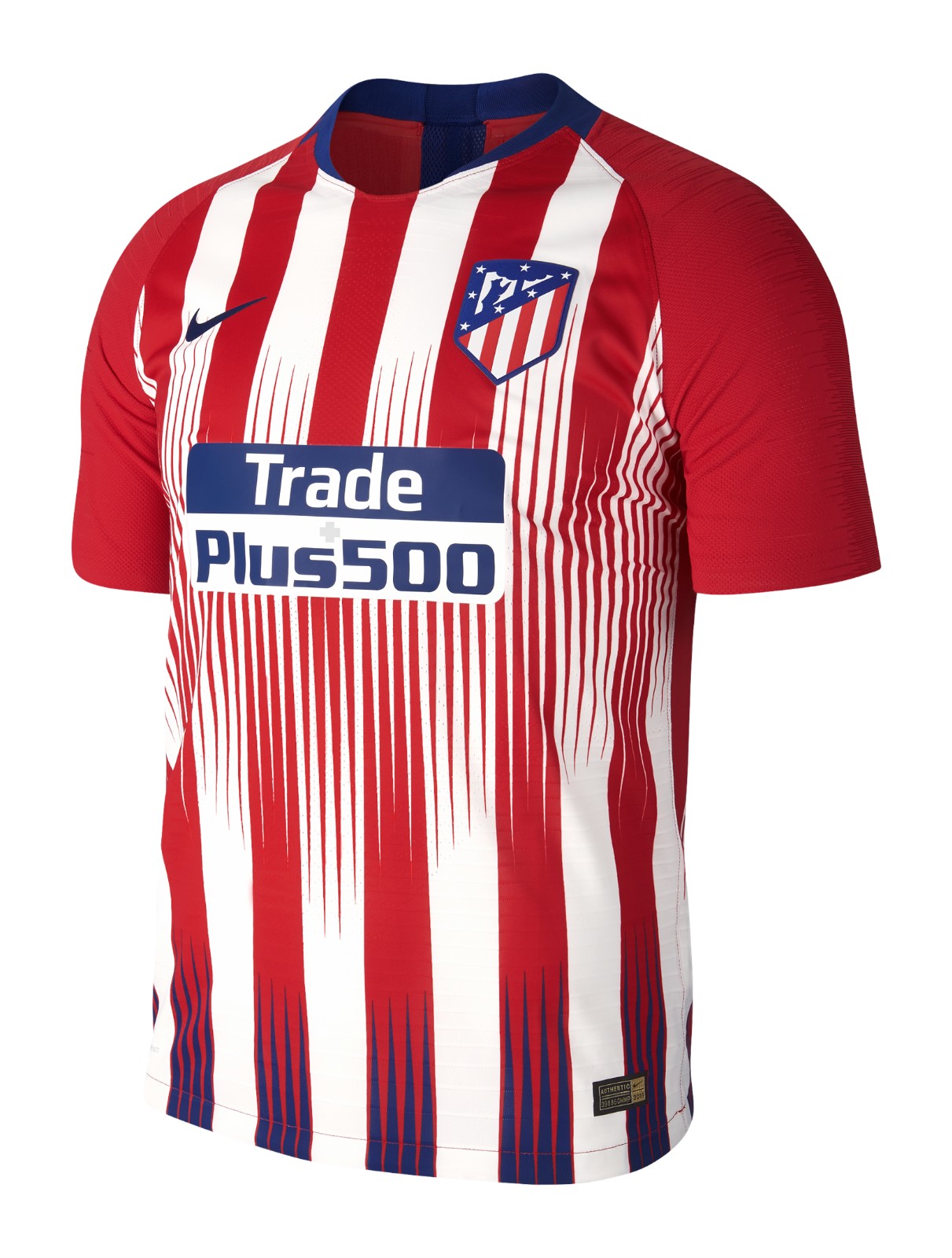
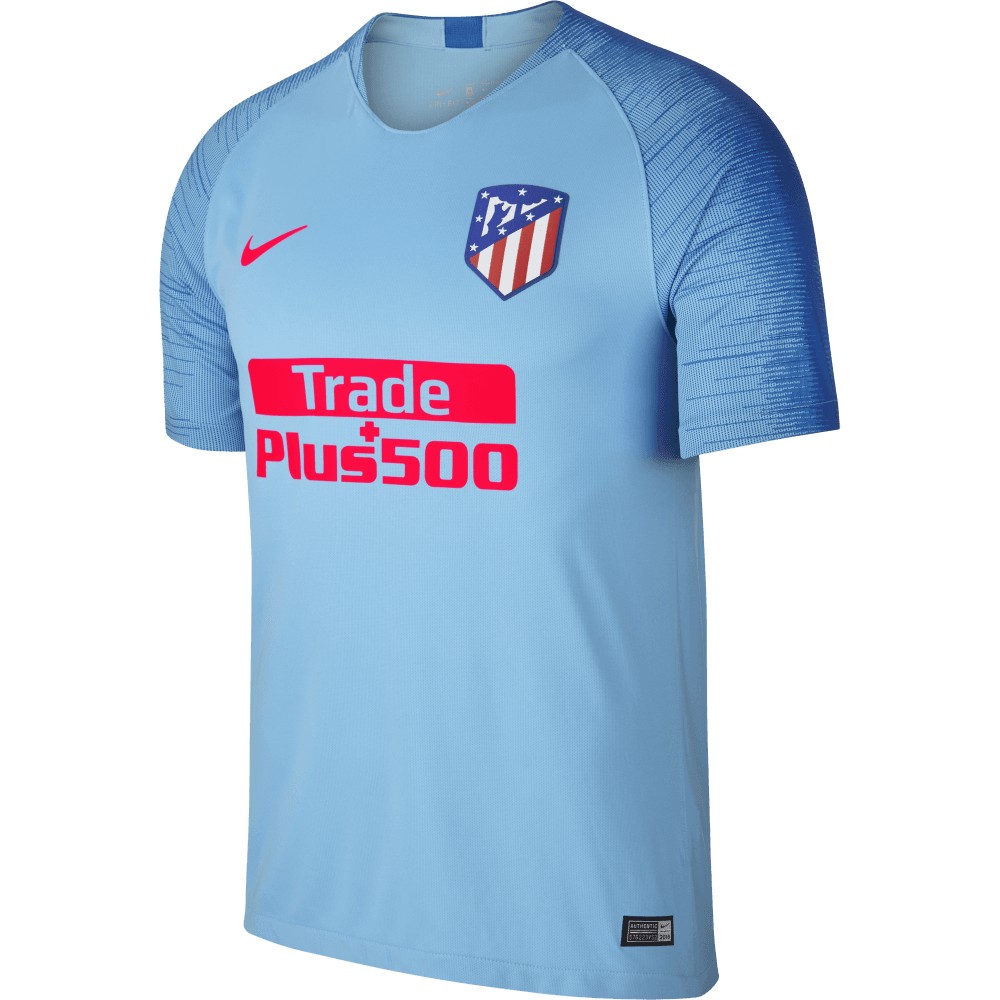
2018/19
FinishedJul 2018 – May 2019
Home
Away
place
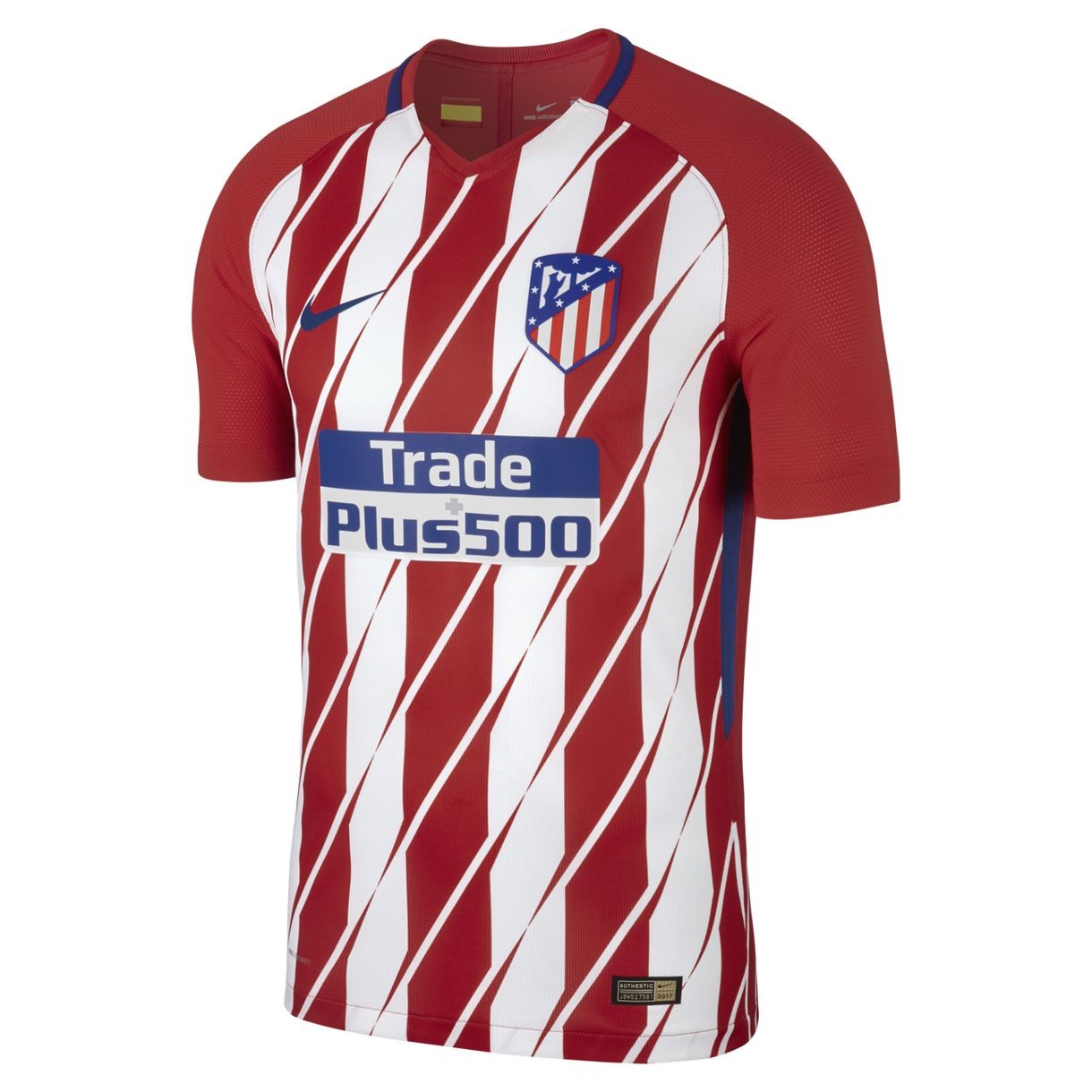
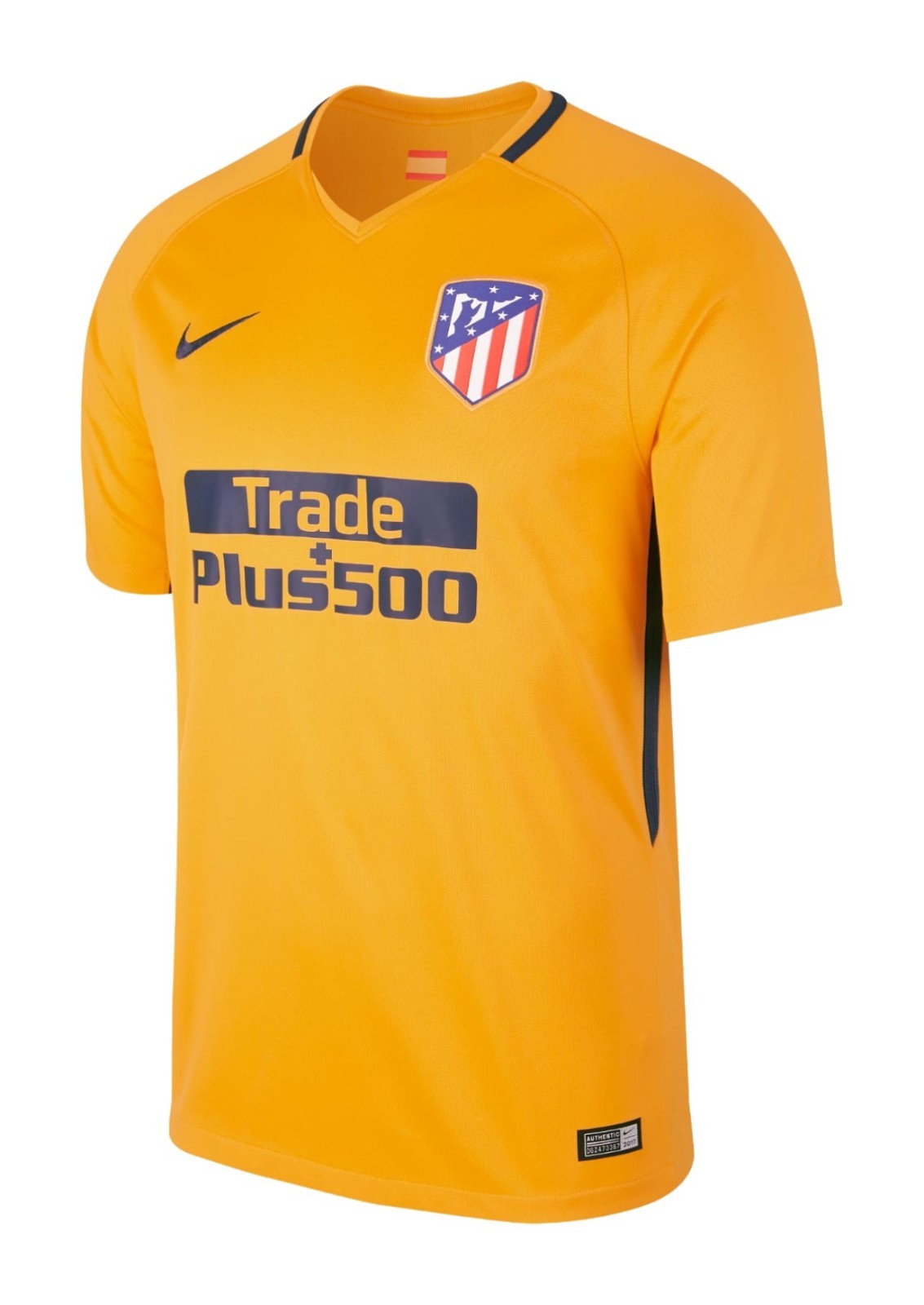
2017/18
FinishedJul 2017 – May 2018
Home
Away
place
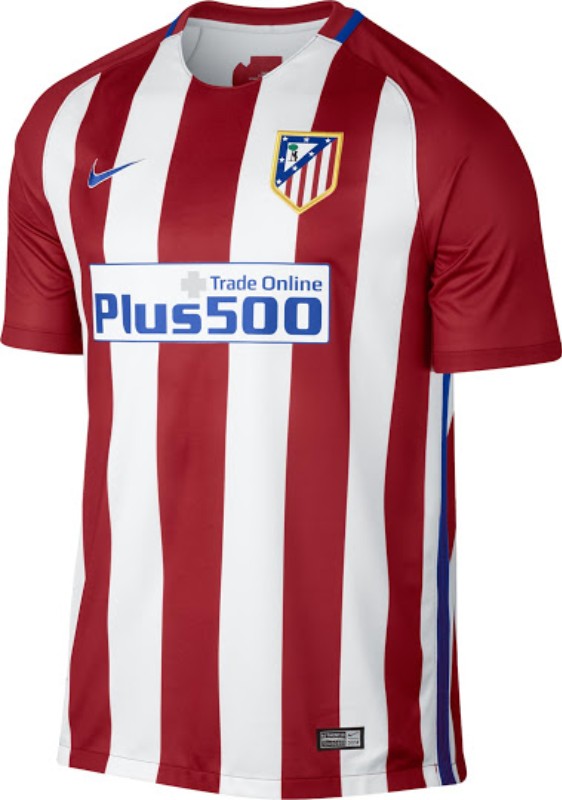
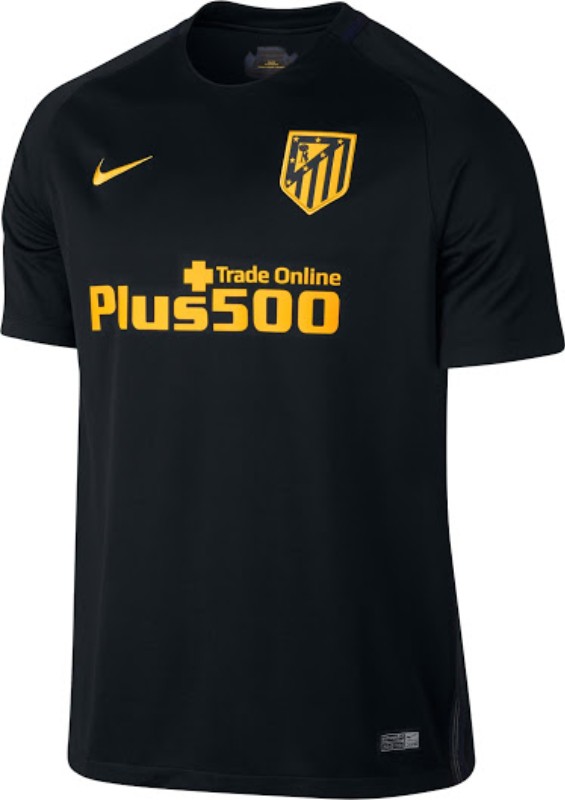
2016/17
FinishedJul 2016 – May 2017
Home
Away
place
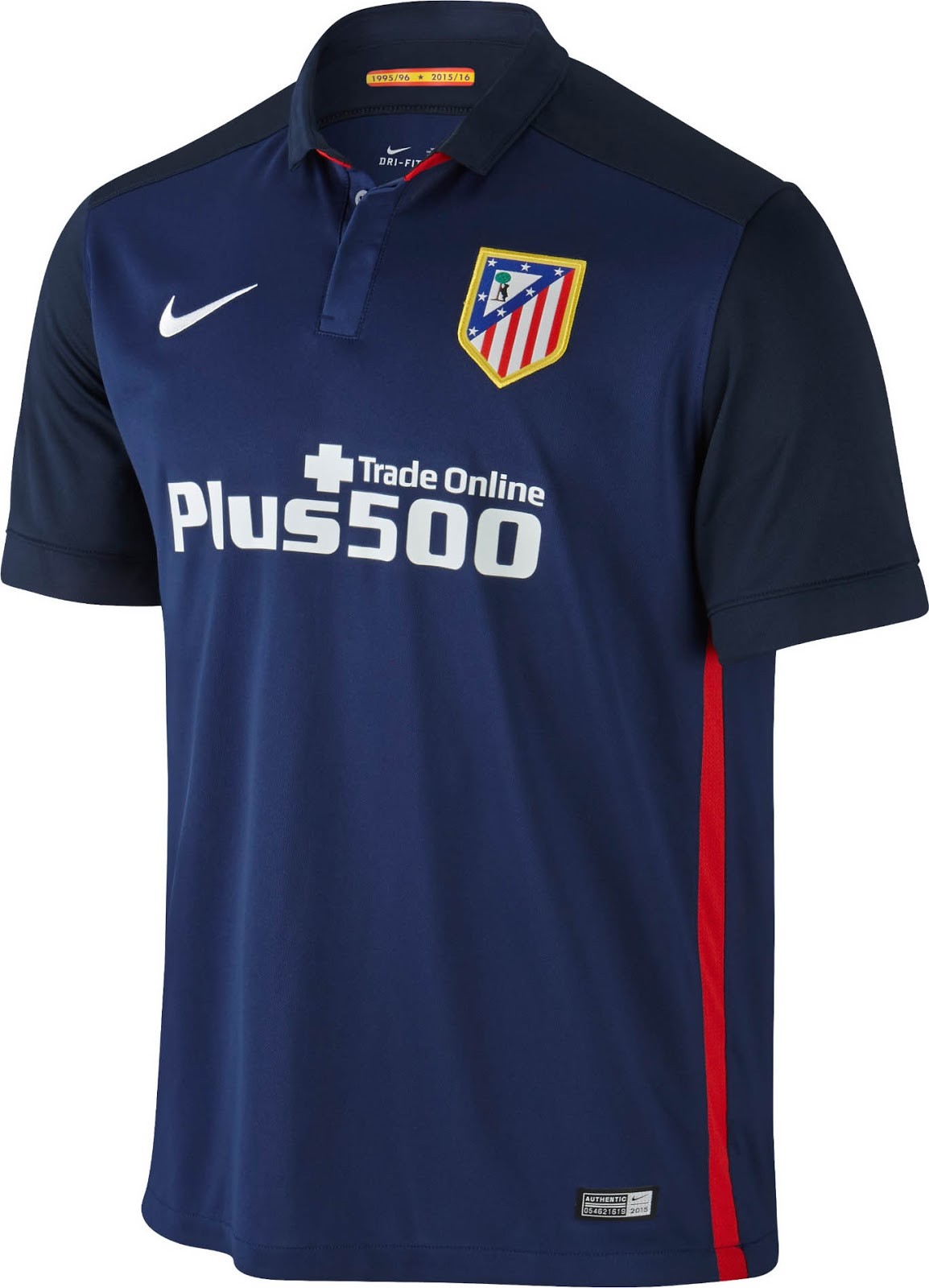
2015/16
FinishedJul 2015 – May 2016
Home
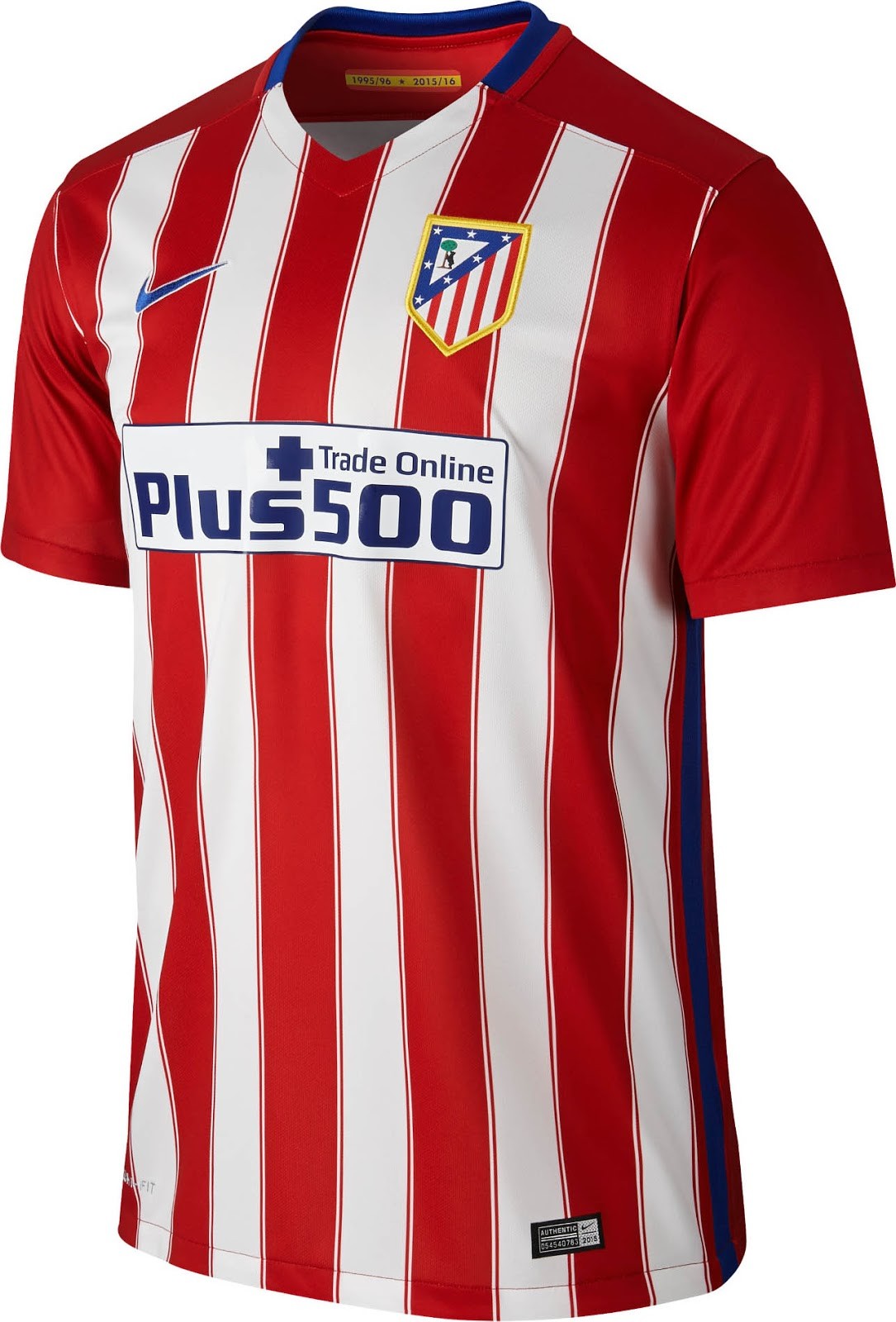
Away
place
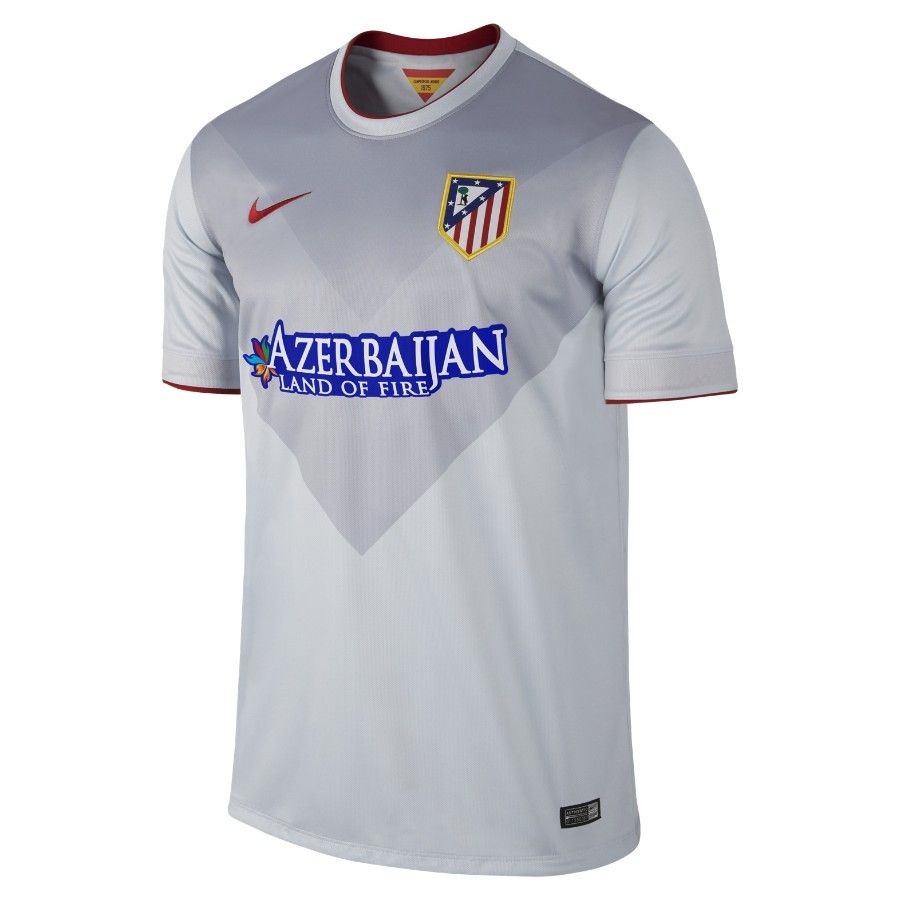
2014/15
FinishedJul 2014 – May 2015
Home
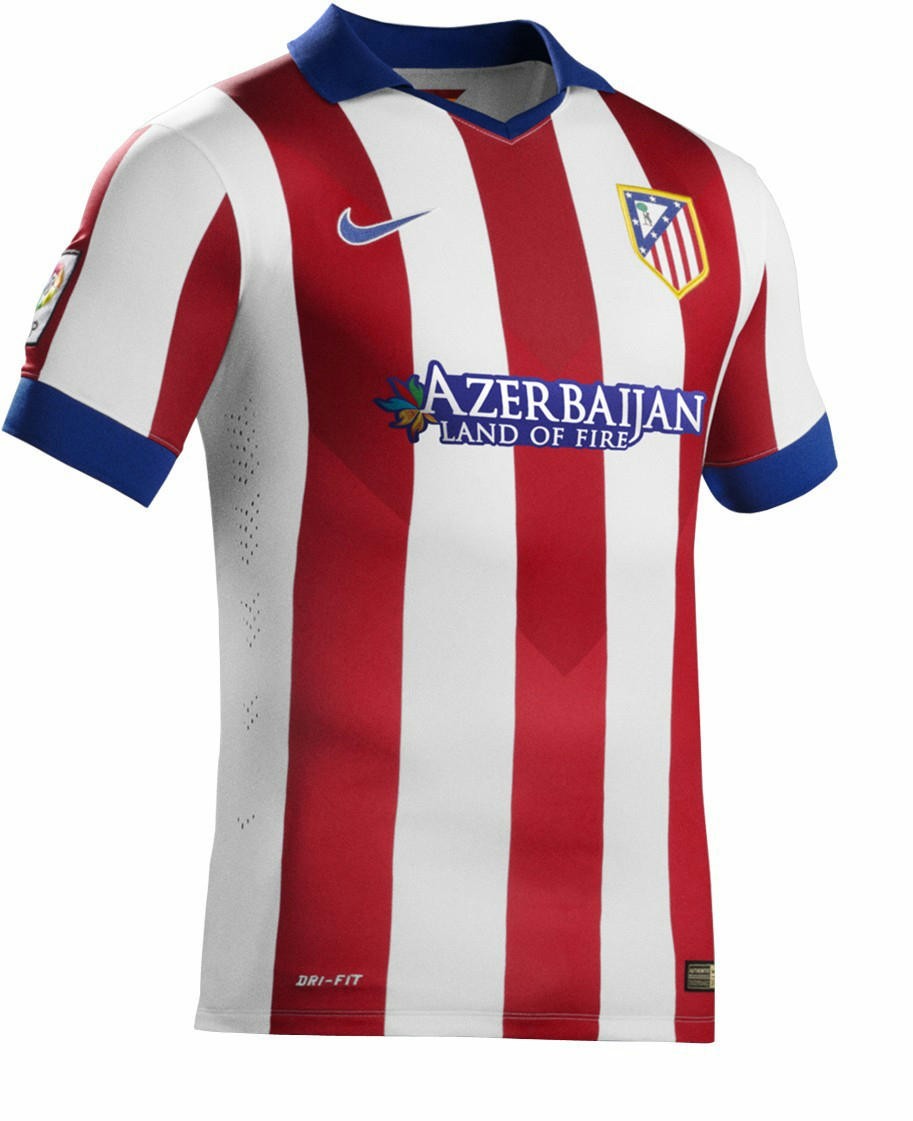
Away
place
2013/14
FinishedJul 2013 – May 2014
Home
Away
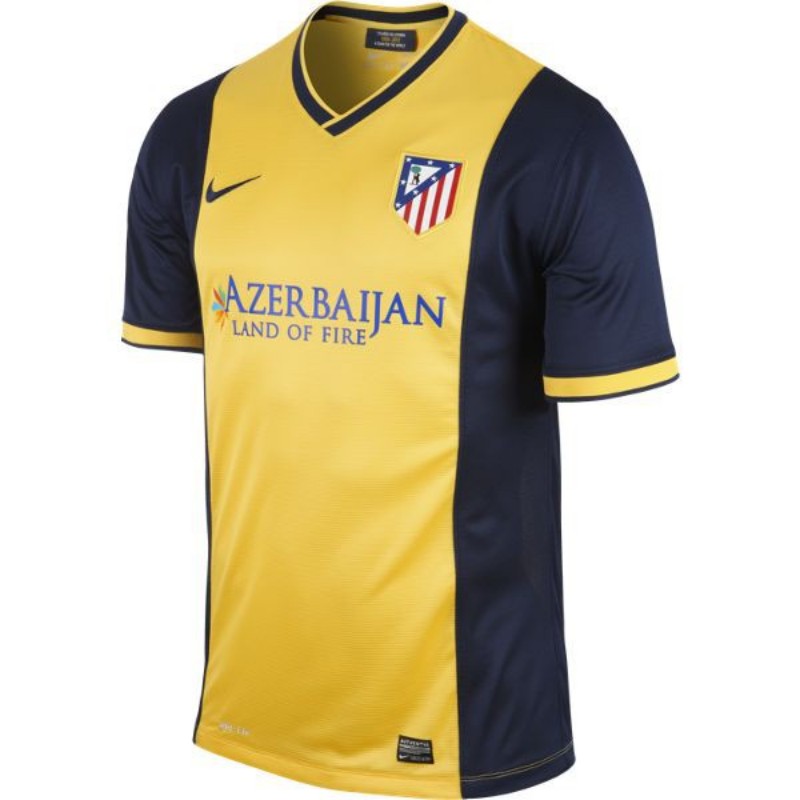
Champions
2012/13
FinishedJul 2012 – May 2013
Home
Away
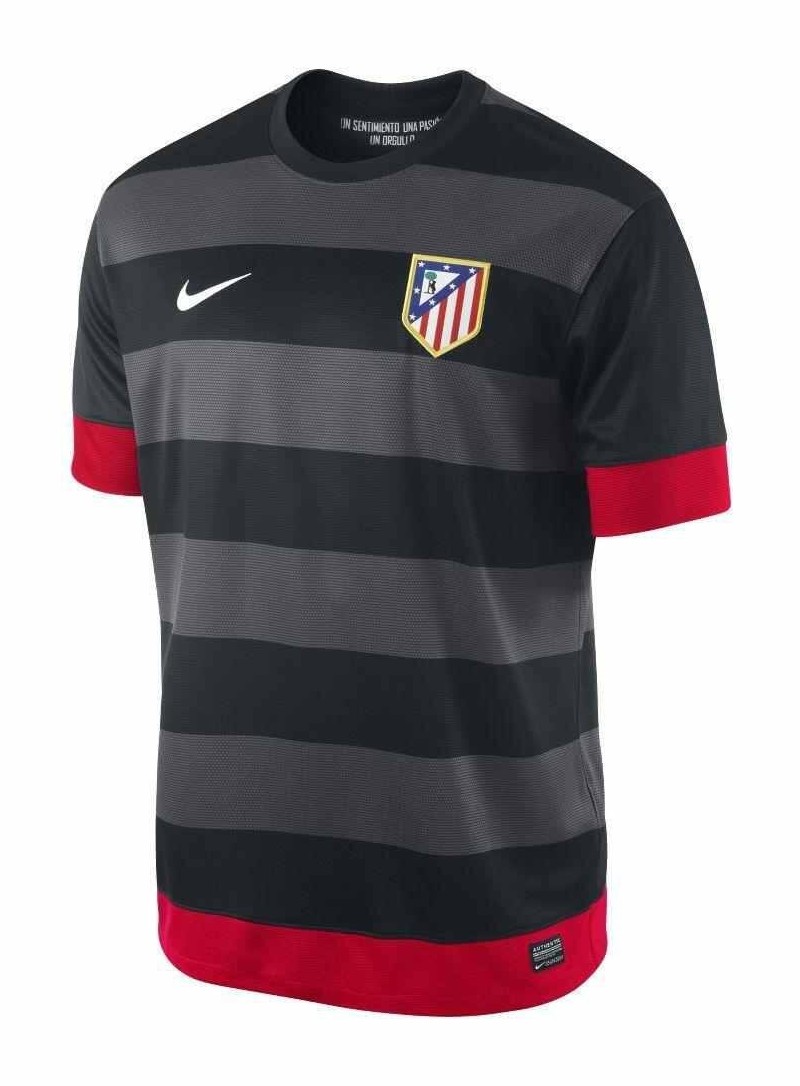
place
2011/12
FinishedJul 2011 – May 2012
Home
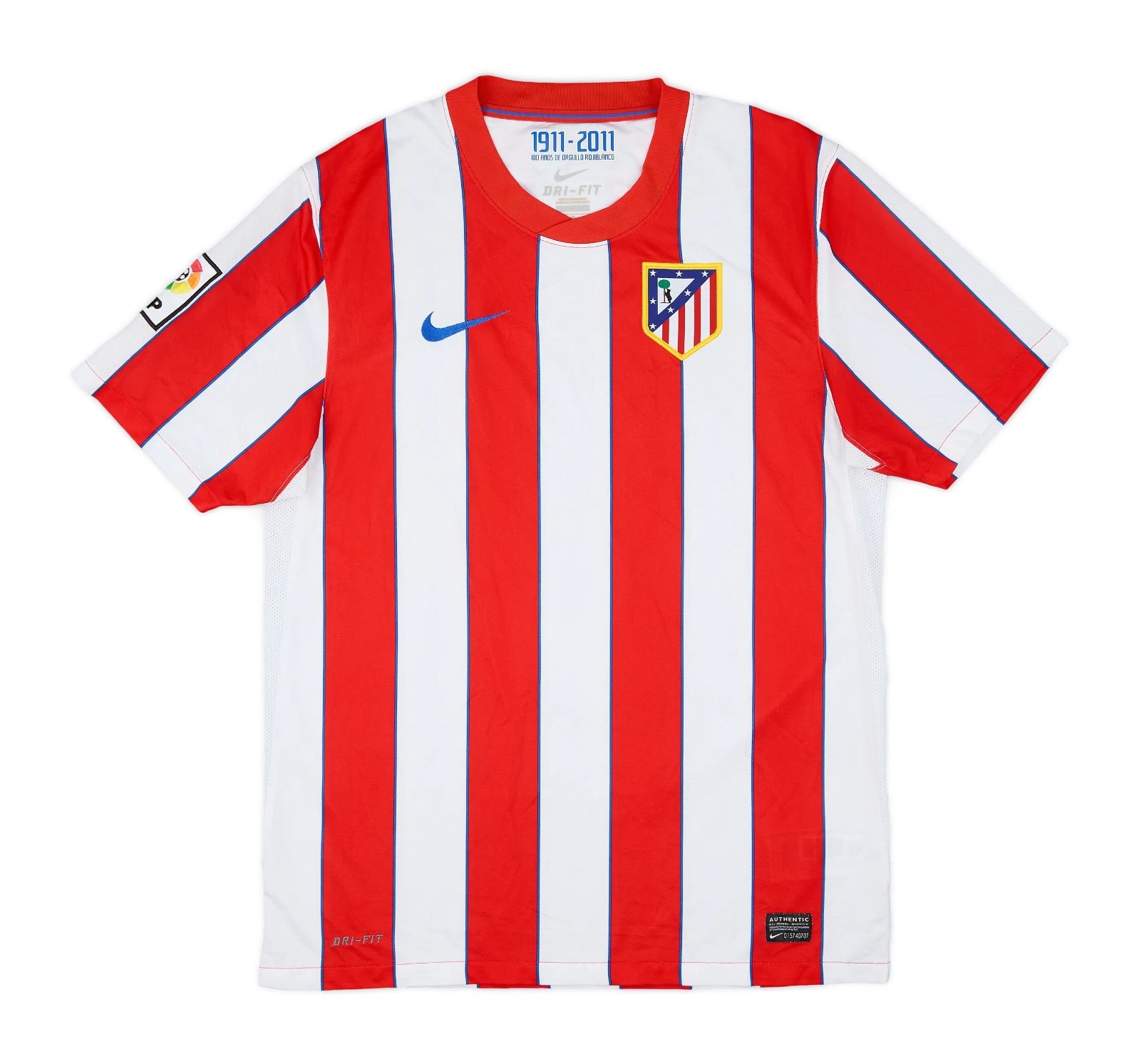
Away
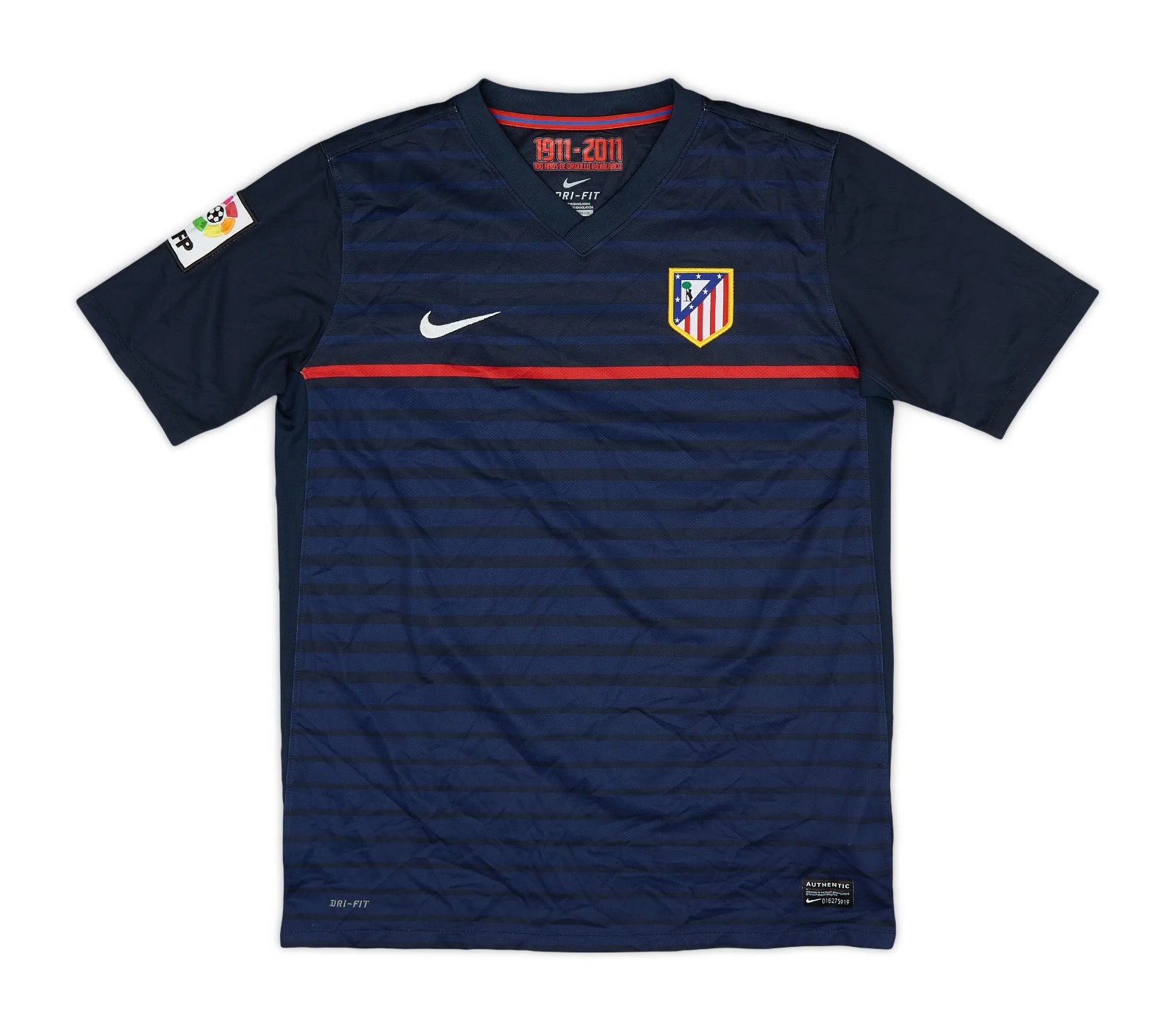
place
2010/11
FinishedJul 2010 – May 2011
Home
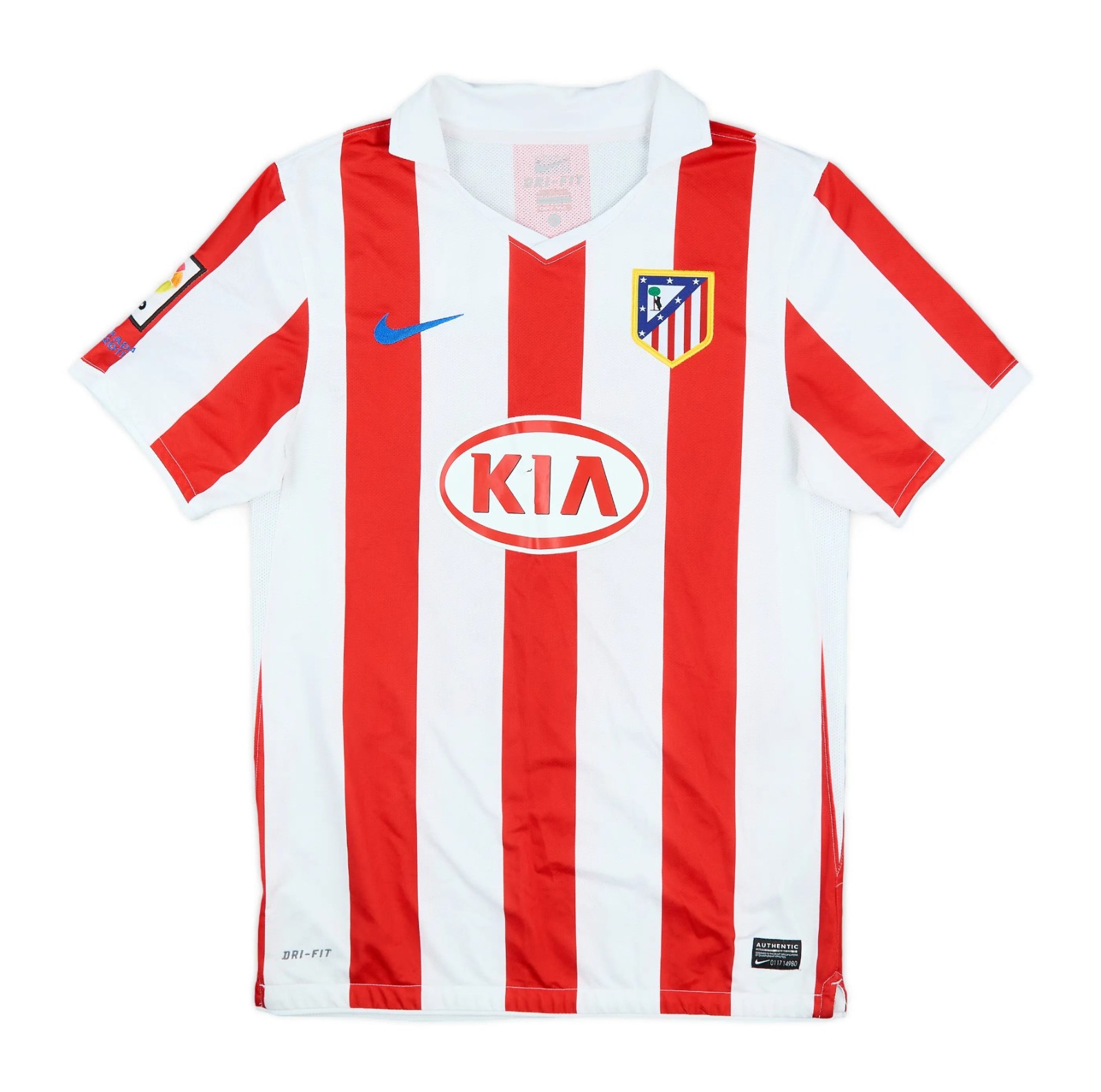
Away
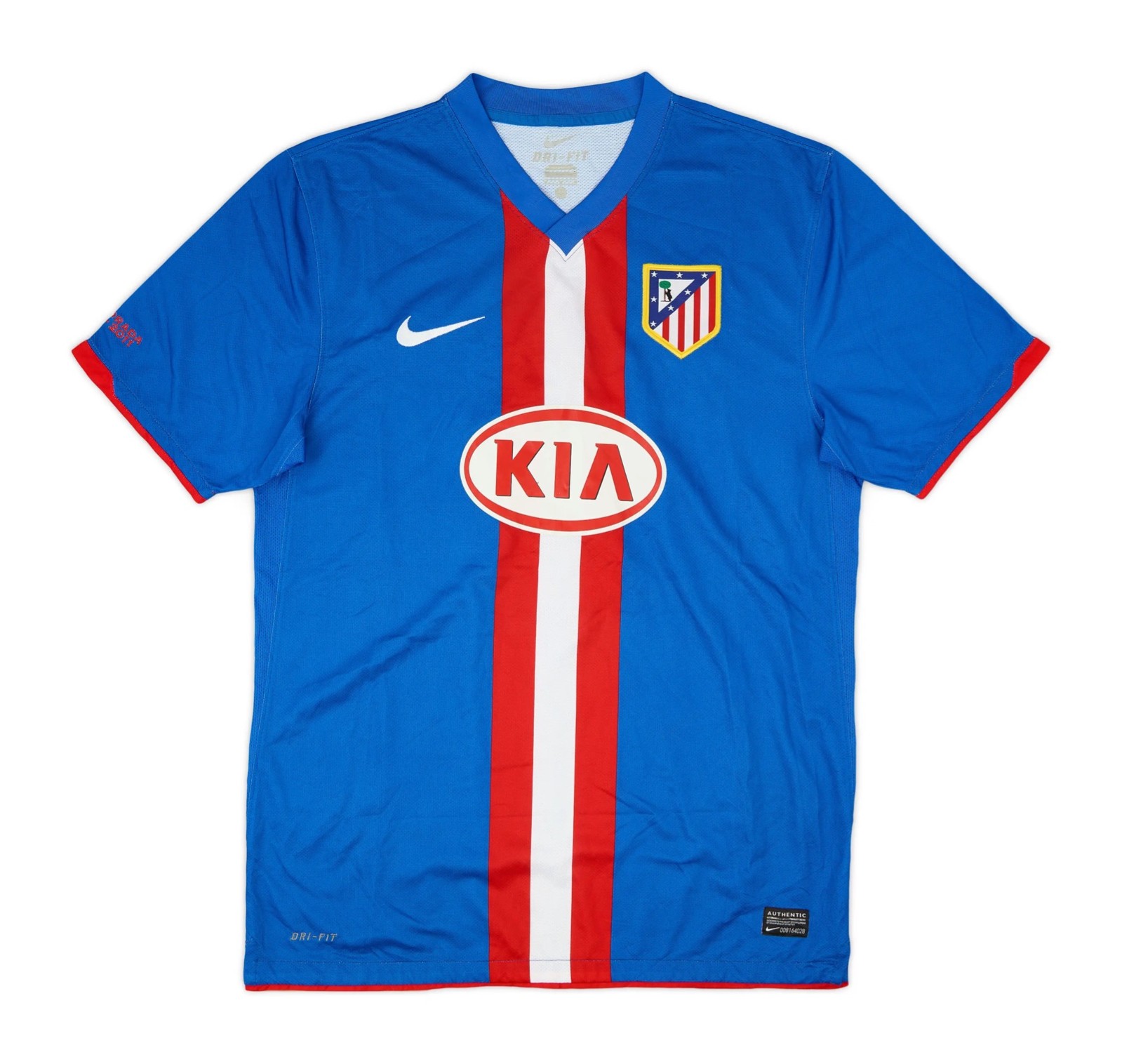
place
2009/10
FinishedHome
Away
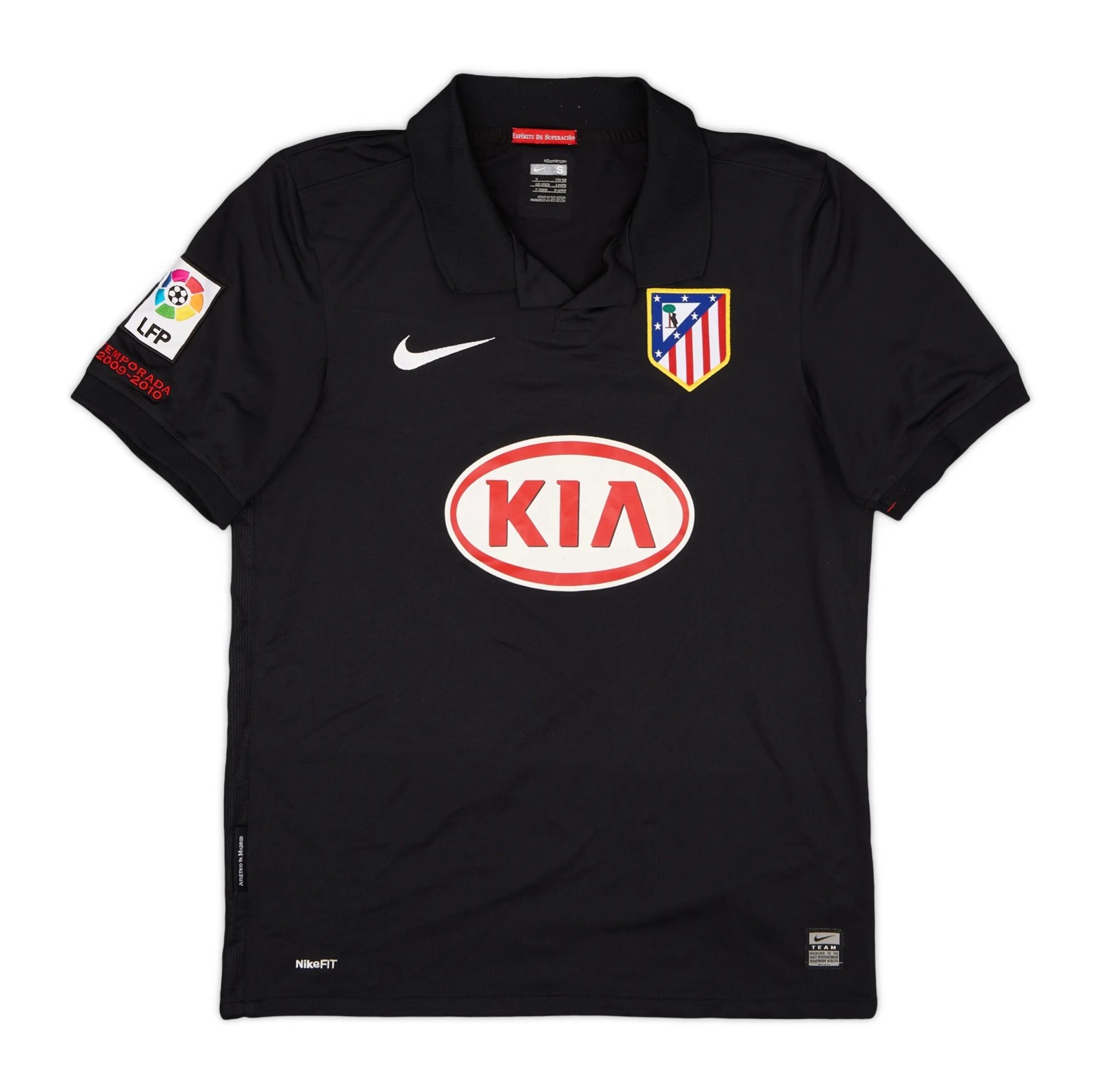
place
2008/09
FinishedHome
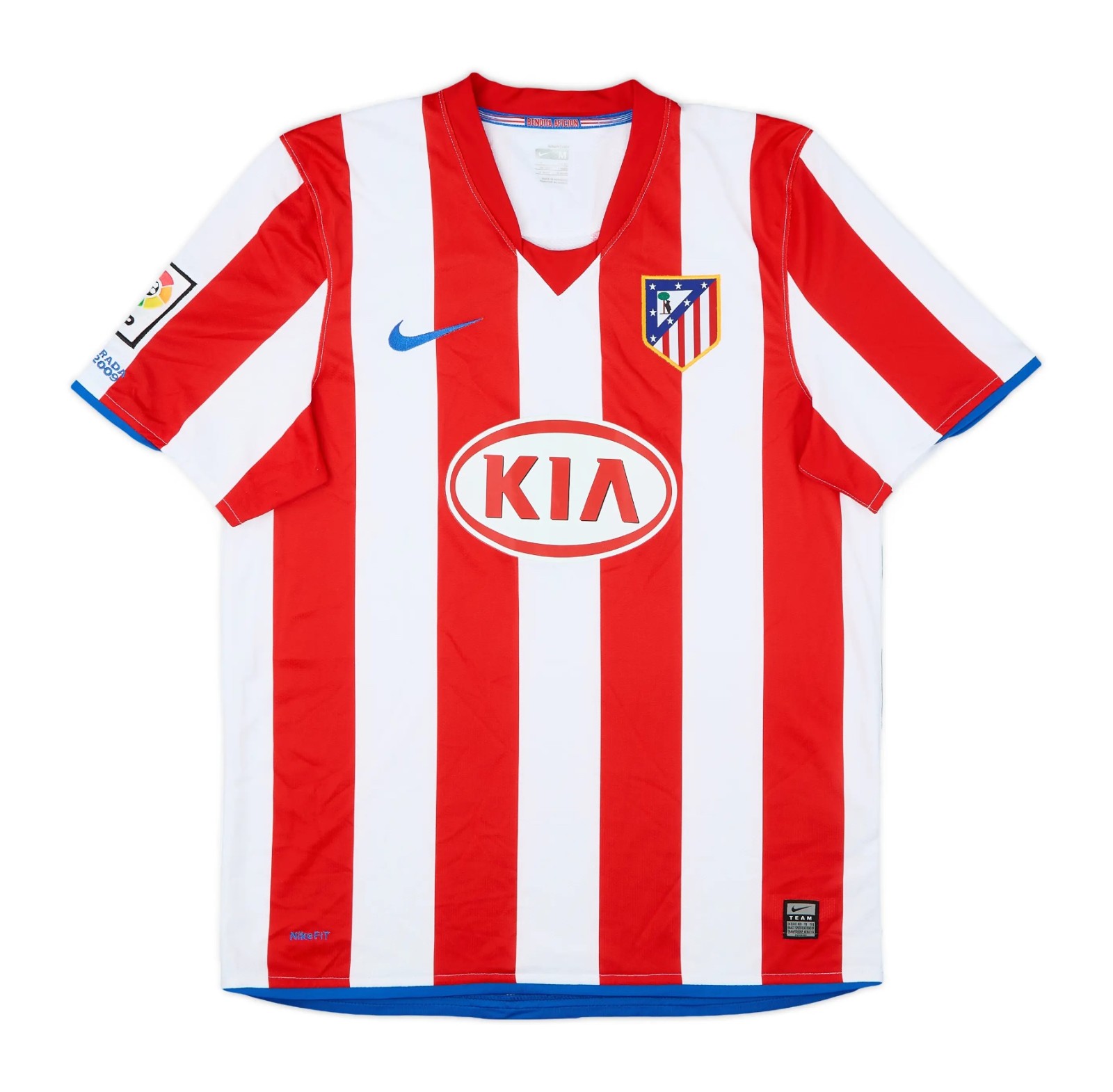
Away
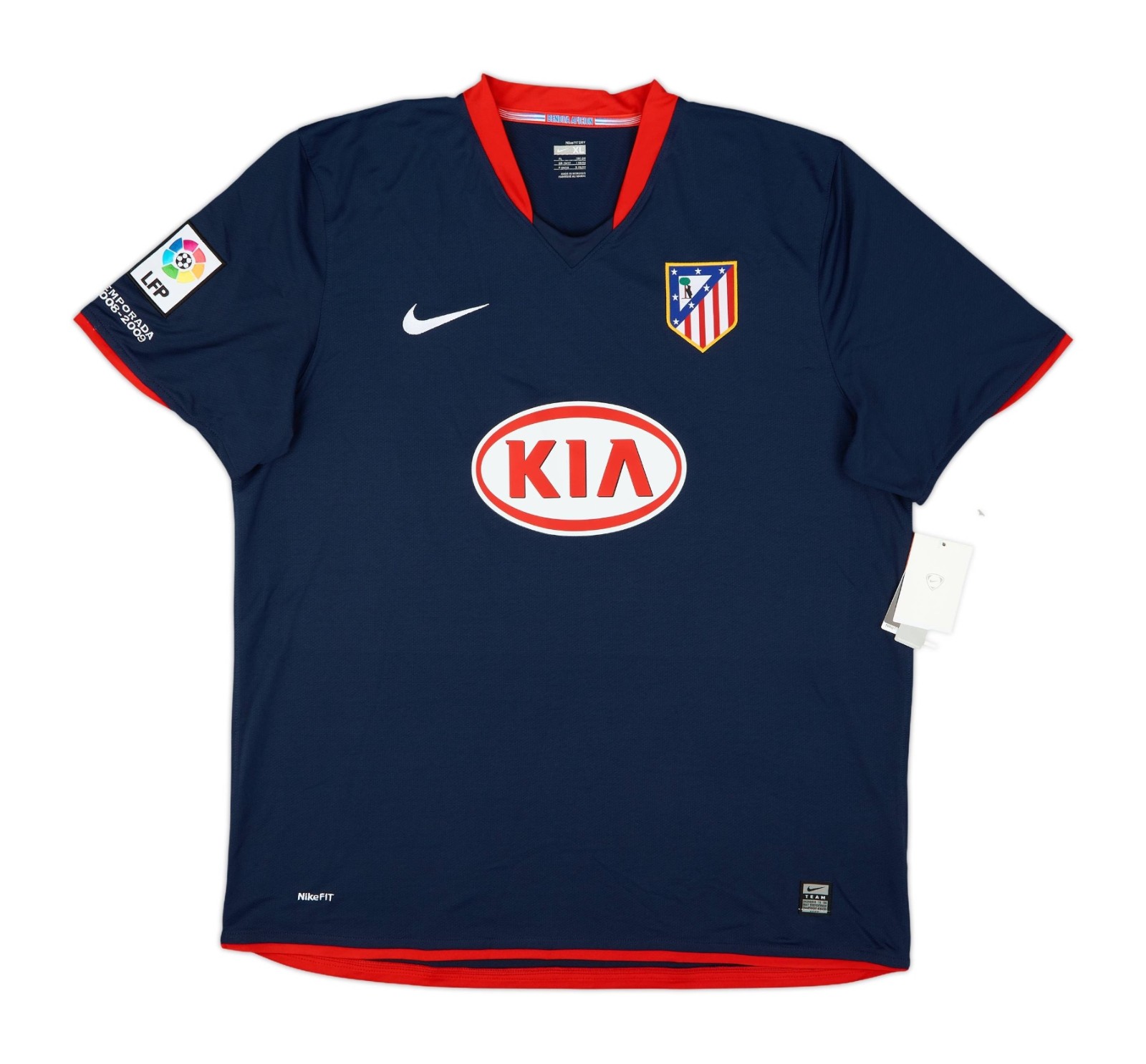
place
2007/08
FinishedHome
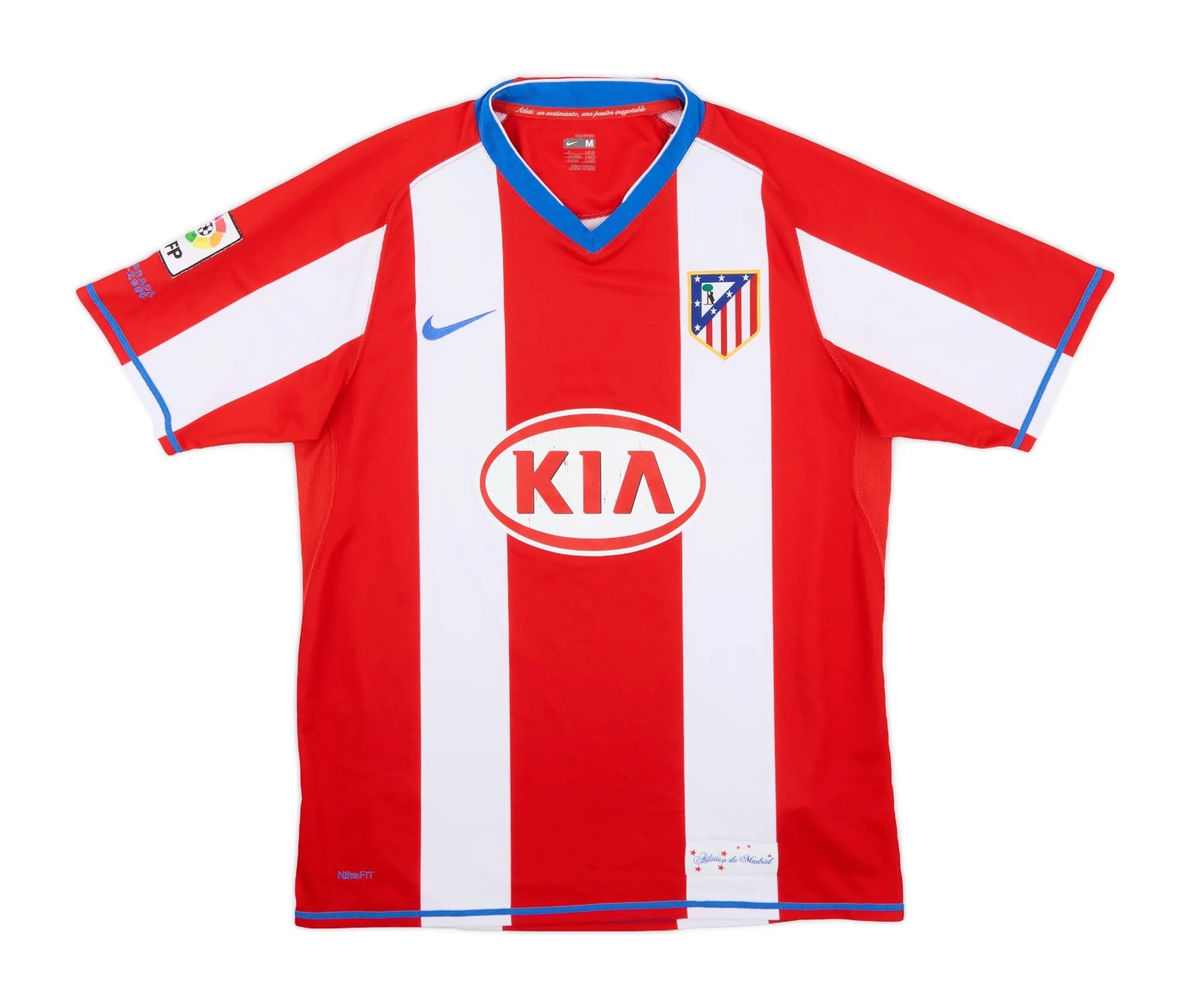
Away
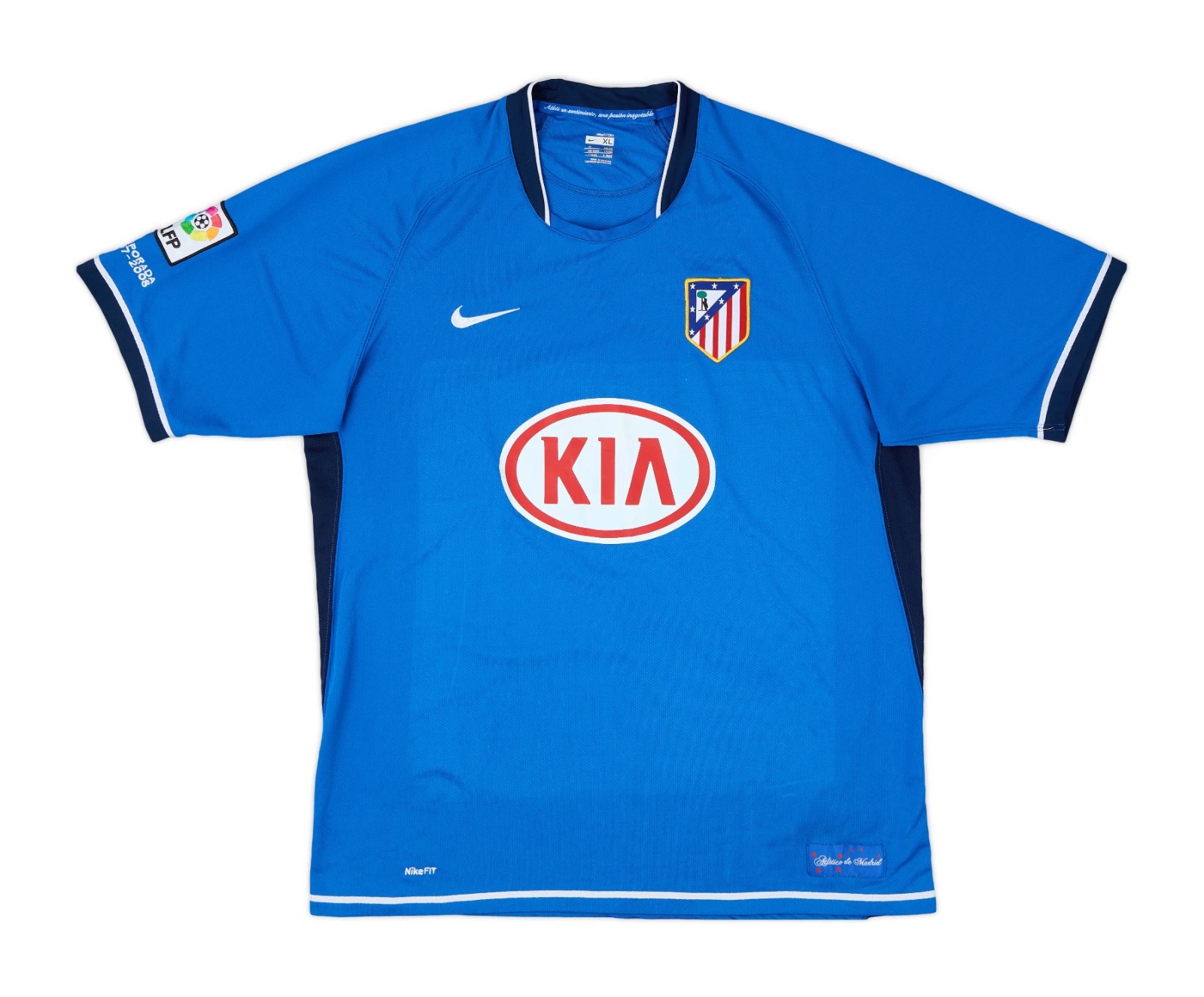
place
2006/07
FinishedHome
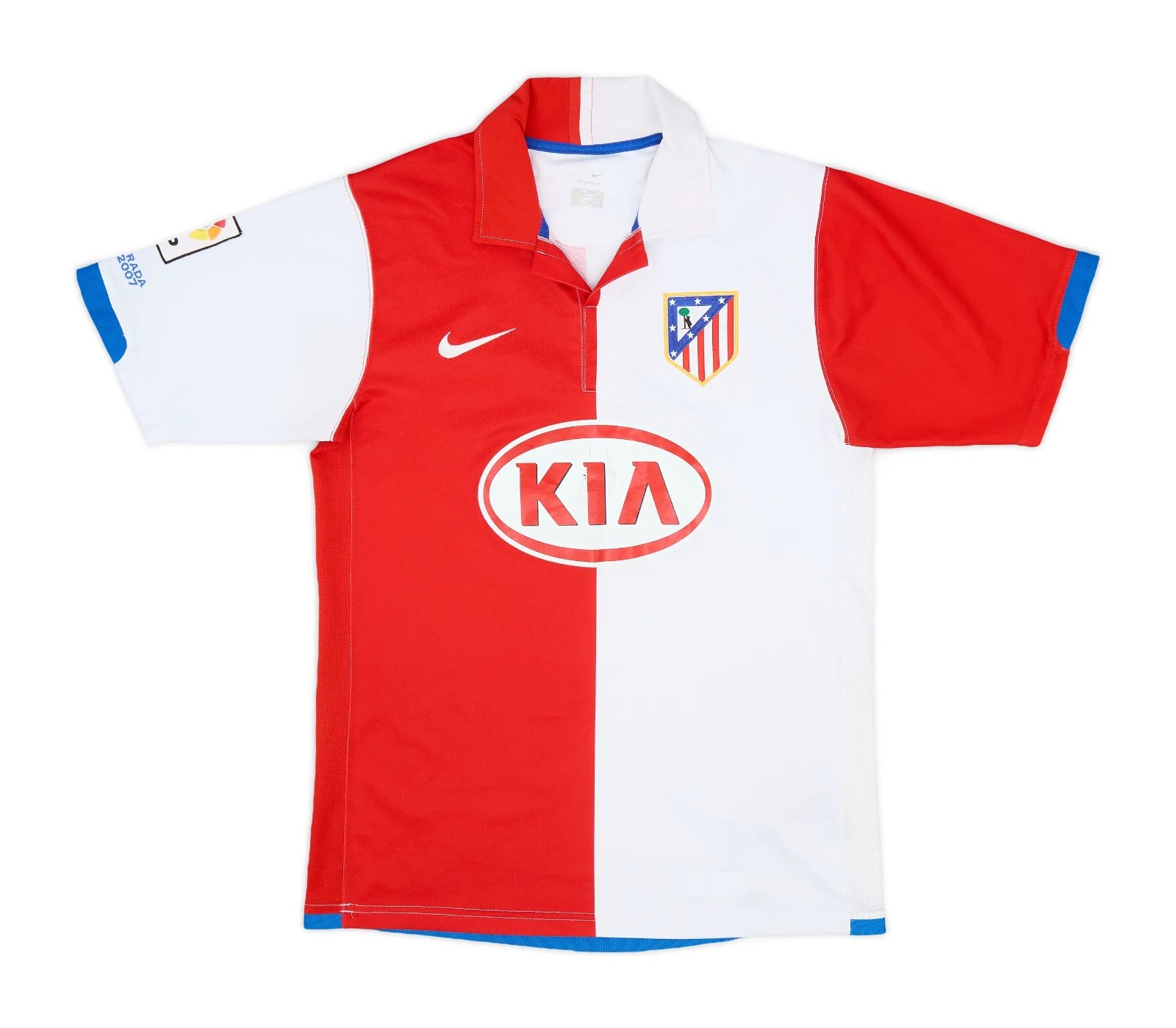
Away
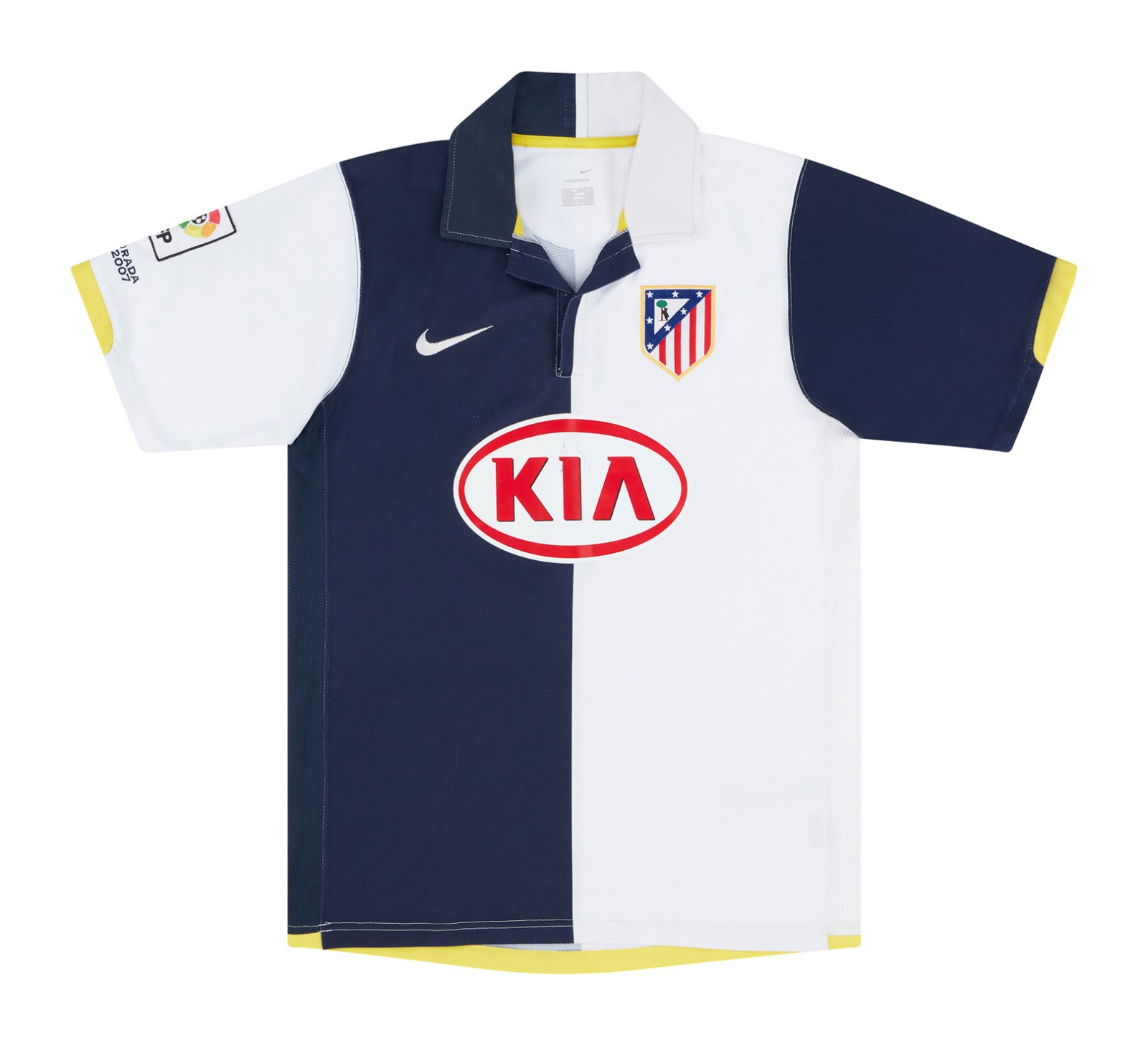
place
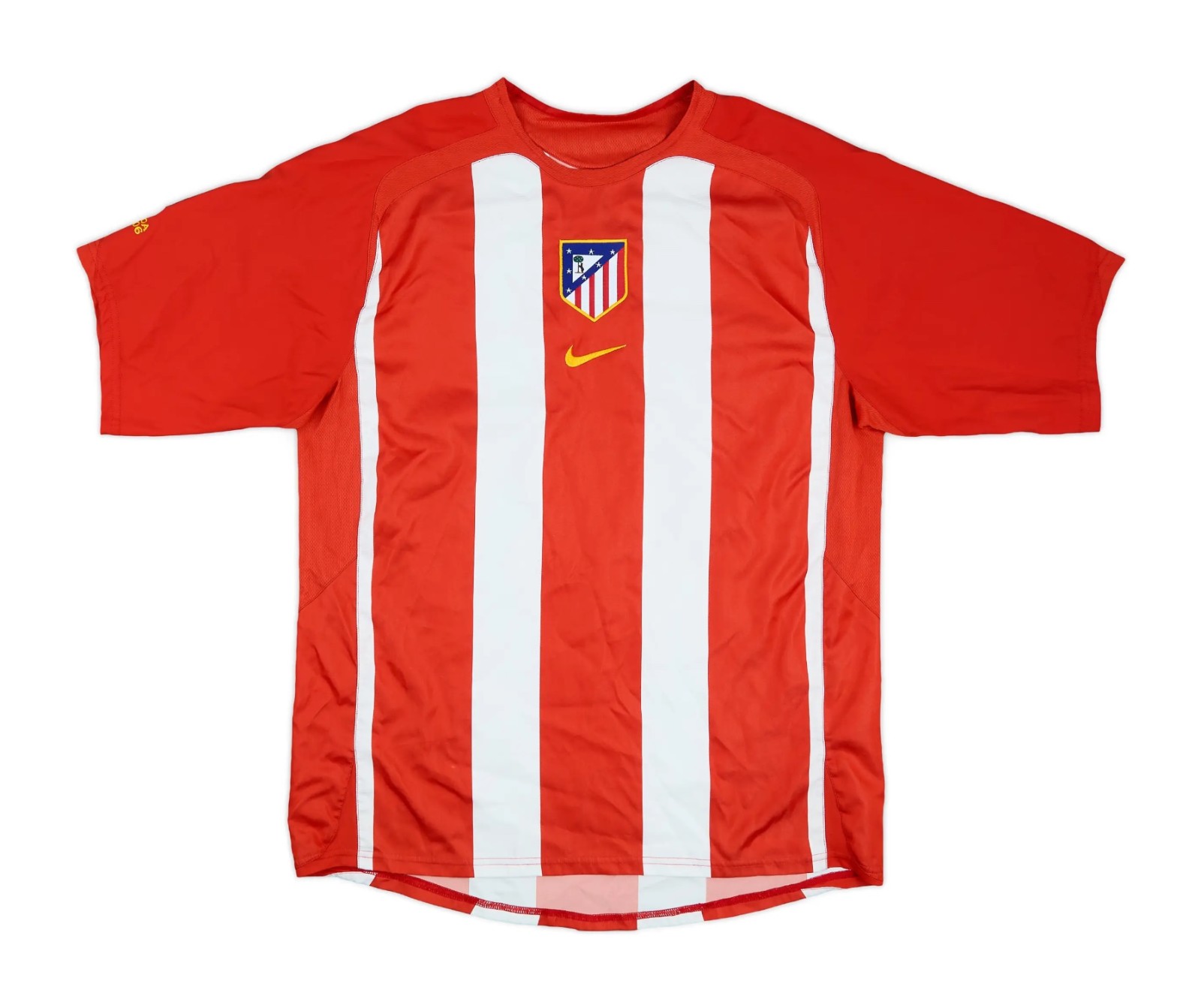
2005/06
FinishedHome
Away
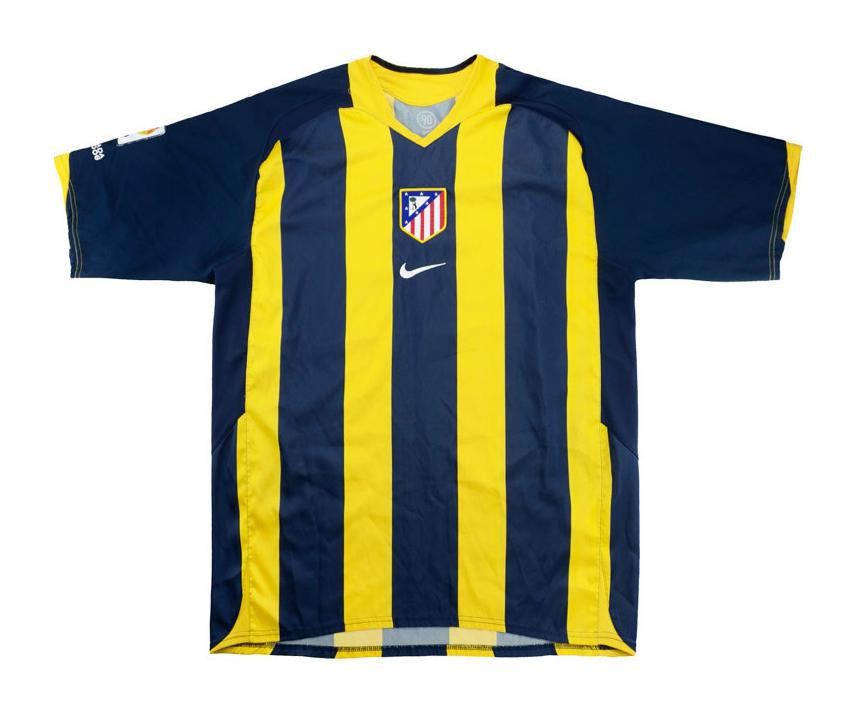
place
2004/05
FinishedHome
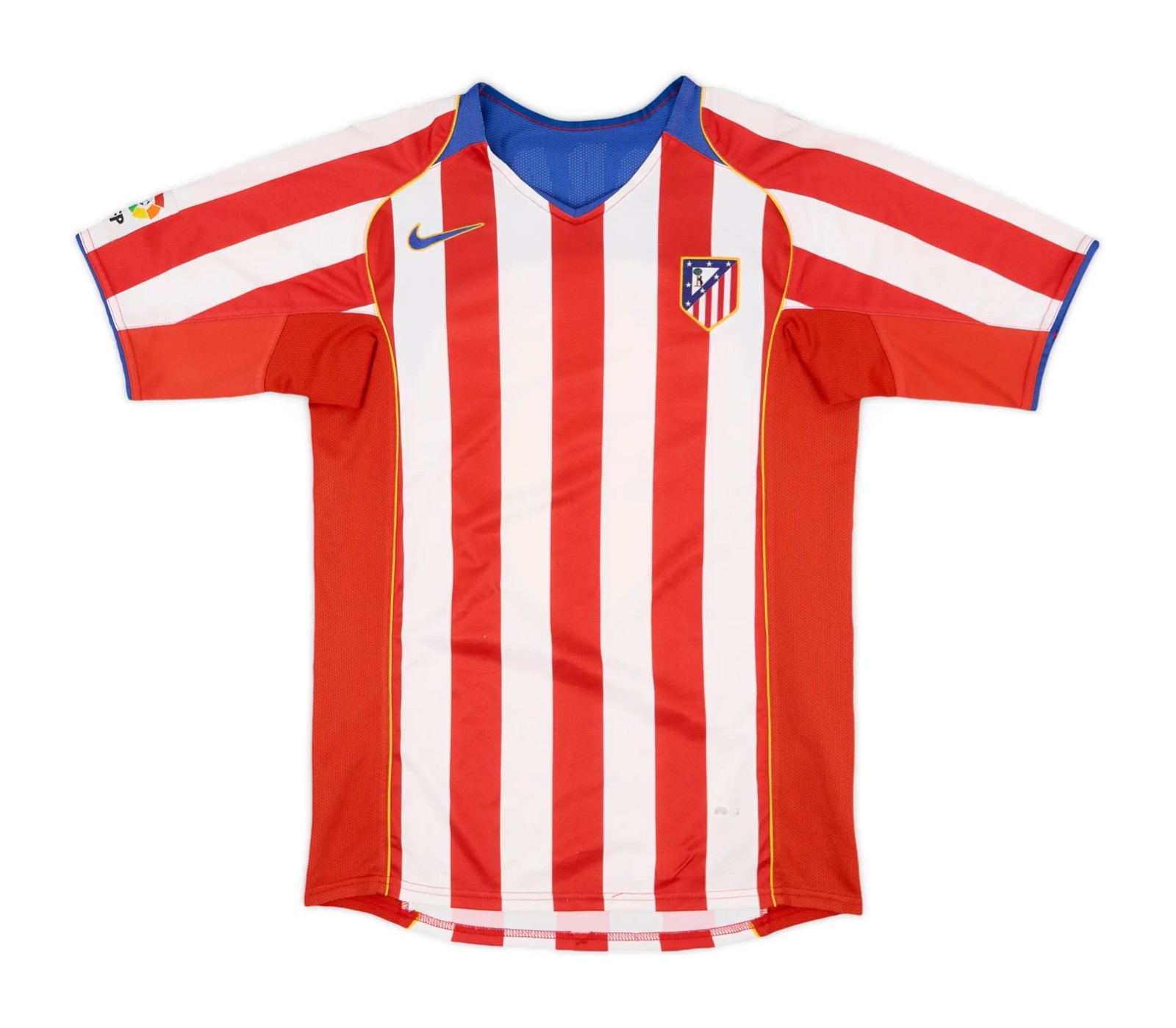
Away
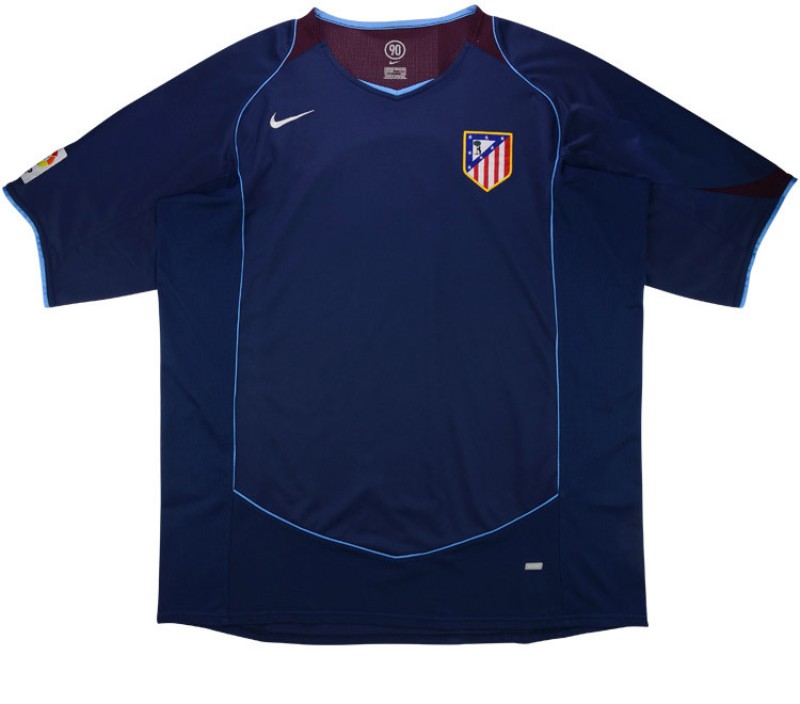
place
2003/04
FinishedHome
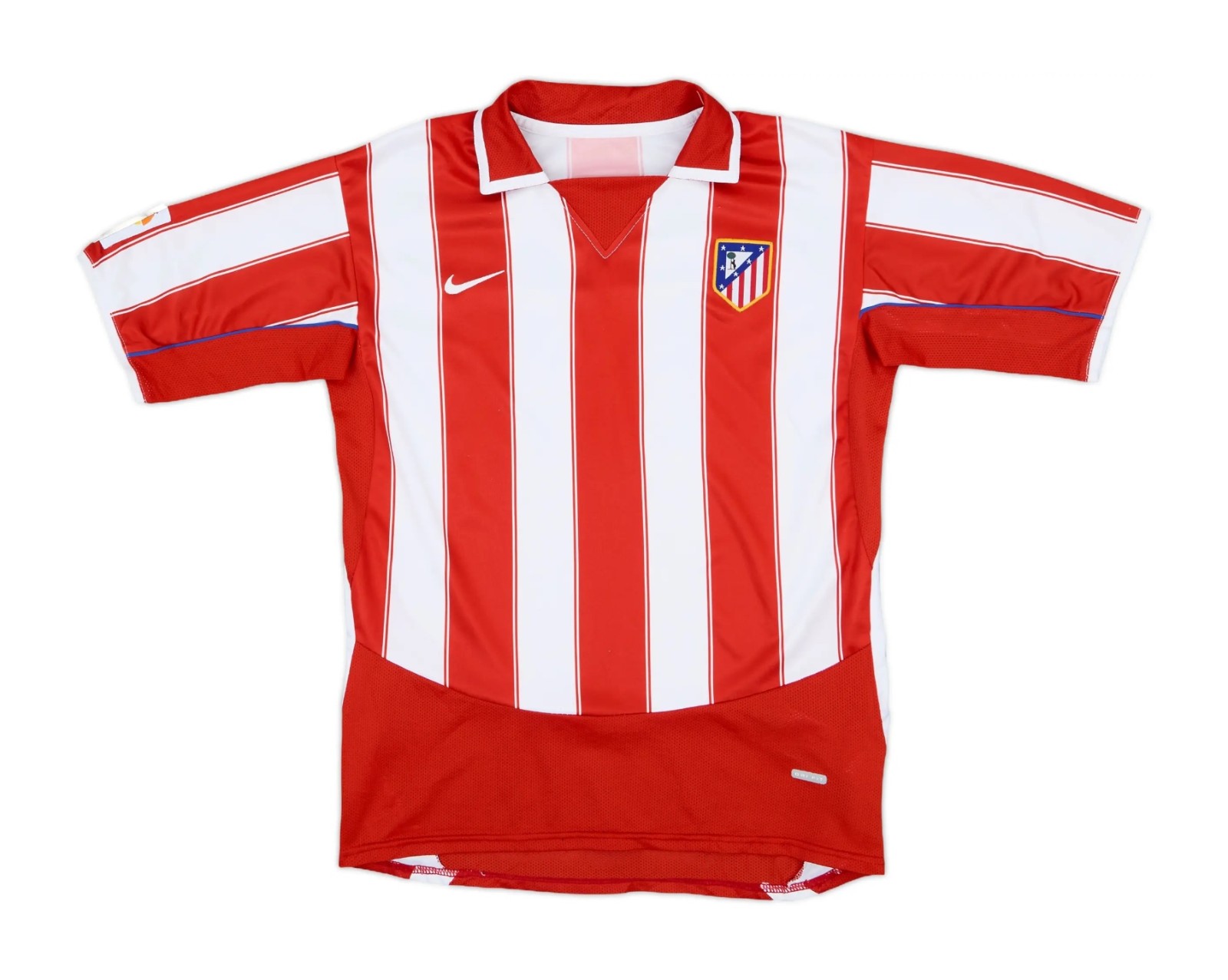
Away
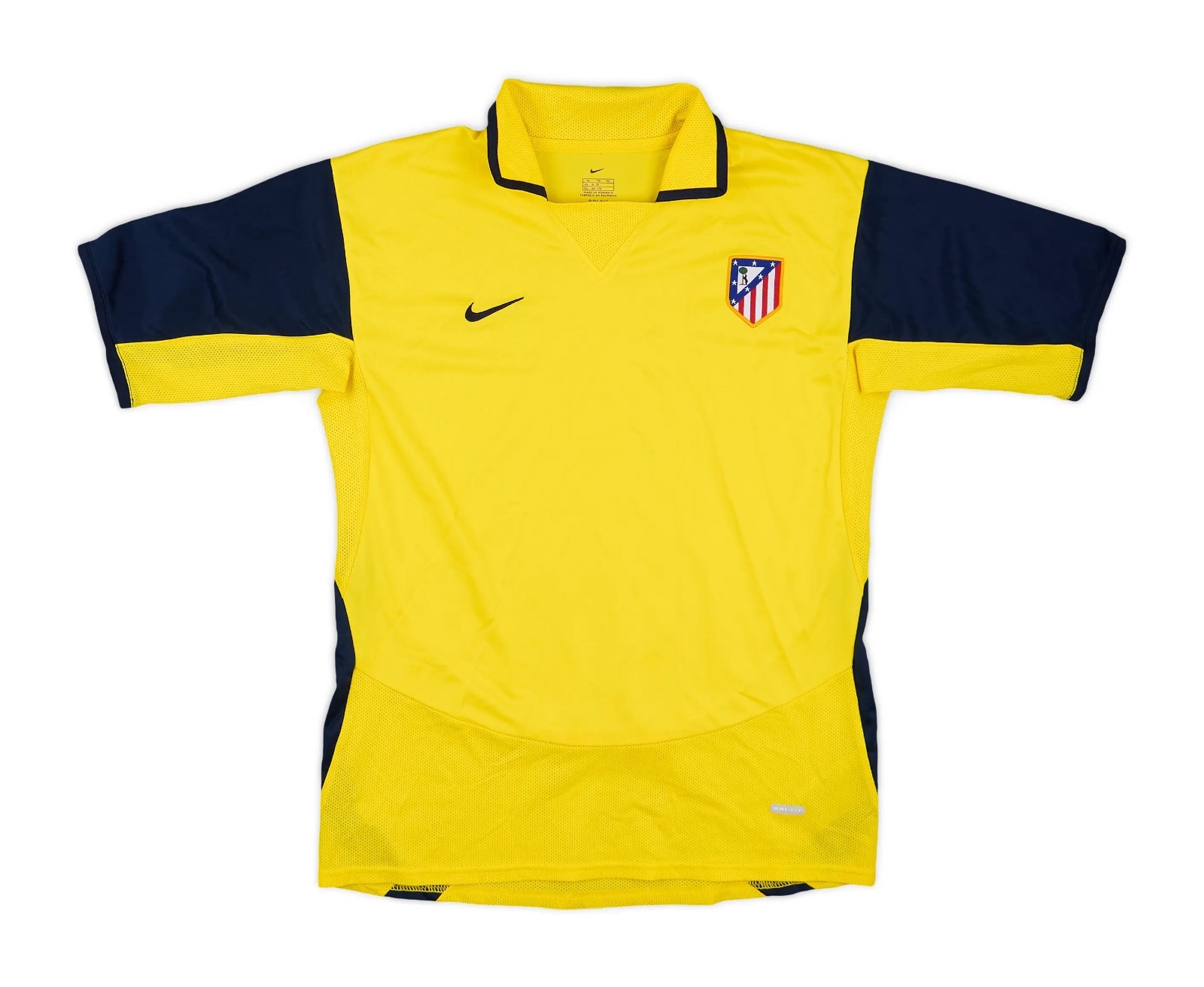
place
2002/03
FinishedHome
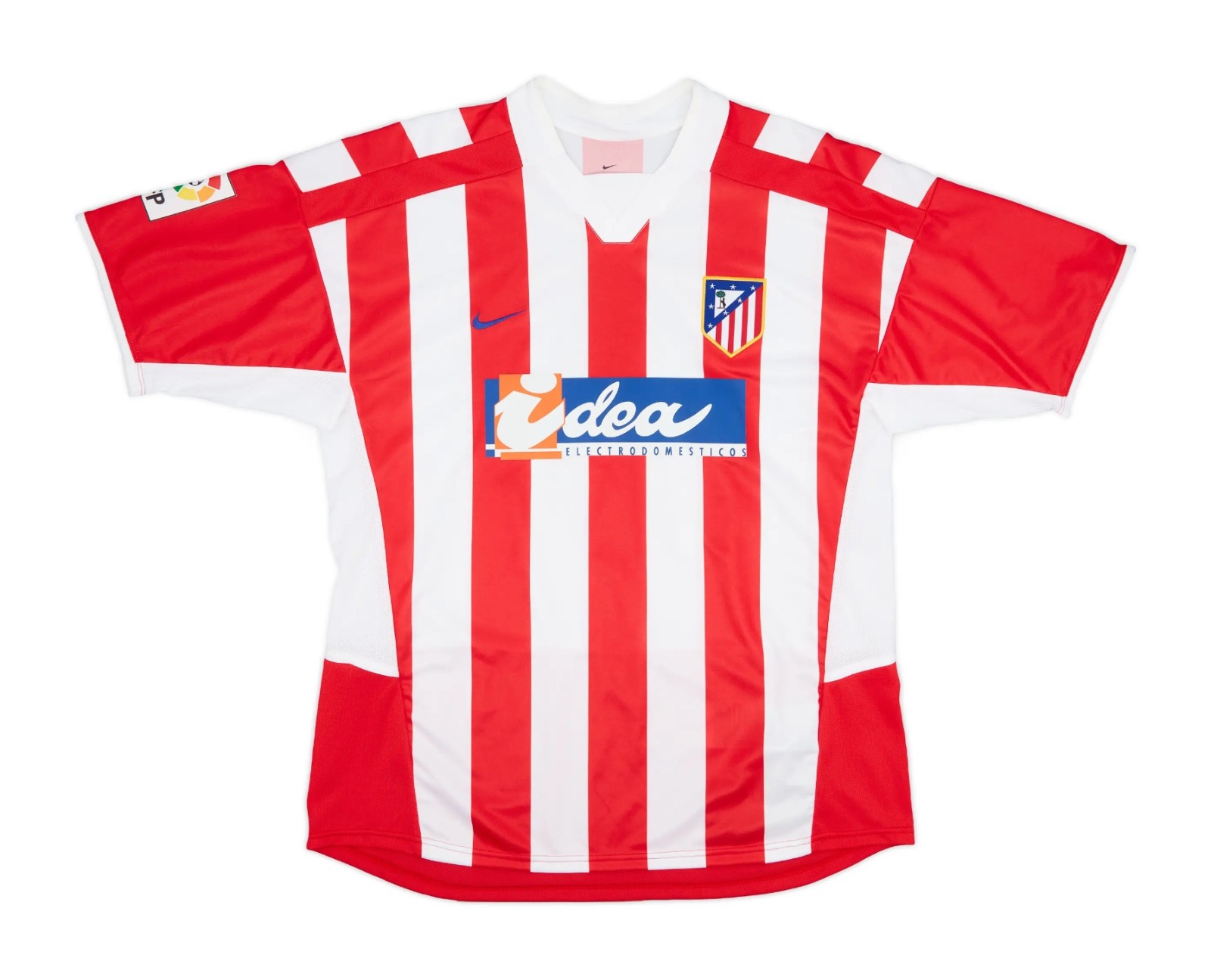
Away
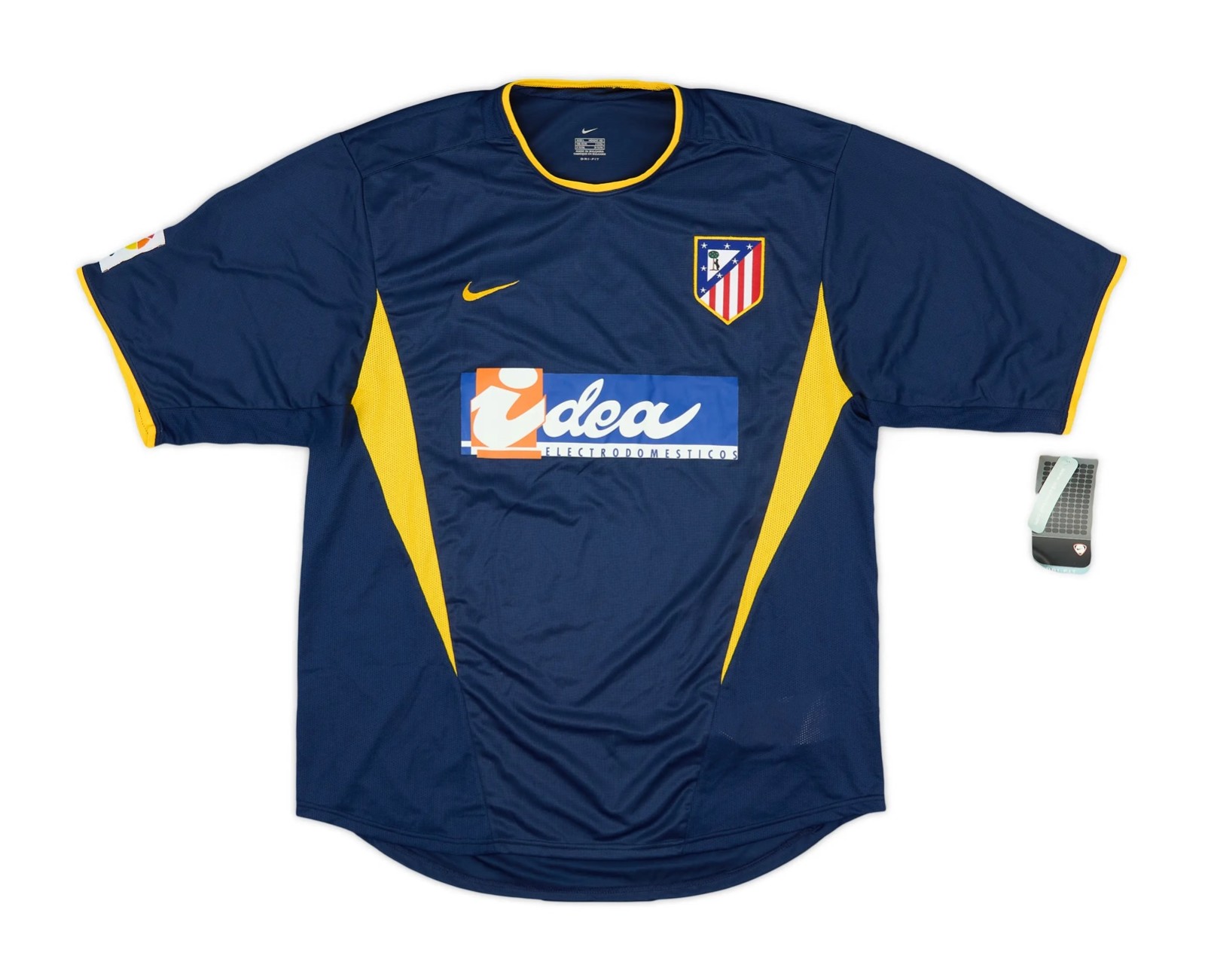
place
1999/00
FinishedHome
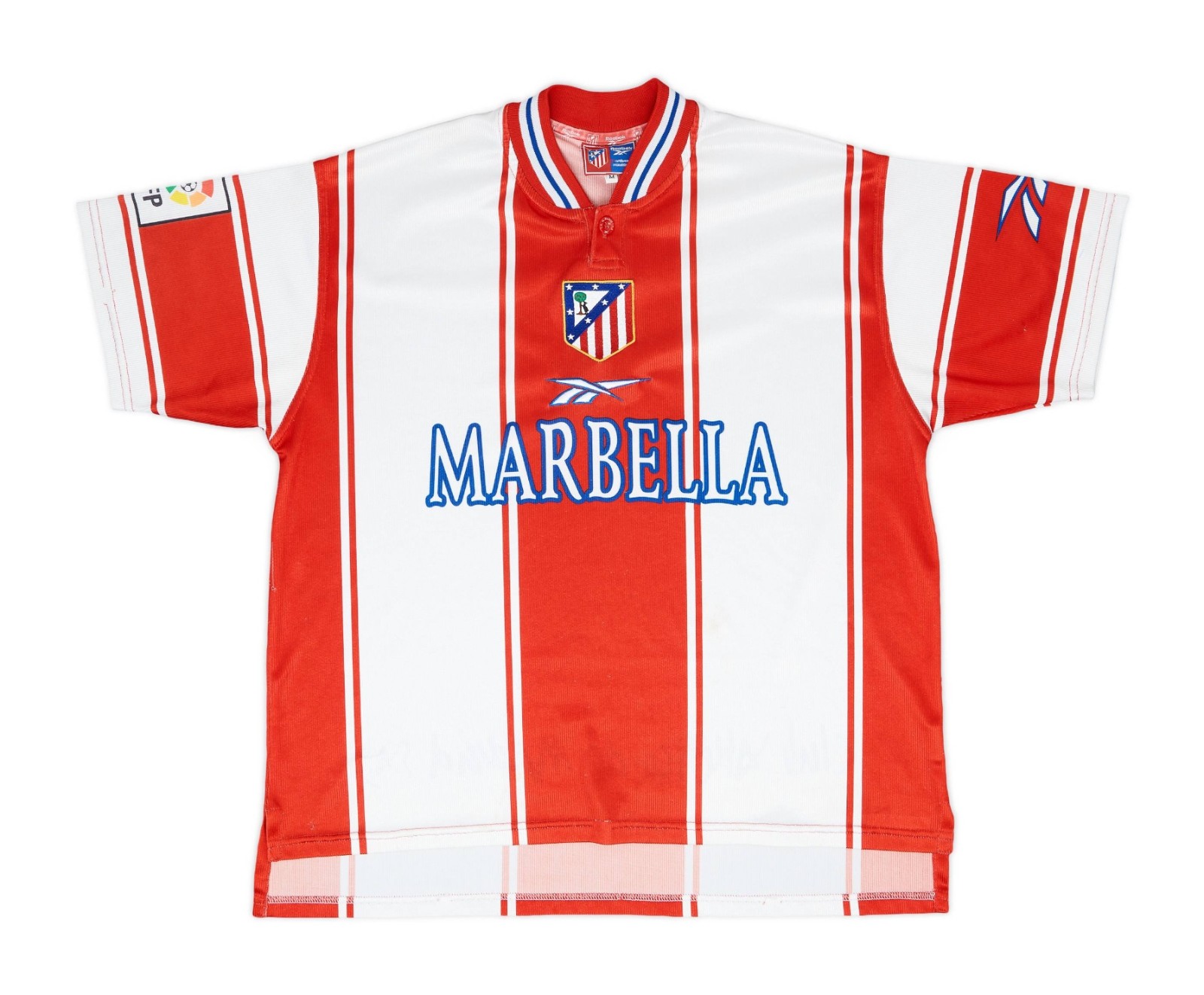
Away
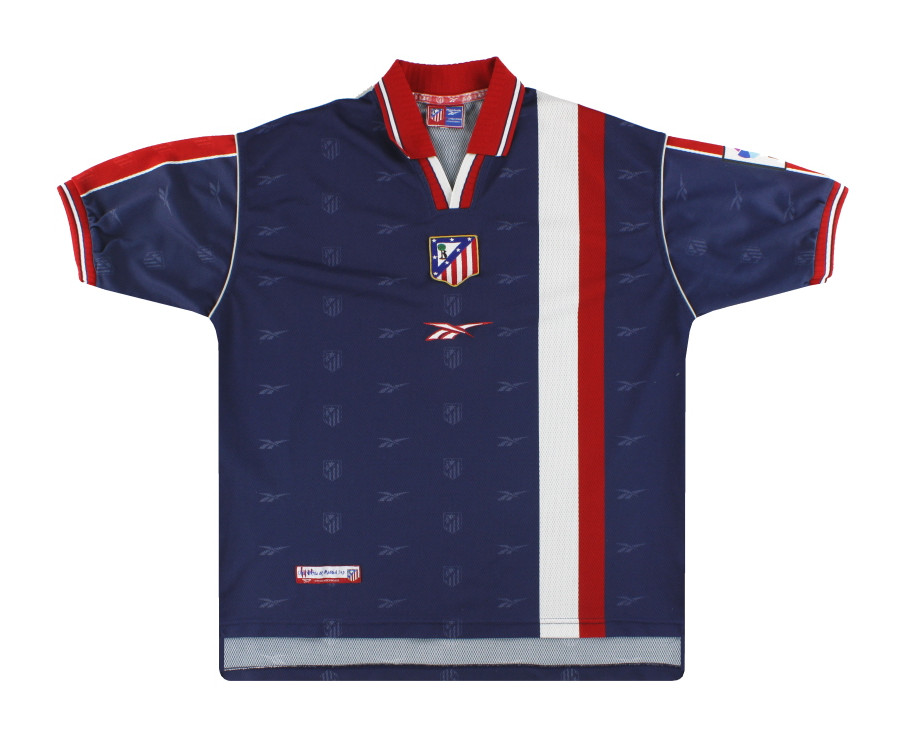
place
1998/99
FinishedHome
Away
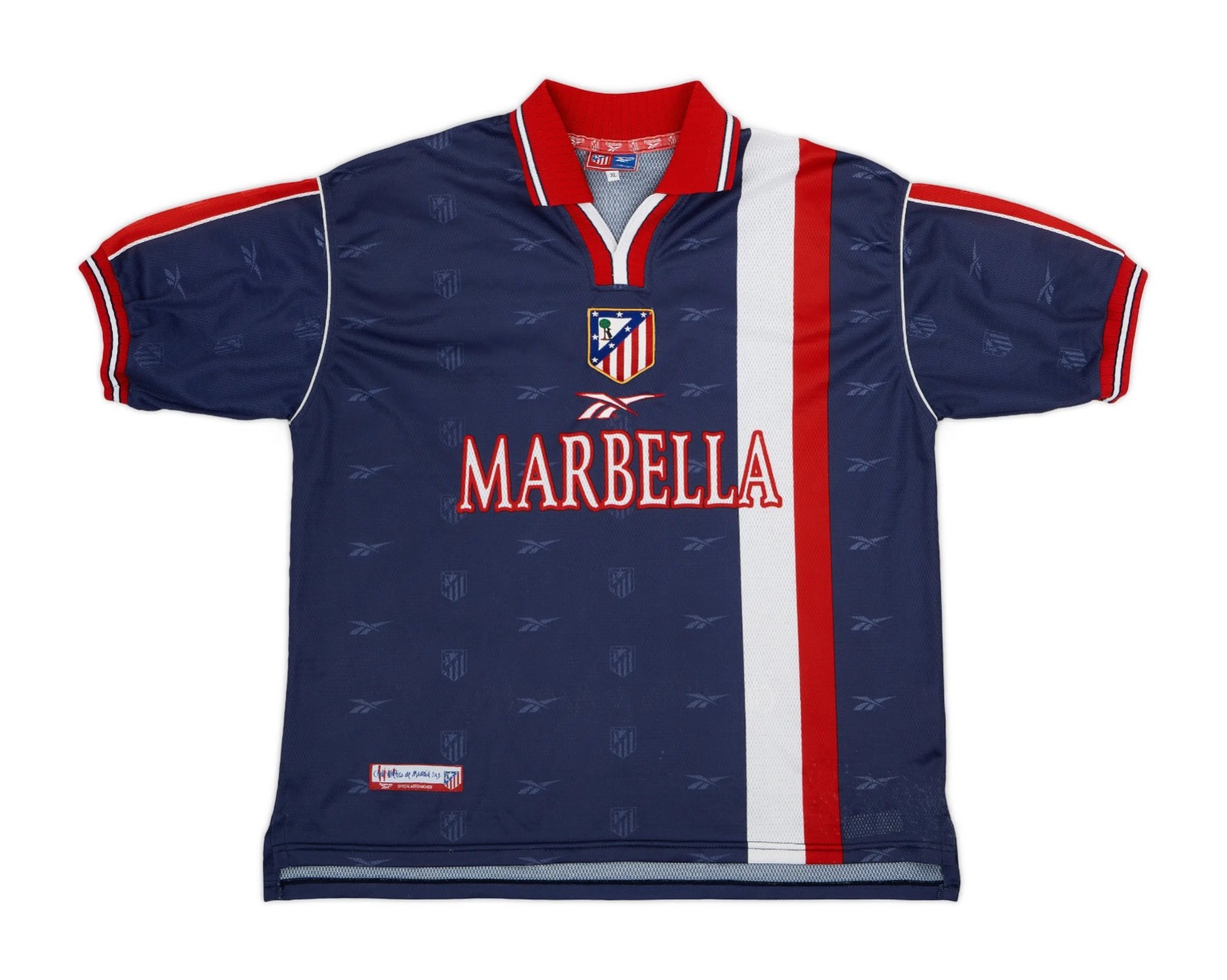
place
1997/98
FinishedHome
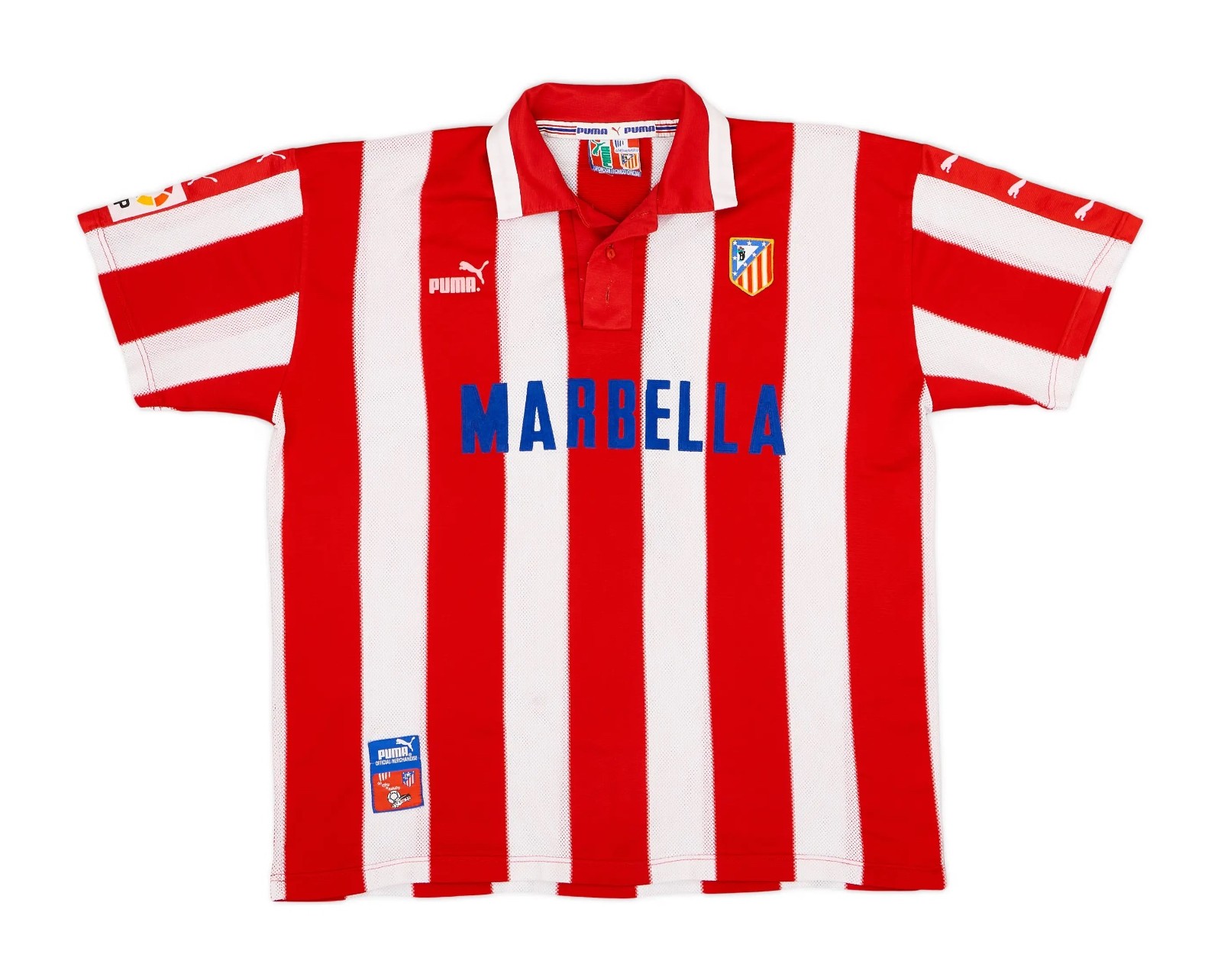
Away
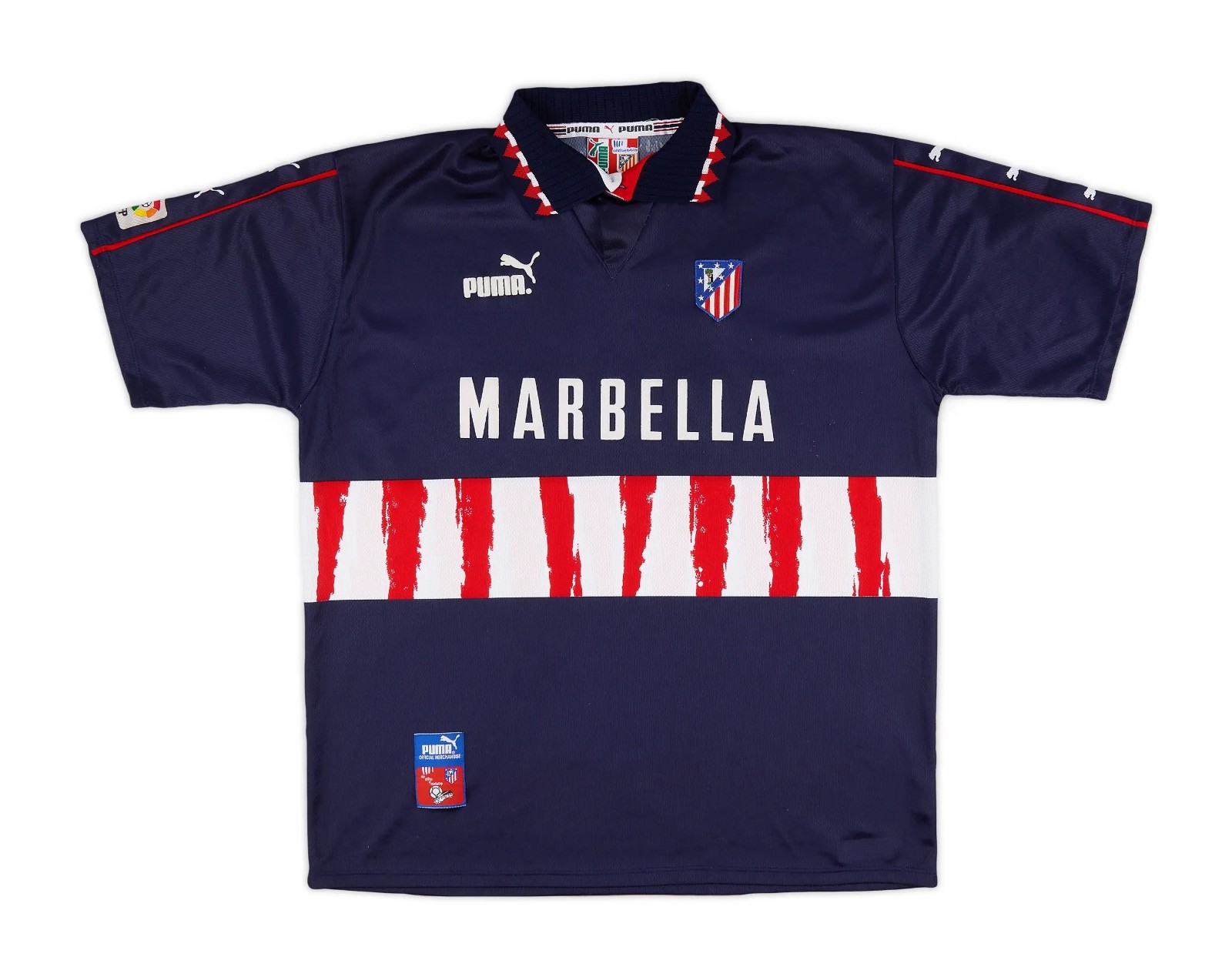
place
1996/97
FinishedHome
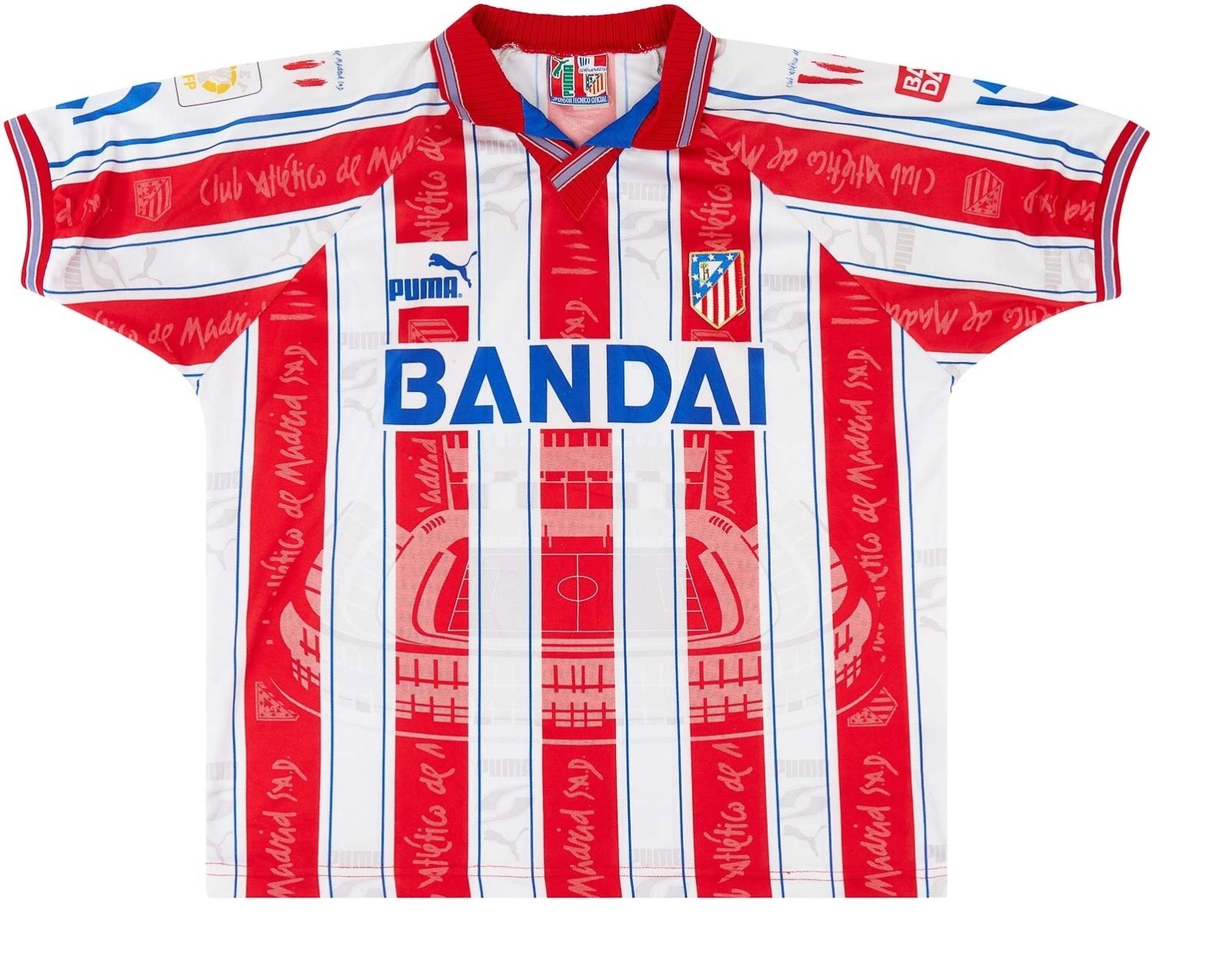
Away
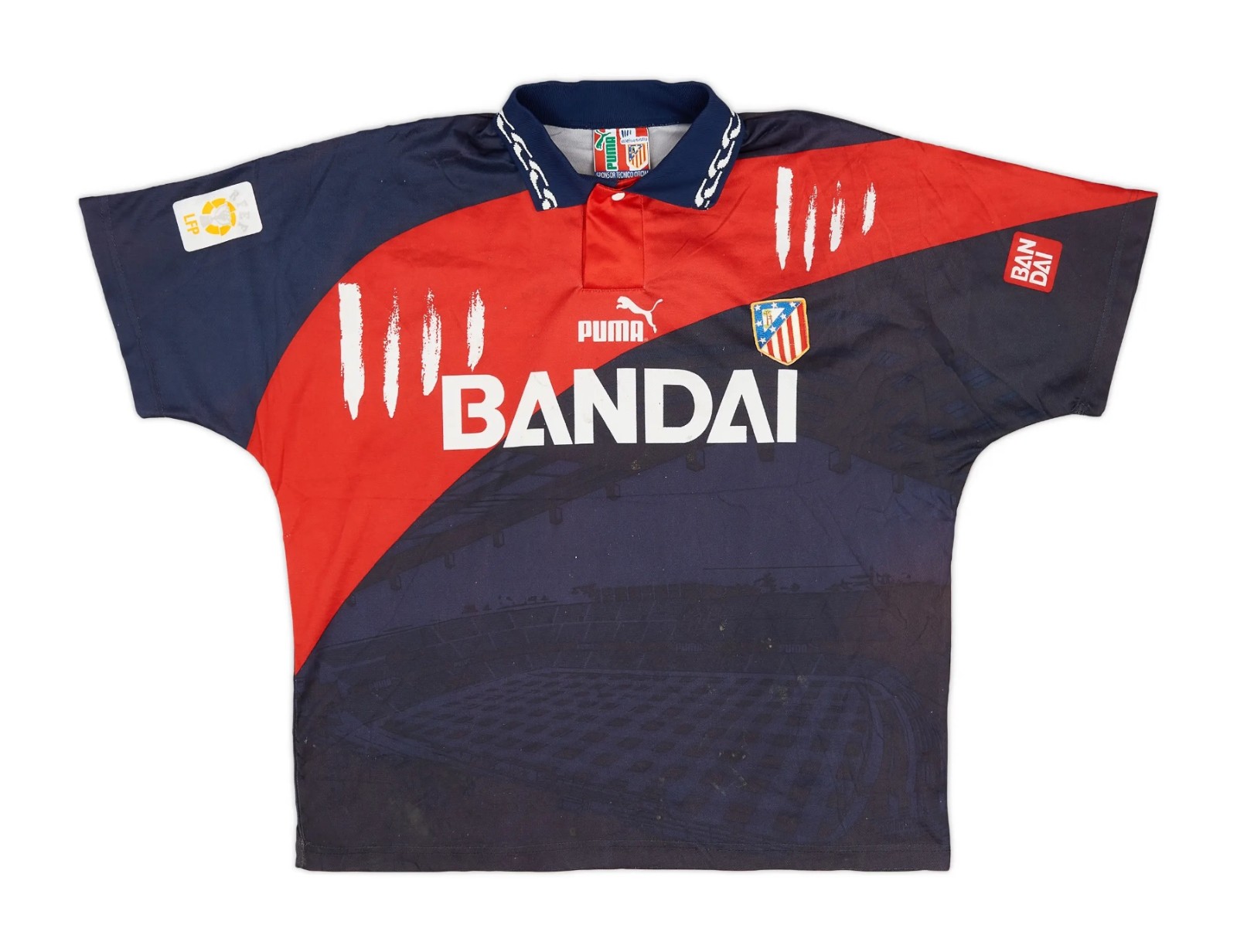
place
1995/96
FinishedHome
Away
Champions
1994/95
FinishedHome
Away
place
1992/93
FinishedHome
Away
place
1991/92
FinishedHome
Away
place
1990/91
FinishedHome
Away
place
1989/90
FinishedHome
Away
place
1988/89
FinishedHome
Away
place
1987/88
FinishedHome
Away
place
1986/87
FinishedHome
Away
place
1985/86
FinishedHome
Away
place
1984/85
FinishedHome
Away
place
1983/84
FinishedHome
Away
place
1982/83
FinishedHome
Away
place
1981/82
FinishedHome
Away
place
1980/81
FinishedHome
Away
place
1979/80
FinishedHome
Away
place
1978/79
FinishedHome
Away
place
1977/78
FinishedHome
Away
place
1976/77
FinishedHome
Away
Champions
1975/76
FinishedHome
Away
place
1974/75
FinishedHome
Away
place
1973/74
FinishedHome
Away
place
1972/73
FinishedHome
Away
Champions
1971/72
FinishedHome
Away
place
1970/71
FinishedHome
Away
place
1969/70
FinishedHome
Away
Champions
1968/69
FinishedHome
Away
place
1967/68
FinishedHome
Away
place
1966/67
FinishedHome
Away
place
1965/66
FinishedHome
Away
Champions
1964/65
FinishedHome
Away
place
1963/64
FinishedHome
Away
place
1962/63
FinishedHome
Away
place
1961/62
FinishedHome
Away
place
1960/61
FinishedHome
Away
place
1959/60
FinishedHome
Away
place
1958/59
FinishedHome
Away
place
1957/58
FinishedHome
Away
place
1956/57
FinishedHome
Away
place
1955/56
FinishedHome
Away
place
1954/55
FinishedHome
Away
place
1953/54
FinishedHome
Away
place
1952/53
FinishedHome
Away
place
1951/52
FinishedHome
Away
place
1950/51
FinishedHome
Away
Champions
1949/50
FinishedHome
Away
Champions
1947/48
FinishedHome
Away
place
1946/47
FinishedHome
Away
place
1935/36
FinishedHome
Away
place
1934/35
FinishedHome
Away
place
1929/30
FinishedHome
Away
place