Some tournaments define a shirt. Brazil 2014 defined this one.
The Netherlands arrived in South America as a team that had been quietly rebuilt. Louis van Gaal had taken over after a failed Euro 2012 campaign and dismantled almost everything. New formation, new faces, a different way of playing. Few expected it to produce anything remarkable. What followed over the course of three weeks in Brazil was the most complete Netherlands performance at a major tournament since 1988.
Salvador, 13 June 2014
The first match was Spain. The reigning world champions, the team that had beaten the Netherlands in the 2010 final in Johannesburg. A Spain side that had not lost a competitive match in years and featured the best midfield in the world.
Xabi Alonso scored a penalty in the 27th minute. The Dutch looked at each other.
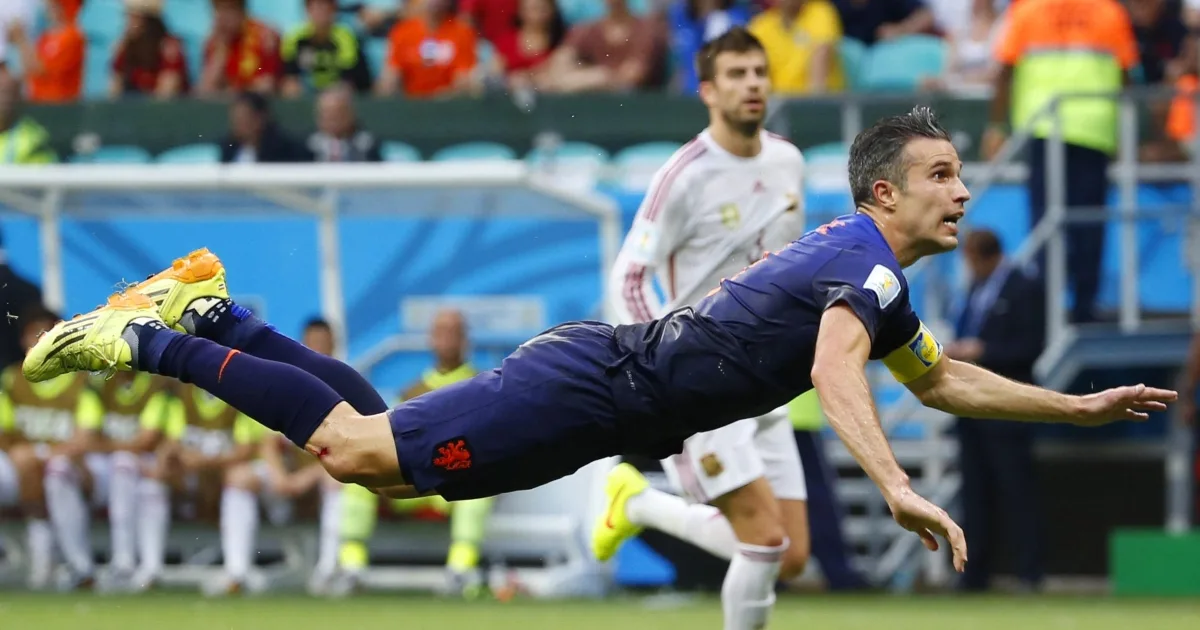
Then, in first-half stoppage time, Daley Blind played a long diagonal ball from inside his own half. Robin van Persie was already running. He read the flight, left his feet, and met the ball with a diving header from well outside the six-yard box. The ball flew past Iker Casillas. It was one of the great goals in World Cup history, produced at the worst possible moment for the team that most needed to hold on.
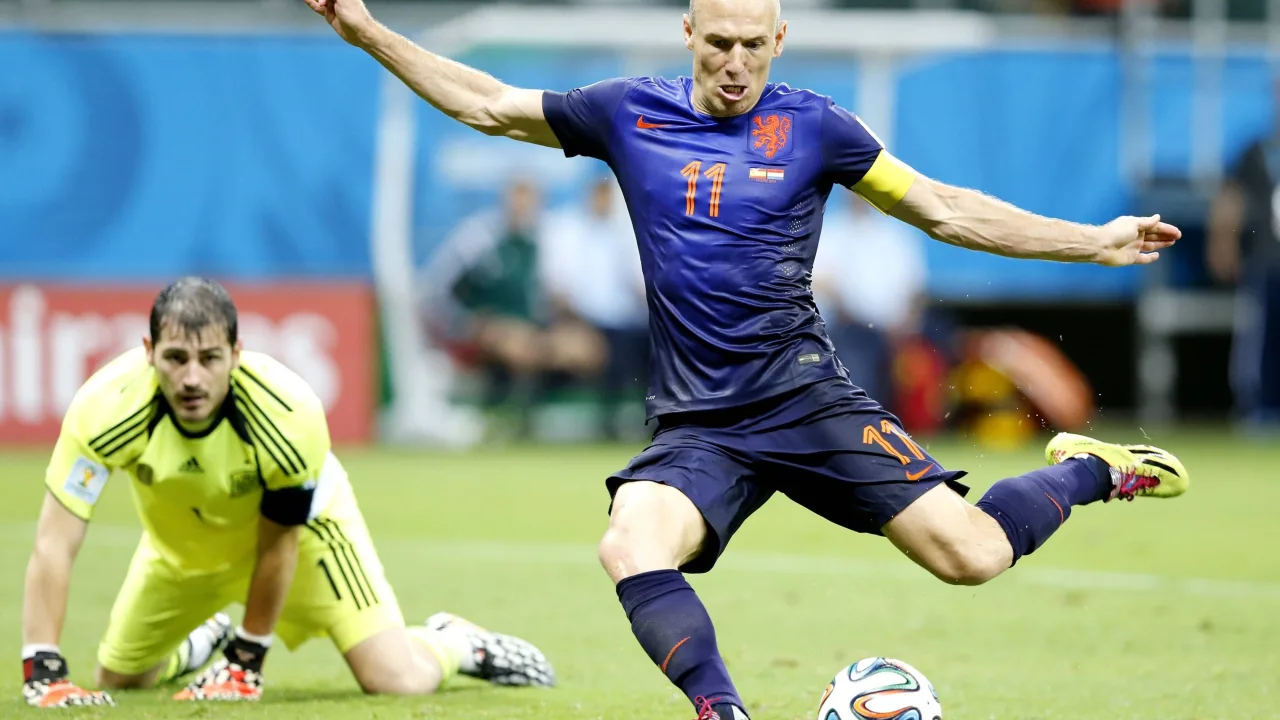
The second half belonged to Arjen Robben. He scored with a run that started sixty metres from goal, burst past two defenders on the right, came inside Sergio Ramos and finished low across Casillas. Then he scored again. Spain, who had looked unbeatable, conceded five. The final score was 5-1. Robben finished the match with two goals, both of them the product of pace, balance and a directness that Spain's defence had no answer to.
The tournament
Van Gaal's system was not pretty. A 5-3-2 built on defensive solidity and the direct use of pace in transition. It was designed around the players available, not around an idea. Robben and Van Persie were the weapons. The rest of the squad's job was to stay compact and give them the ball in the right positions.
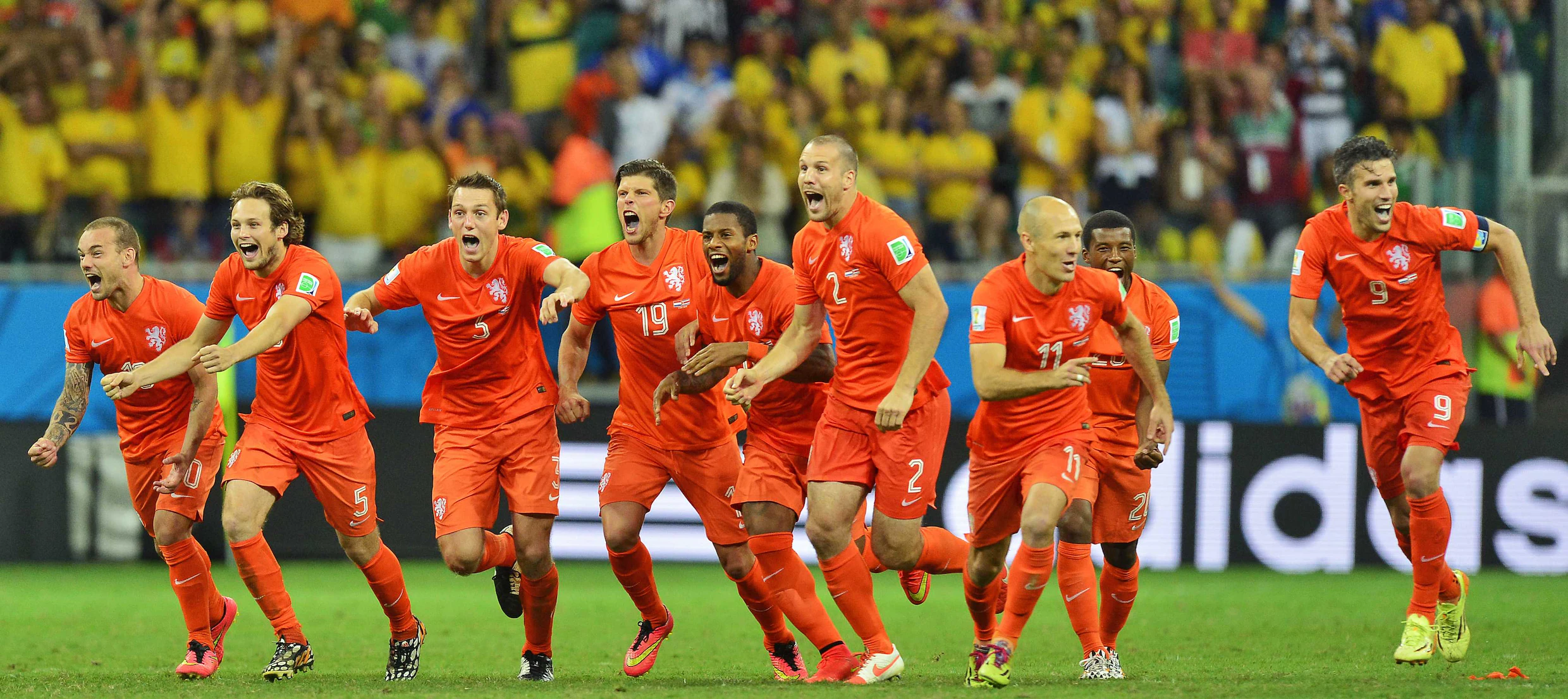
It worked. Australia were beaten 3-2 in a match the Netherlands won despite conceding first. Chile were beaten 2-0 in the final group game. Against Mexico in the last sixteen, the Dutch came from behind with two late goals, the second of them a Robben penalty won under pressure in the 94th minute that ended a match Mexico had defended for most of ninety minutes.
The quarter-final against Costa Rica produced one of the stranger tactical moments of the tournament. With the match goalless and heading to a penalty shootout, Van Gaal substituted goalkeeper Jasper Cillessen for Tim Krul, who had barely played all season. Krul saved two penalties. The Netherlands were through.
Argentina stopped them in the semi-final. The match produced next to nothing in ninety minutes or extra time, and Argentina won on penalties. The Netherlands won the third-place play-off against host nation Brazil 3-0, Robben scoring his third goal of the tournament.
Robben
He was thirty years old in Brazil. At his best for Bayern Munich, he had won the Champions League the previous year. He arrived at the World Cup in the form of his career.
What made him different in this tournament was the combination of pace and purpose. He ran at defenders at full speed and they could not stop him. The run against Spain that produced his first goal, covering half the length of the pitch and ending with a low finish that Casillas could not reach, was repeated in similar form across the next four weeks. Defenders knew it was coming. It did not matter.
He finished the tournament with three goals. The shirt he wore doing all of it was a straightforward Nike design in the classic Dutch orange. No statement, no special edition. Just the colour.
Two shirts, one tournament
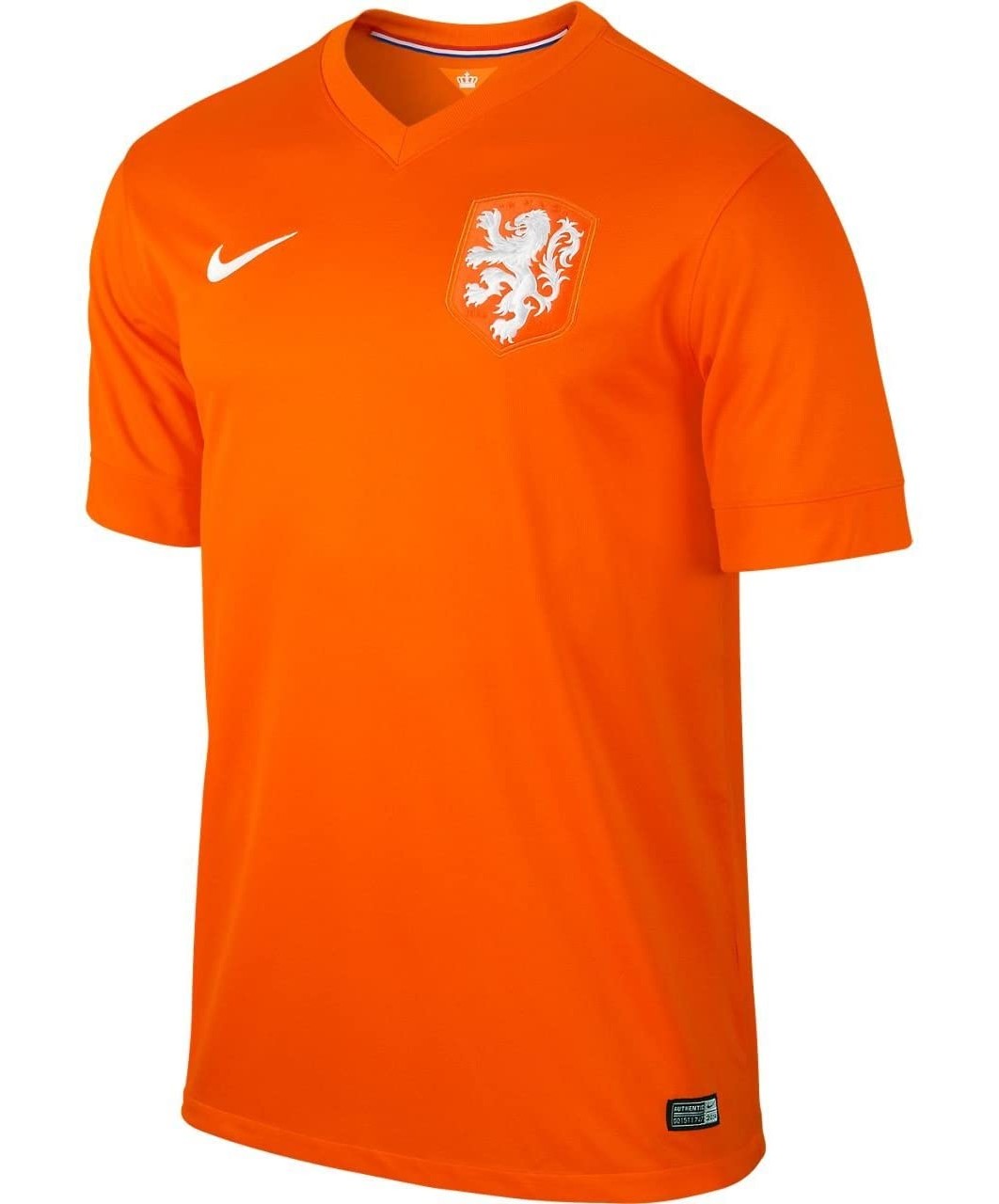
Nike had been making Netherlands shirts since 1996. The 2014 home kit followed the pattern of that era: a clean orange body, the KNVB crest on the left chest, the Nike swoosh on the right. A subtle textured weave gave the fabric some visual depth. The collar was a V-neck. It stayed out of the way and let the colour do the work.
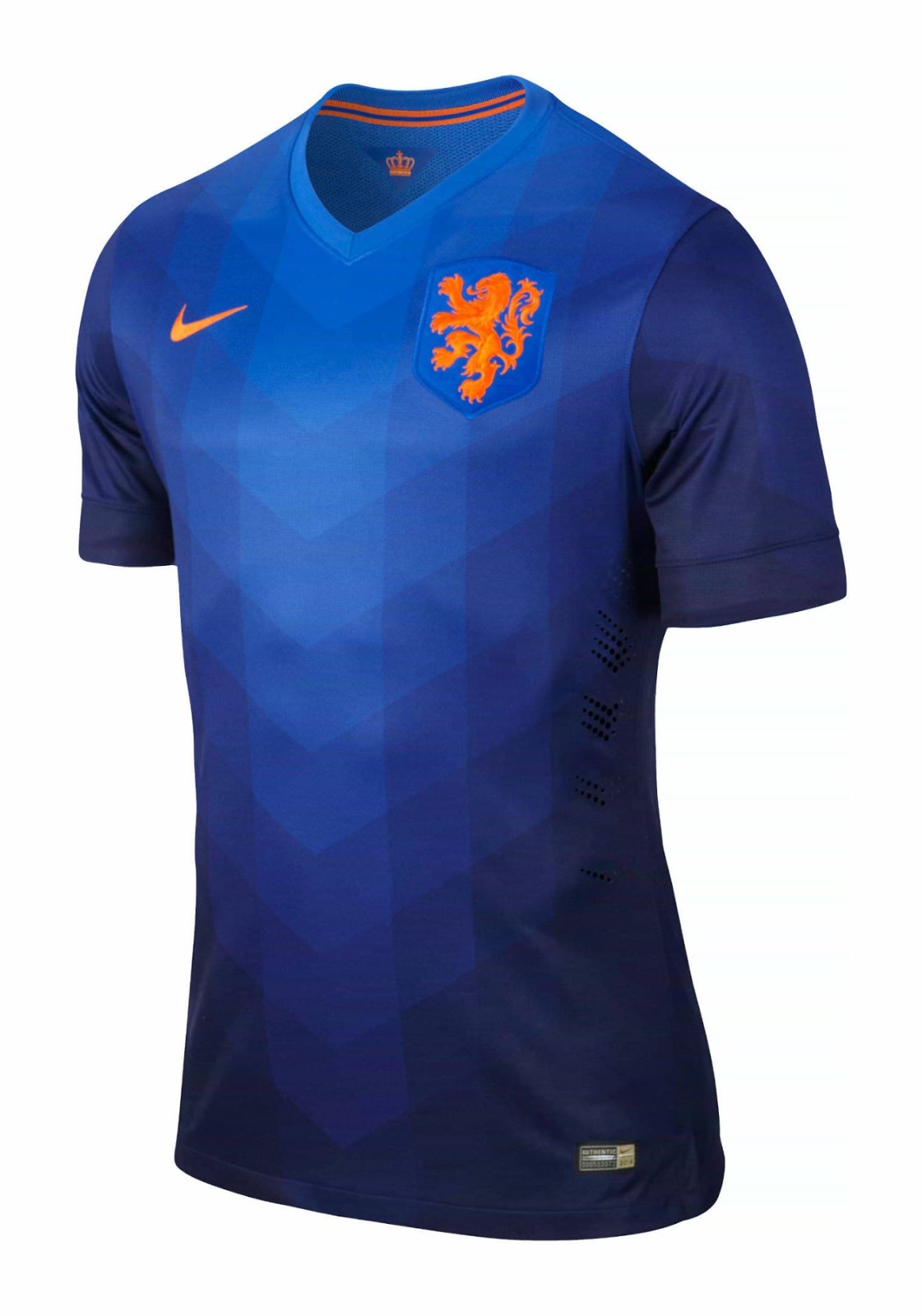
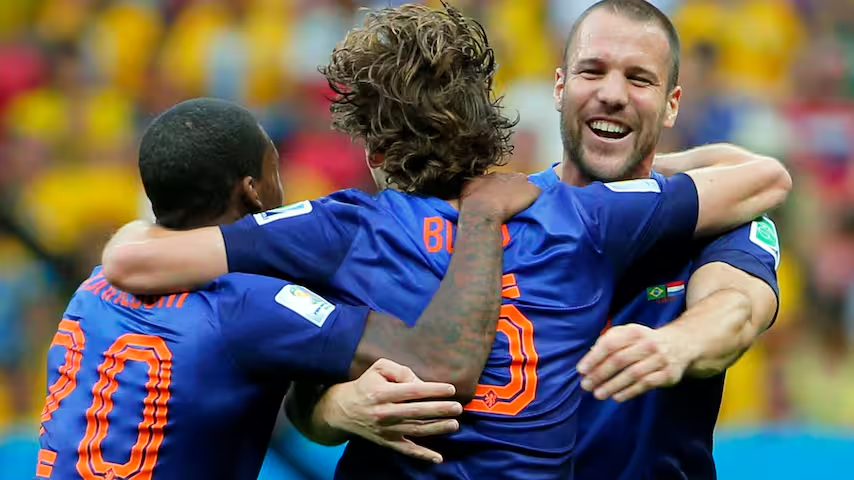
Then there was the away kit. Where the home shirt was all warmth and noise, the away was its opposite: a deep navy, close to black, with orange trim at the collar and cuffs. The KNVB crest sat against the dark fabric in a way that made it look more serious, more considered. It was one of the better away shirts Nike produced in that period, and it turned out to be the more striking design of the two.
The contrast between the two kits mirrored something about the squad itself. The orange was the identity: loud, historically loaded, unmistakably Dutch. The navy carried a different kind of weight, colder and more controlled. Both of them ended up on the podium in Brasília when the Netherlands beat Brazil 3-0 to finish third.
That colour is the point, with both shirts. There is no shade in football quite like Dutch orange, but the 2014 away reminded collectors that what surrounds the orange matters too. Navy against orange is a combination the Dutch have returned to repeatedly. At this World Cup, Nike got the balance right.
The 2014 home is now the orange a generation of Netherlands supporters thinks of when they think of that summer. The one Van Persie wore when he left his feet in Salvador. The one Robben wore when he ran through the Spanish defence. The navy away, darker and quieter, carries the same tournament. The same players. The same result.
Nike / World Cup 2014
Netherlands 2014 home kit
In the ShirtSociety catalogue
Nike / World Cup 2014
Netherlands 2014 away kit
In the ShirtSociety catalogue