Some shirts carry a season. Some carry a trophy. This one carries six minutes that should never have happened.
On 25 May 2005, Liverpool walked out at the Atatürk Olympic Stadium in Istanbul wearing Reebok's red home kit. By half time they were 3-0 down to AC Milan, a side built to win European Cups, and the match appeared to be over. It was not. What followed between the 54th and 59th minute is the defining passage of play in the history of the Champions League, and the shirt worn during it has carried that weight ever since.
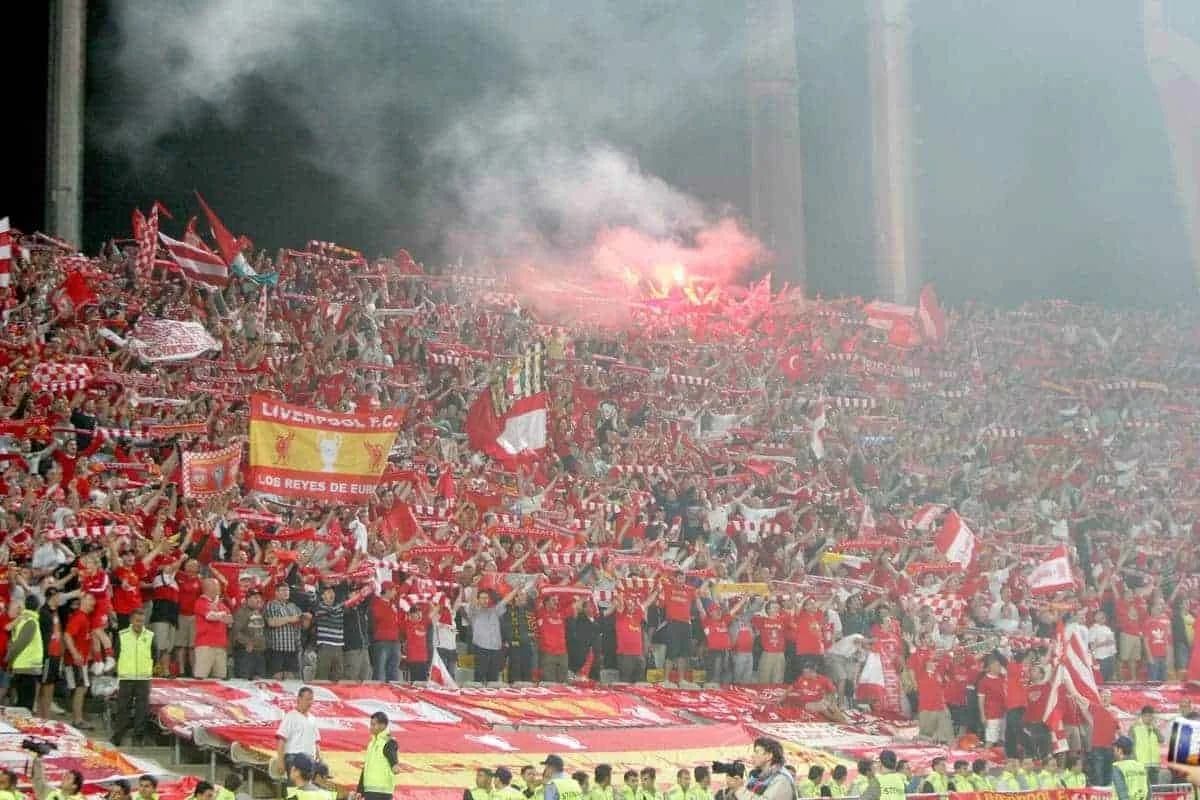
A team that had no business being there
Rafael Benítez had arrived from Valencia the previous summer with two La Liga titles to his name and an unfamiliar squad to rebuild. Liverpool finished fifth in the Premier League that season. The domestic form was unconvincing. But in Europe, something different happened.
They came through Bayer Leverkusen, Bayer Leverkusen and Juventus before the semi-final against Chelsea, which came down to a Luis García goal at Anfield that may or may not have crossed the line. The referee gave it. Liverpool were in the European Cup final for the first time since Heysel in 1985, against a Milan side that had Kaká, Pirlo, Crespo and Andriy Shevchenko, the best individual player on the planet at that point. Nobody seriously expected them to win.
Three-nil
Paolo Maldini scored with fifty-two seconds on the clock. Pirlo's free kick, Maldini on the volley, the ball in the net before Liverpool had touched it. The fastest goal in a Champions League final.
The first half got progressively worse. Kaká was operating at a level Liverpool had no answer to, picking apart the defensive structure with passes that created space where there should have been none. Hernán Crespo scored twice in the last six minutes of the half: a close-range finish, then a chip over Jerzy Dudek that was as good a goal as the occasion deserved. Three-nil. The gap felt wider than the scoreline.
In the dressing room at half time, Benítez changed the shape: Dietmar Hamann came on for Steve Finnan, the formation shifted to give Liverpool a midfield base they had not had in the first half. Gerrard spoke to his teammates. The players decided, between them, that the second half would be different.
Six minutes
The 54th minute. A cross from John Arne Riise found Steven Gerrard arriving late at the back post. His header went in. Three-one. The Milan players, who had looked unassailable, paused for just a moment. Something shifted in the Atatürk.
Two minutes later Vladimir Šmicer, on as a substitute, struck from outside the area. The ball skipped low and went through Dida's hands. Three-two. The Milan players were no longer pausing. They looked at each other.
Then the 59th minute. Gerrard was fouled in the box. Xabi Alonso stepped up, Dida saved, and Alonso drove the rebound into the net before anyone had time to clear the area. Three-three. The stadium made a noise that had not been heard before and has not been heard since in quite the same way.
Six minutes. Three goals. A deficit that had felt insurmountable had been erased by a team that had spent the entire first half being taken apart.
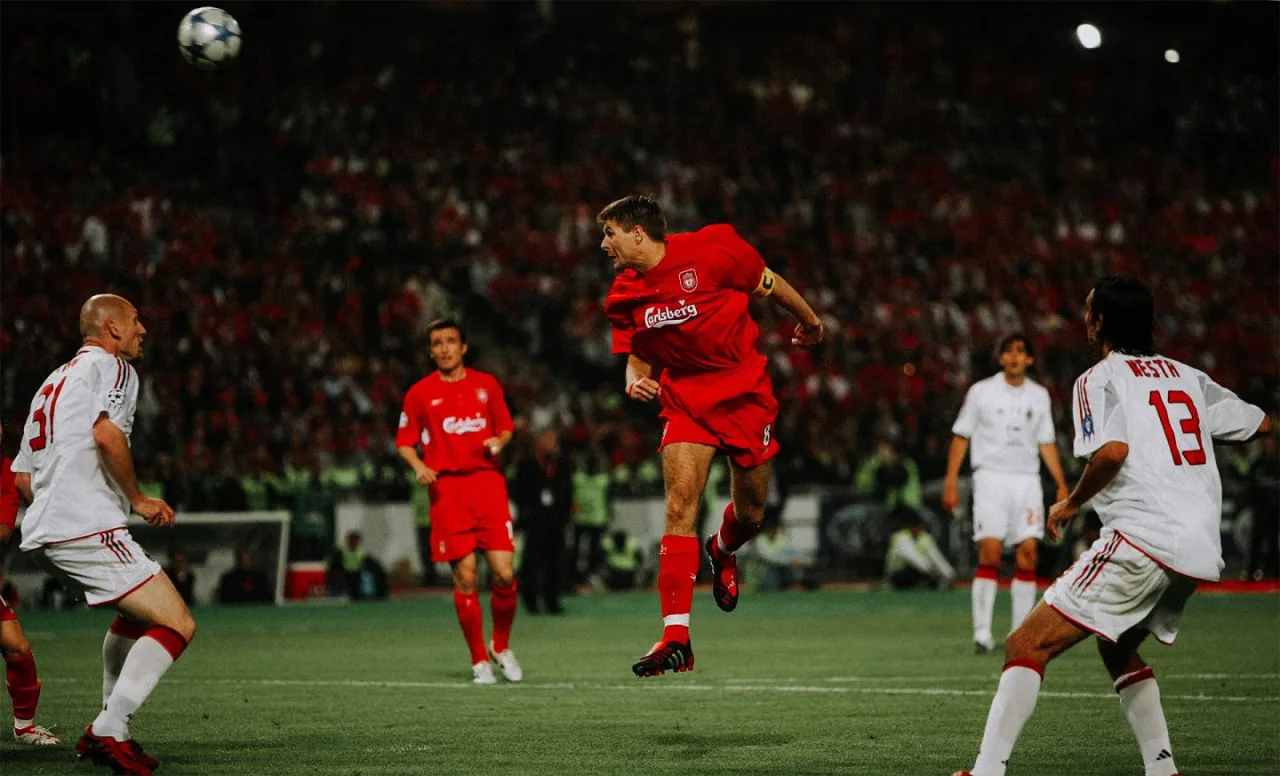
Extra time brought chances at both ends and no further goals. The match went to penalties.
Dudek
Jerzy Dudek was not a certain starter. He had made errors at Liverpool, had faced competition for his place, and arrived at this final without anything like the standing of the players in front of him. What he did in the shootout erased all of that.
He stood on his line and moved. Arms out, legs bending, the full visual distraction. It was deliberate: a technique passed down from Polish goalkeeping tradition, designed to break a penalty taker's concentration at the moment they need it most. Pirlo hit his straight at Dudek. Saved.
Shevchenko stepped up last. He was the best player in the world. He drove his penalty straight, trying to beat Dudek with pace rather than placement. Dudek went to his left, got both hands to it, pushed it away.
Liverpool had won 3-2 on penalties. The European Cup was theirs. Dudek ran. The red shirt ran with him.
The shirt
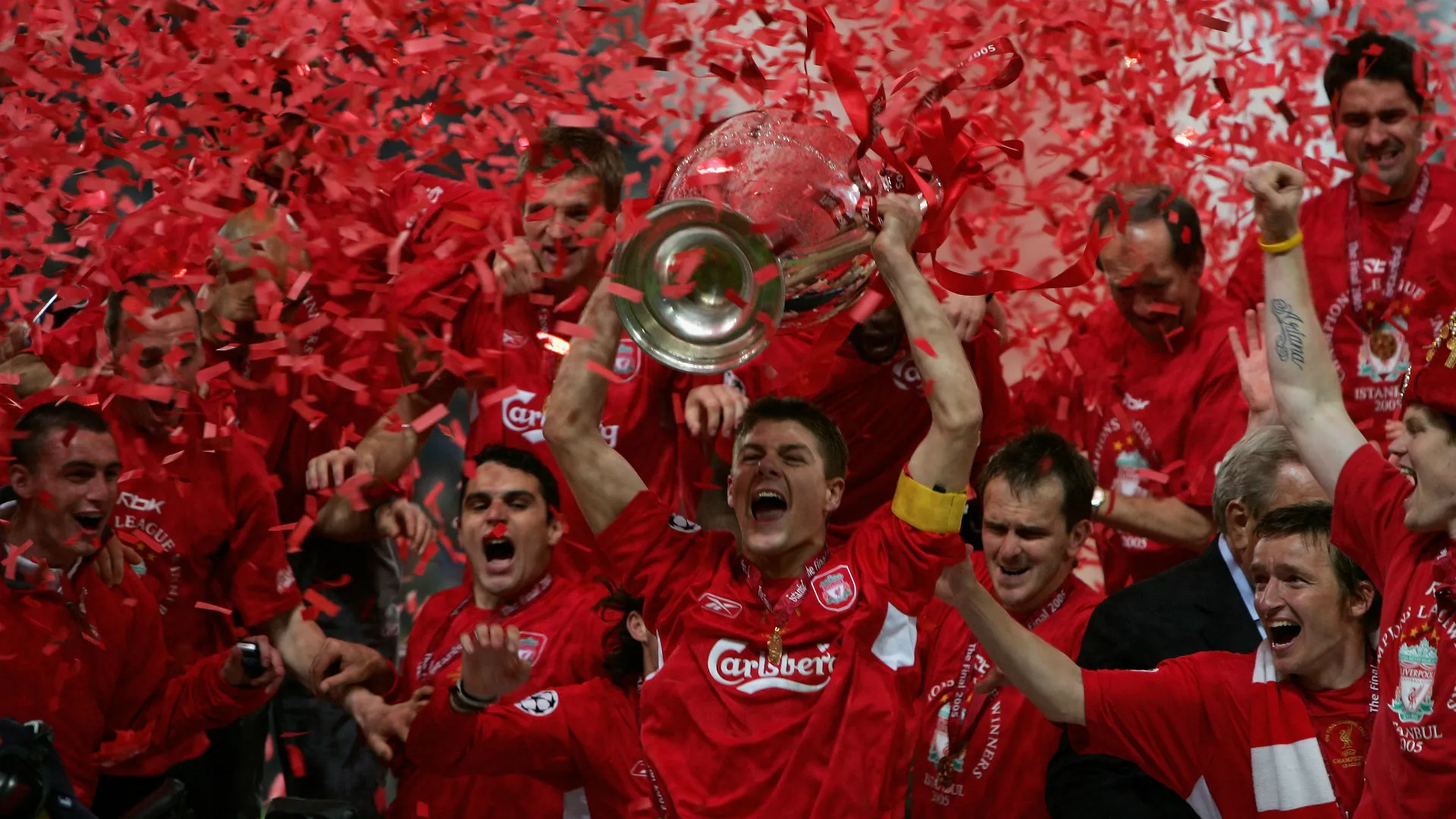
What Liverpool wore that night was Reebok's 2004-05 home kit: a clean red body, white trim at the neck and sleeve edges, the Reebok vector mark in white on the chest and Carlsberg below it. The design was understated even by the standards of the era. There was nothing about it that asked for attention.
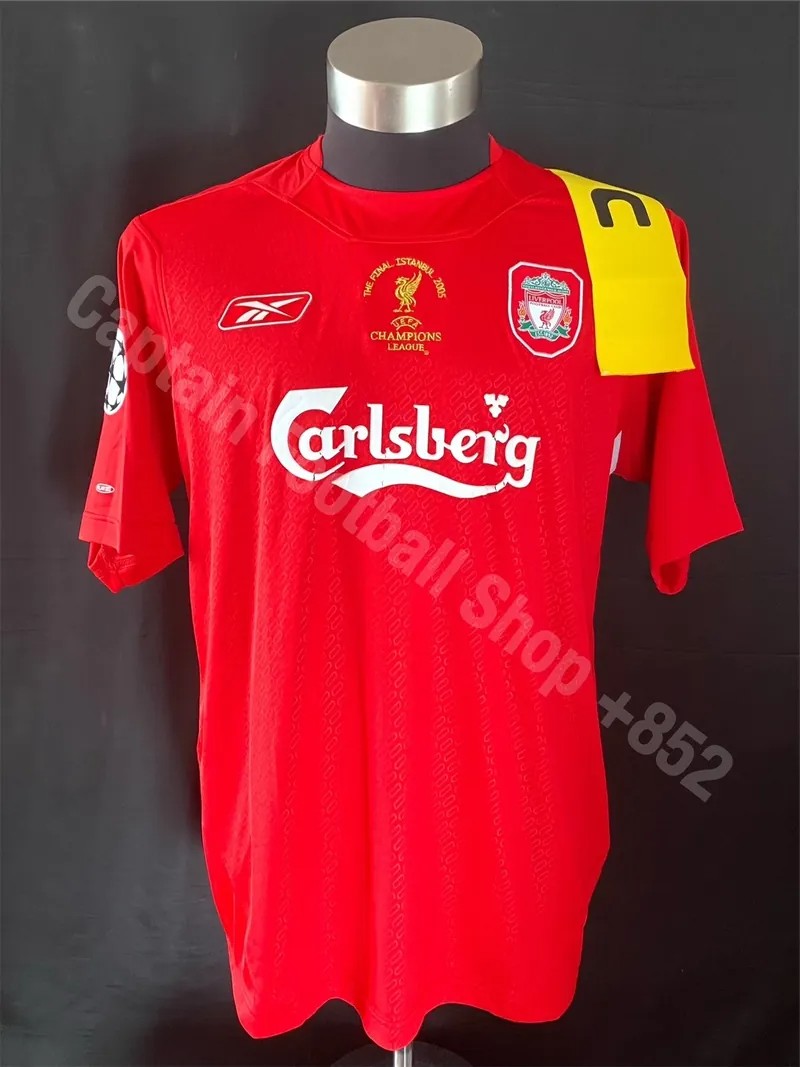
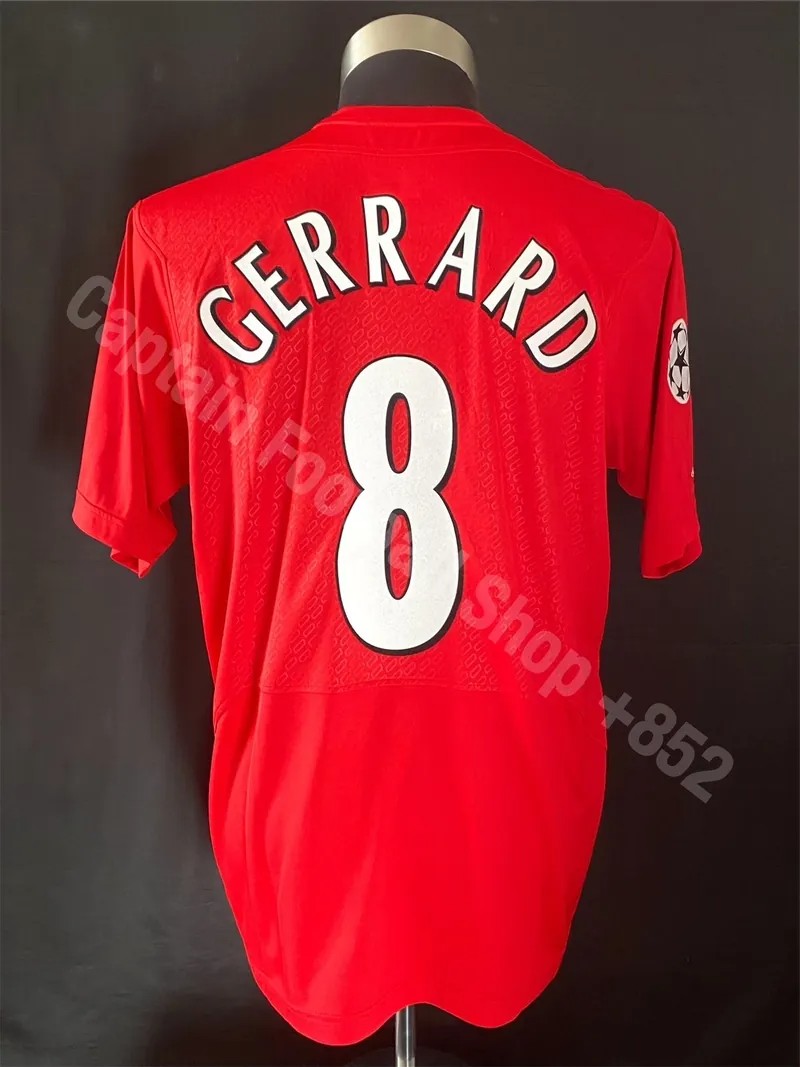
The final variant carried additional marking: the UEFA Champions League starball embroidered on the chest beside the club badge, Reebok's acknowledgement that this shirt was being made for one specific occasion. It was issued to the squad and released as a commemorative edition. The standard home kit remained in the catalogue. This version existed for a single night.
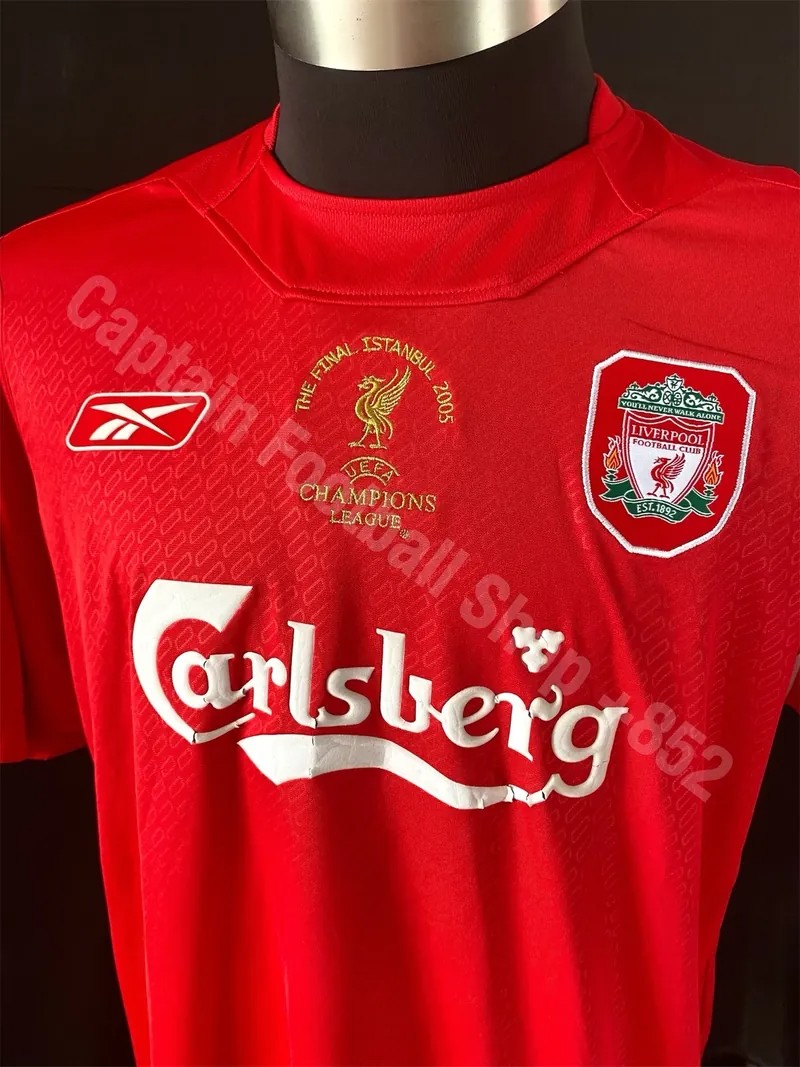
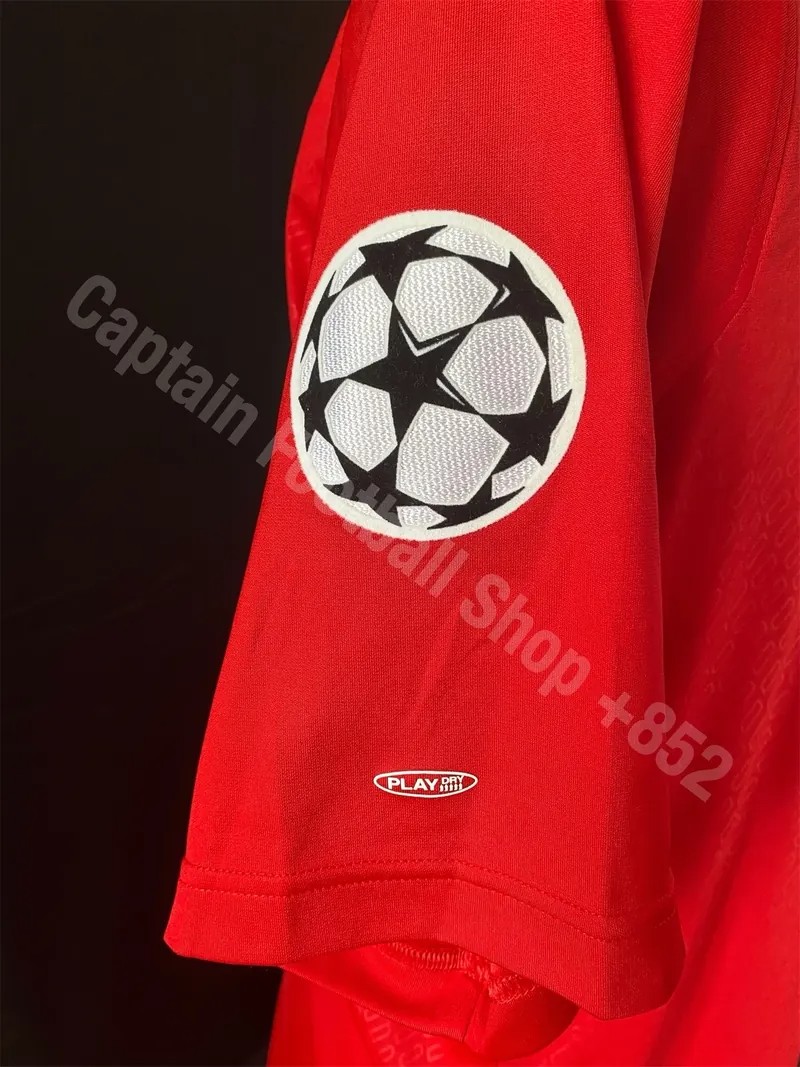
Gerrard scored his header in it. Šmicer hit his volley in it. Xabi Alonso put in the rebound in it. Dudek saved from Shevchenko in it. Every moment that made Istanbul what it is happened inside this fabric.
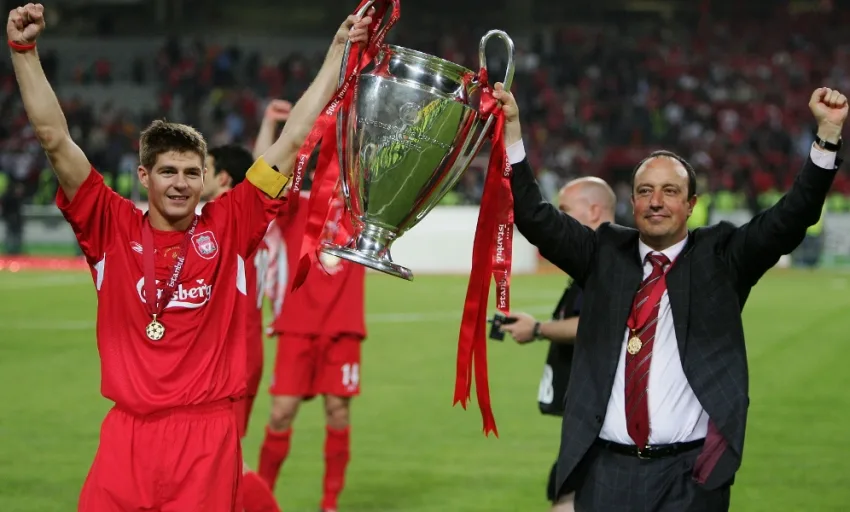
Reebok left football slowly over the following years, their club partnerships winding down one by one. Their time at Liverpool ran until 2012 and produced kits that ranged from forgettable to quietly good. The 2004-05 home shirt is not their most technically interesting design. It is, without question, their most important one.
That is what this shirt is. Not just a piece of fabric from a Reebok season. A record of a night in Istanbul that the sport has been trying to make sense of ever since.
Reebok / Champions League final
Liverpool FC 2004-05 Champions League final kit
In the ShirtSociety catalogue