Before the season started, you could get 5000/1 on Leicester City winning the Premier League. The same odds as Elvis being found alive. The same odds as a royal abdication. Nobody took the bet.
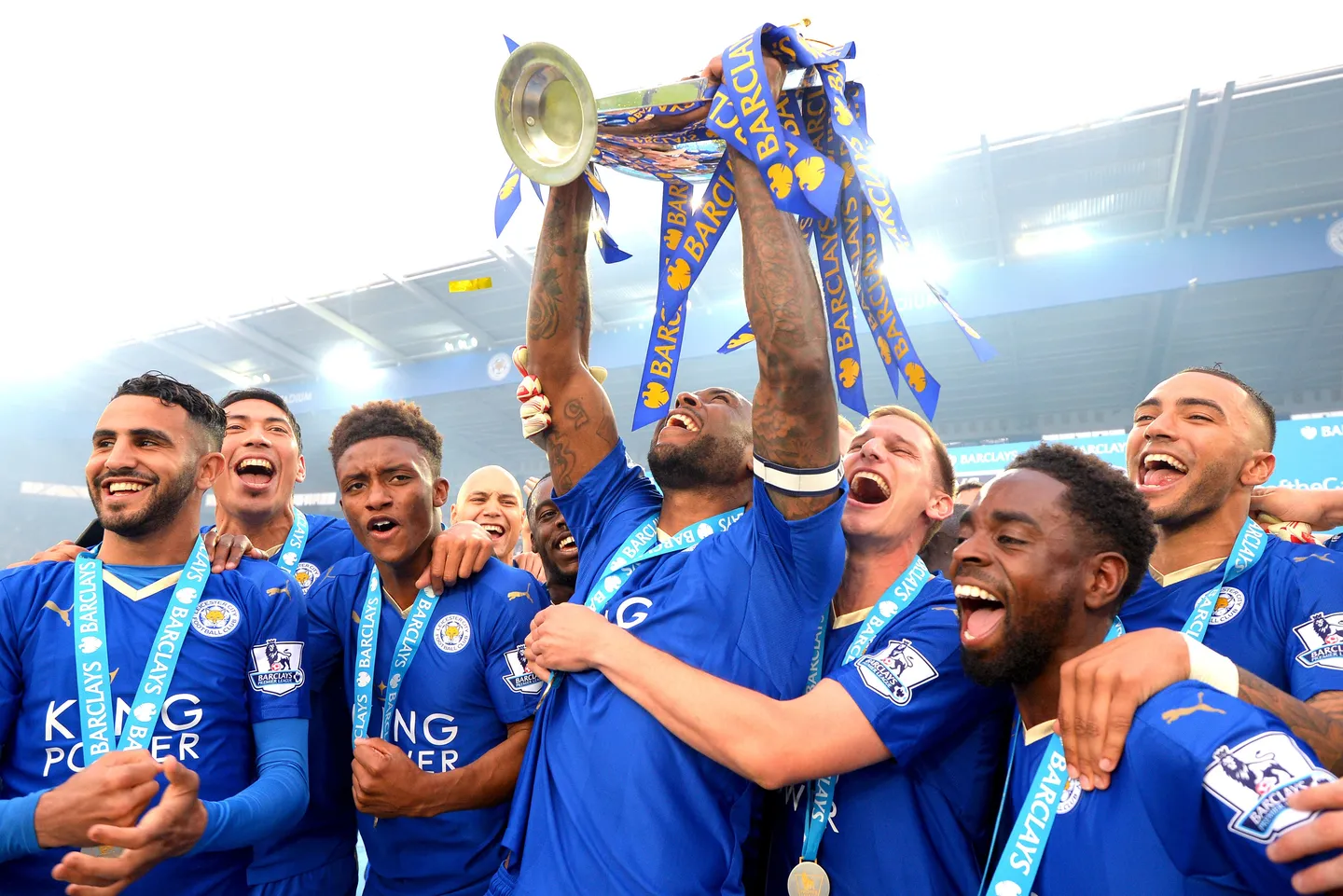
Nine months later, on the night of 2 May 2016, Leicester City were champions of England. It remains the most improbable title win in the history of the top division.
The 5000/1 shot
Claudio Ranieri was appointed manager in July 2015. He was sixty-three years old and had just been sacked from the Greece national team after a 1-0 defeat to the Faroe Islands. The appointment was widely mocked. One journalist asked whether it was a joke.
The squad he inherited had finished the previous season with seven wins from their last nine matches to escape relegation. Most of the squad was the same: Jamie Vardy up front, Riyad Mahrez on the right, a midfield built around Danny Drinkwater and a new signing from Caen, N'Golo Kanté, who had cost three million pounds. They had Kasper Schmeichel in goal, Wes Morgan and Robert Huth at centre-back, and Christian Fuchs at left back. It was not a squad assembled for title challenges.
Ranieri brought calmness. He said very little of significance in press conferences, smiled constantly, and instituted a famous reward system: clean sheets earned the players a pizza party. It worked on the group in ways that were not immediately obvious from the outside.
The season
Leicester went to the top of the Premier League in October and stayed there.
Vardy was the story of the autumn. He scored in eleven consecutive Premier League matches between August and November, breaking Ruud van Nistelrooy's long-standing record. The goals came in different ways: volleys, headers, shots across the goalkeeper, finishes from tight angles. He was everywhere, and once the record run ended the goals kept coming. He finished the season with twenty-four in the league.
Mahrez was his equal. Seventeen goals and eleven assists, the PFA Players' Player of the Year award voted by his own peers. He could change a match in a single moment: a dribble, a cut inside, a pass that nobody else in the stadium had seen. He and Vardy combined to give Leicester a front partnership that no defence in the division solved consistently.
Behind them was Kanté. At this point in his career he was almost unknown outside France. What became clear over the course of the season was that he was operating at a level that the Premier League had not seen in that position. He covered ground that should have been physically impossible, won the ball in areas where the opposition thought they were safe, and recycled possession at a speed that made the entire team function better. The debate about whether he was the best player in the league that year was never settled. It did not need to be.
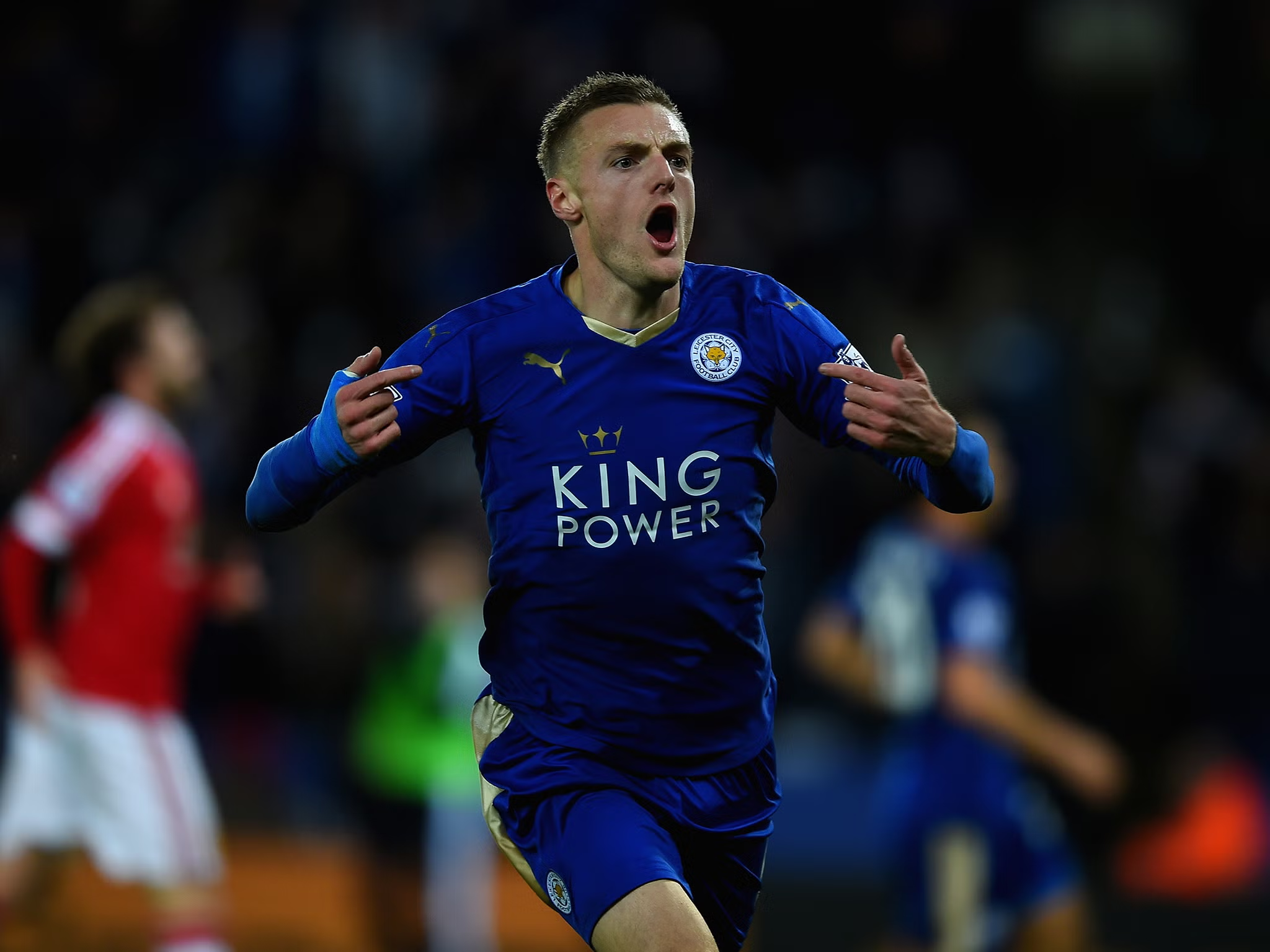
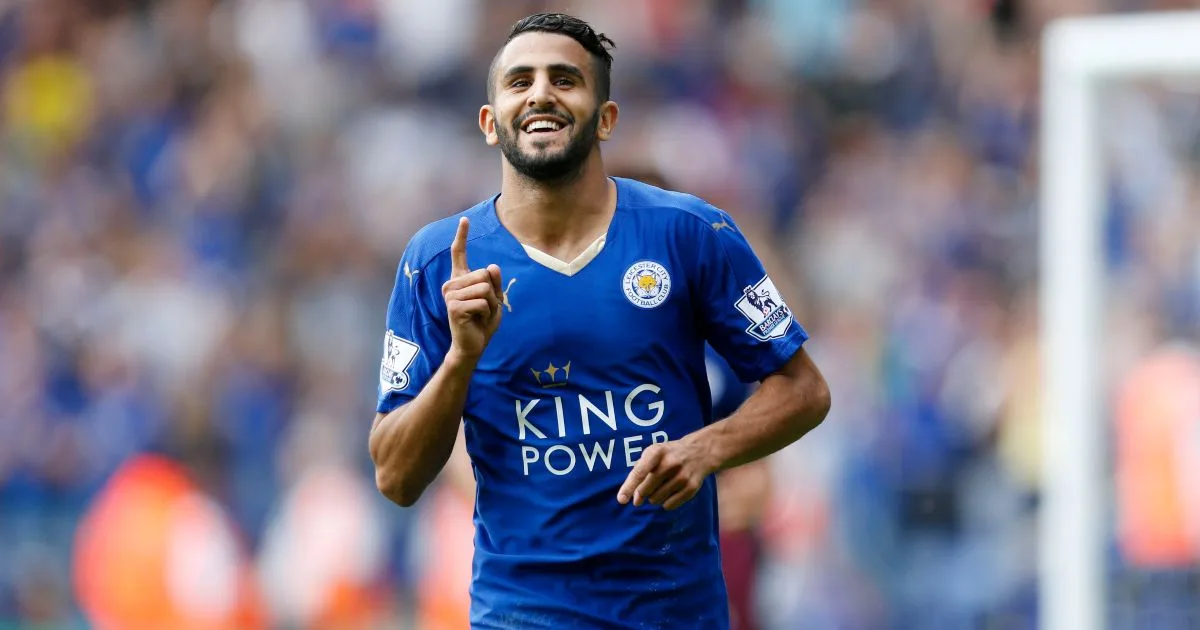
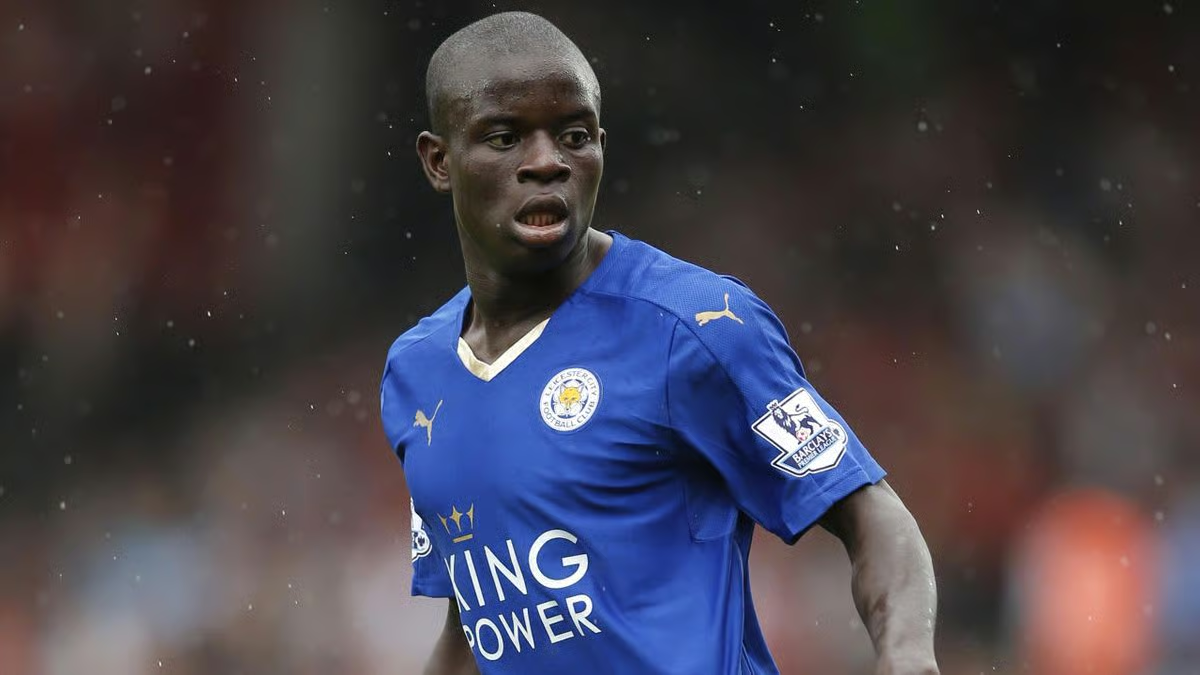
The results accumulated in a way that felt unreal. Leicester beat Manchester City 3-1 at the Etihad in February. They beat Liverpool, they beat Arsenal, they beat Tottenham at the King Power Stadium with a Vardy penalty that left Harry Kane on the floor and the stadium shaking. Each result was dismissed as a fluke by someone. There were no flukes left to explain by April.
Monday night, Stamford Bridge
On 2 May 2016, Leicester needed Chelsea to avoid defeat against Tottenham to become champions. Spurs needed to win. Leicester were not playing. They watched from Vardy's house.
Tottenham led 2-0 at half time. It looked as though the title would wait another week. In the second half, Chelsea pulled one back, then another. Gary Cahill, then Eden Hazard, who equalised in the 83rd minute. Stamford Bridge went loud. Spurs could not score again.
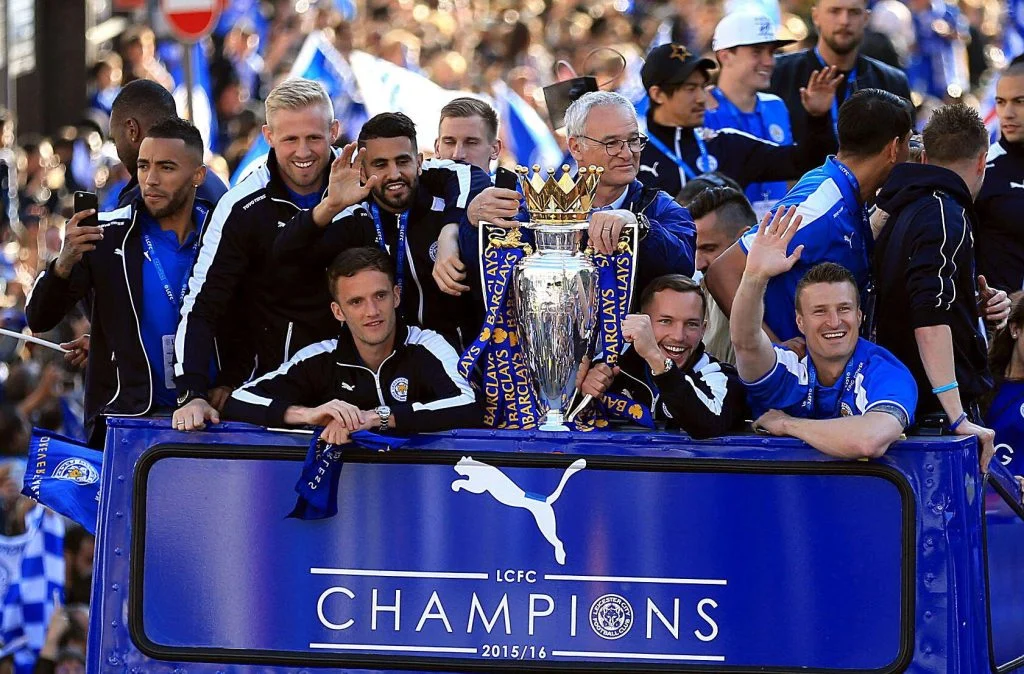
At full time it was 2-2. Leicester City were Premier League champions with two matches to spare. The television cameras cut to Vardy's house. The scenes were everything the season had been: loud, chaotic, entirely unexpected, and completely deserved. Ranieri, elsewhere in Rome visiting his ninety-six-year-old mother, was photographed in tears.
The squad reconvened three days later to beat Everton 3-1 at the King Power, with the players lifting the trophy in front of a stadium that had been waiting for this for one hundred and thirty-two years.
The shirt
Puma had been making Leicester shirts since 2013. The 2015-16 home kit was built on their standard template: royal blue body, white trim at the collar and cuffs, the Puma cat on the right chest, the foxes crest on the left. King Power in white lettering across the front, the sponsor of a Thai businessman named Vichai Srivaddhanaprabha, who had bought the club in 2010 and quietly transformed it.
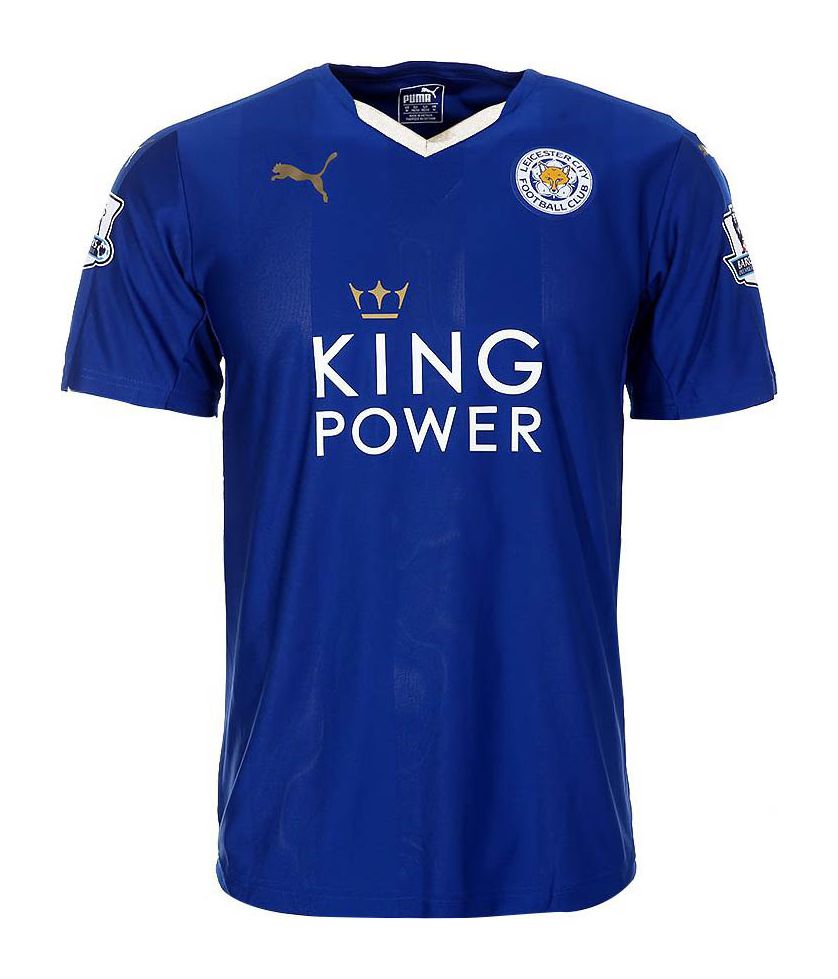
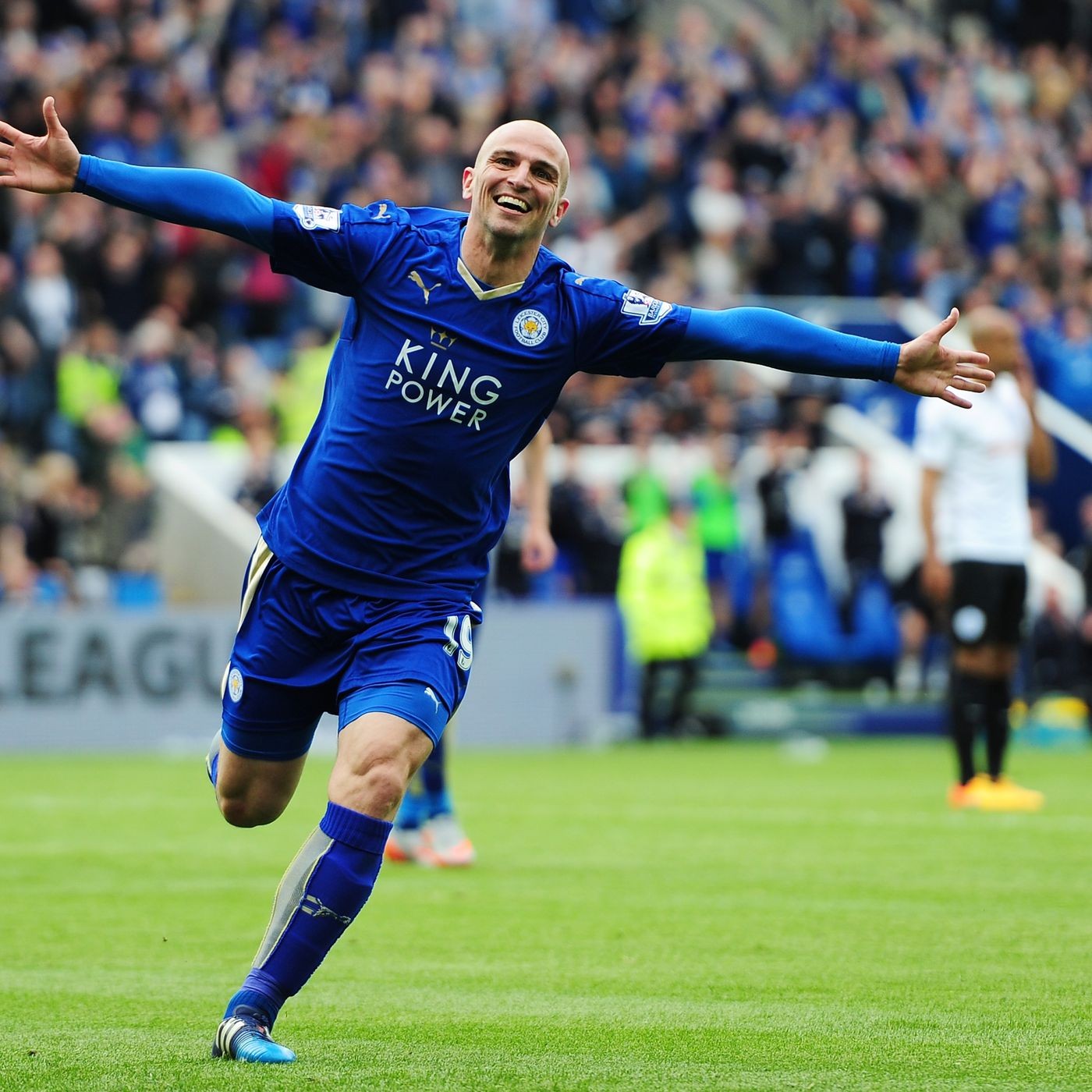
The design asked for nothing. No bold graphics, no special patterns, no statement. Royal blue, white trim, a crest, a sponsor. Leicester had been playing in versions of this shirt for decades. The 2015-16 version is the same shirt as any other year, which is exactly what makes it different from every other shirt.
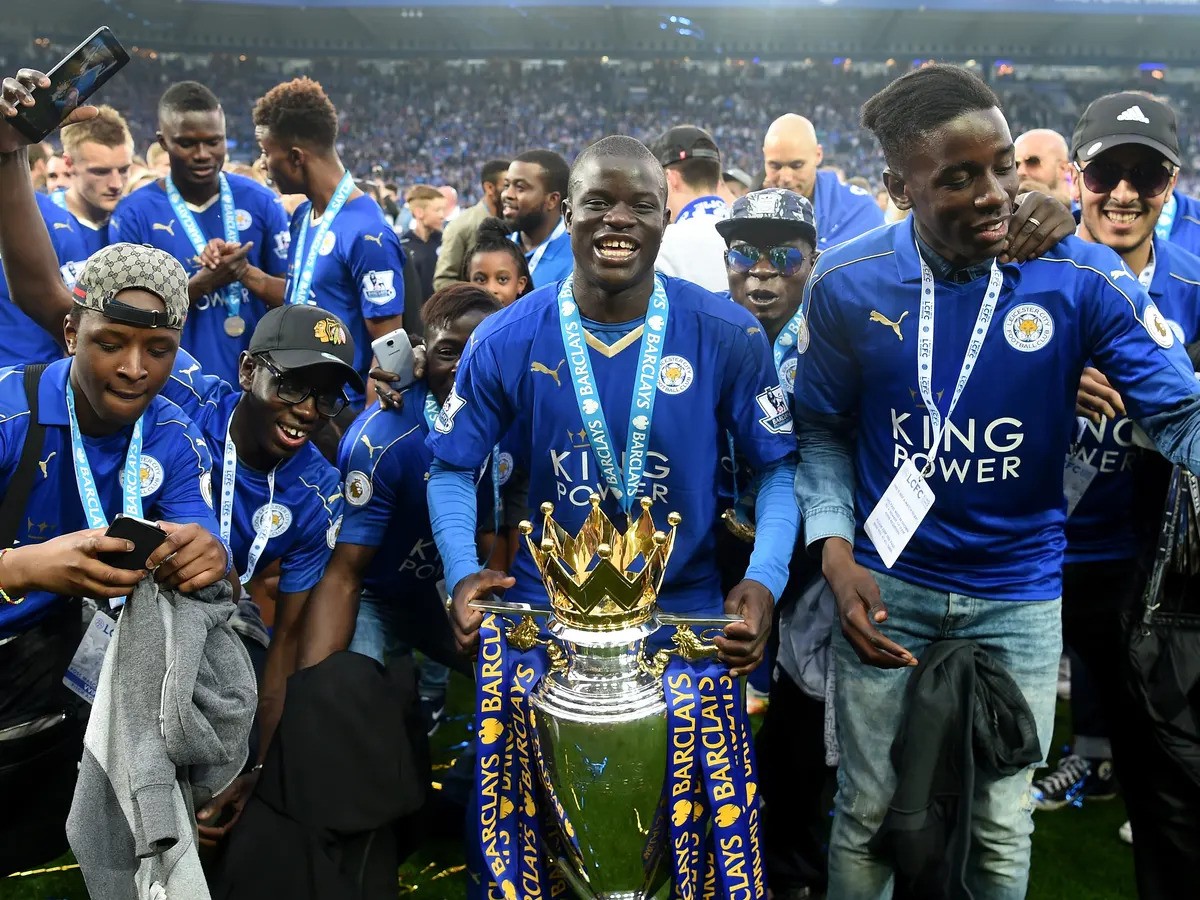
Vardy wore it when he scored in eleven consecutive games. Mahrez wore it for his thirty goals and assists. Kanté wore it every time he appeared from nowhere to win the ball back. Schmeichel wore it when he kept the clean sheets that kept the points total climbing. It was present for all of it.
Vichai Srivaddhanaprabha died in a helicopter crash outside the King Power Stadium in October 2018. The title he oversaw in 2016 sits alongside the shirt he sponsored. Both of them belong to the same story.
Puma / Premier League champions
Leicester City 2015-16 home kit
In the ShirtSociety catalogue