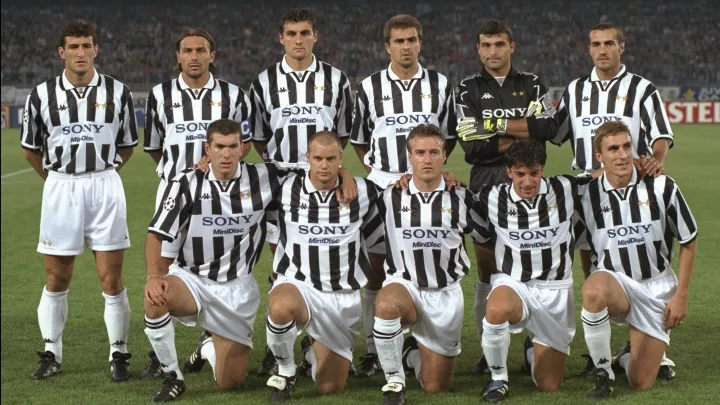
There are kit partnerships that produce good shirts. Then there are kit partnerships that produce cultural artefacts. Kappa and Juventus, across the first half of the 1990s, were the second kind.
Turin meets Turin
Kappa was founded in Turin in 1967. Juventus have played there since 1897. The two institutions of the same city came together formally in 1989, at the start of a period that would define both of their identities.
The timing mattered. Italian football at the turn of the 1990s was the most watched in the world. Serie A had Gullit, Van Basten, Maradona, Vialli, and Mancini. The league's global visibility meant that every kit worn under those floodlights was seen by hundreds of millions of people. Kappa, a relatively small Turin brand at the time, found itself dressing arguably the world's most famous football club just as the sport entered its first real era of global broadcast.
The result was a crash course in how to build a brand through association.
The kits that built the reputation
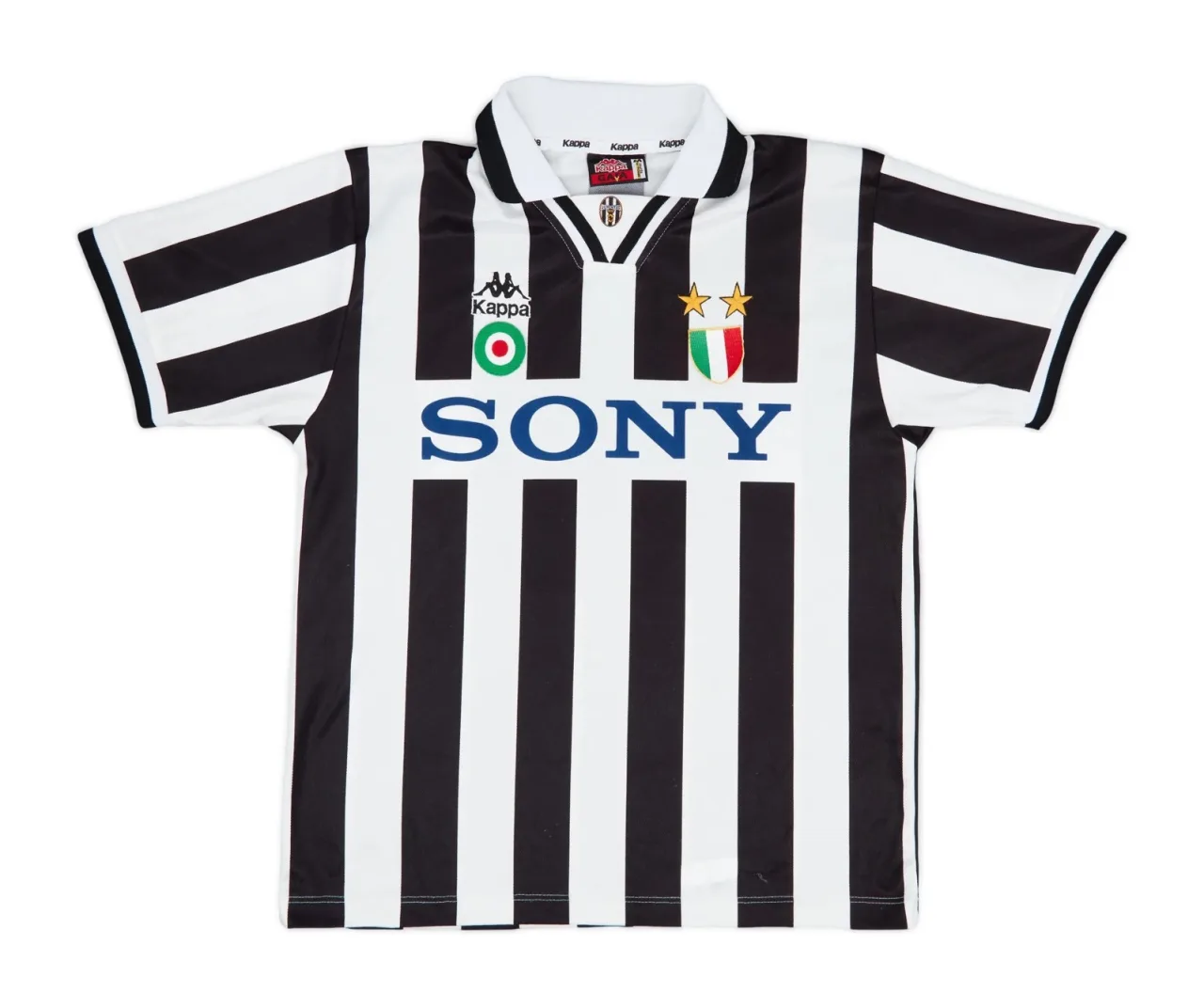
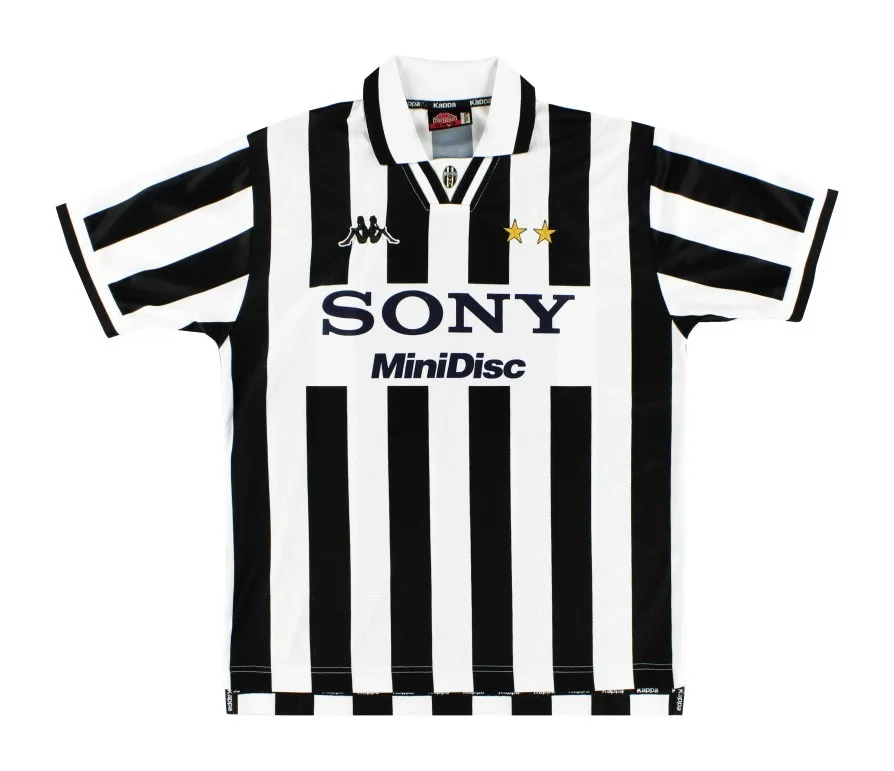
The early 1990s Juventus home shirts are not the ones that defined the partnership. Black and white vertical stripes on a Juventus shirt is not a design challenge. The challenge is what you put on the collar, the cuffs, the chest, the details.
Kappa solved it by bringing a precision and restraint that felt different from what Adidas and Umbro were producing for English clubs at the same time. Clean lines. Considered use of white trim. A silhouette that suited the Italian appetite for tailoring even in sportswear. The shirts looked expensive because, by the standards of the era, they were.
The away shirts were where Kappa showed what they were actually capable of.
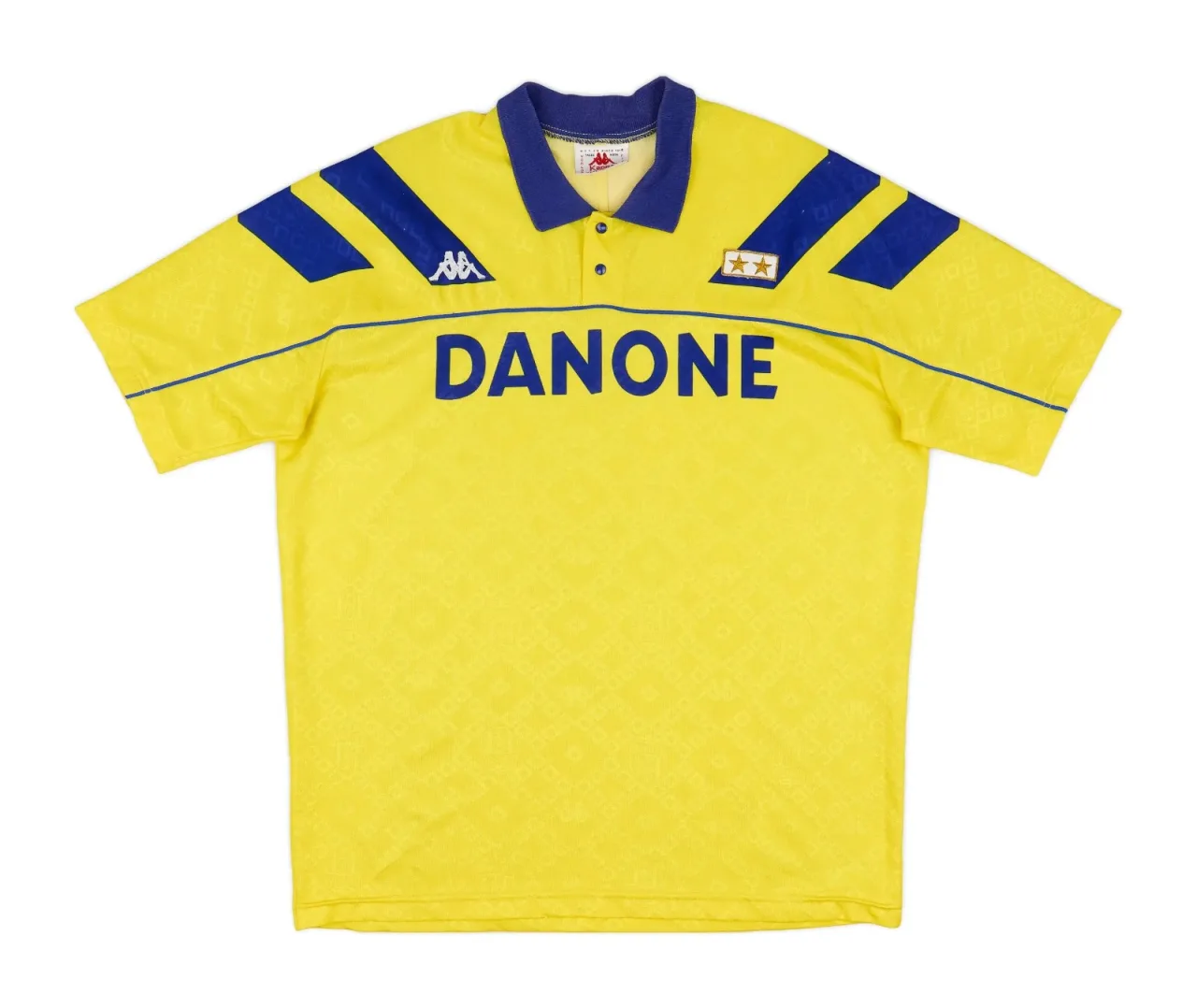
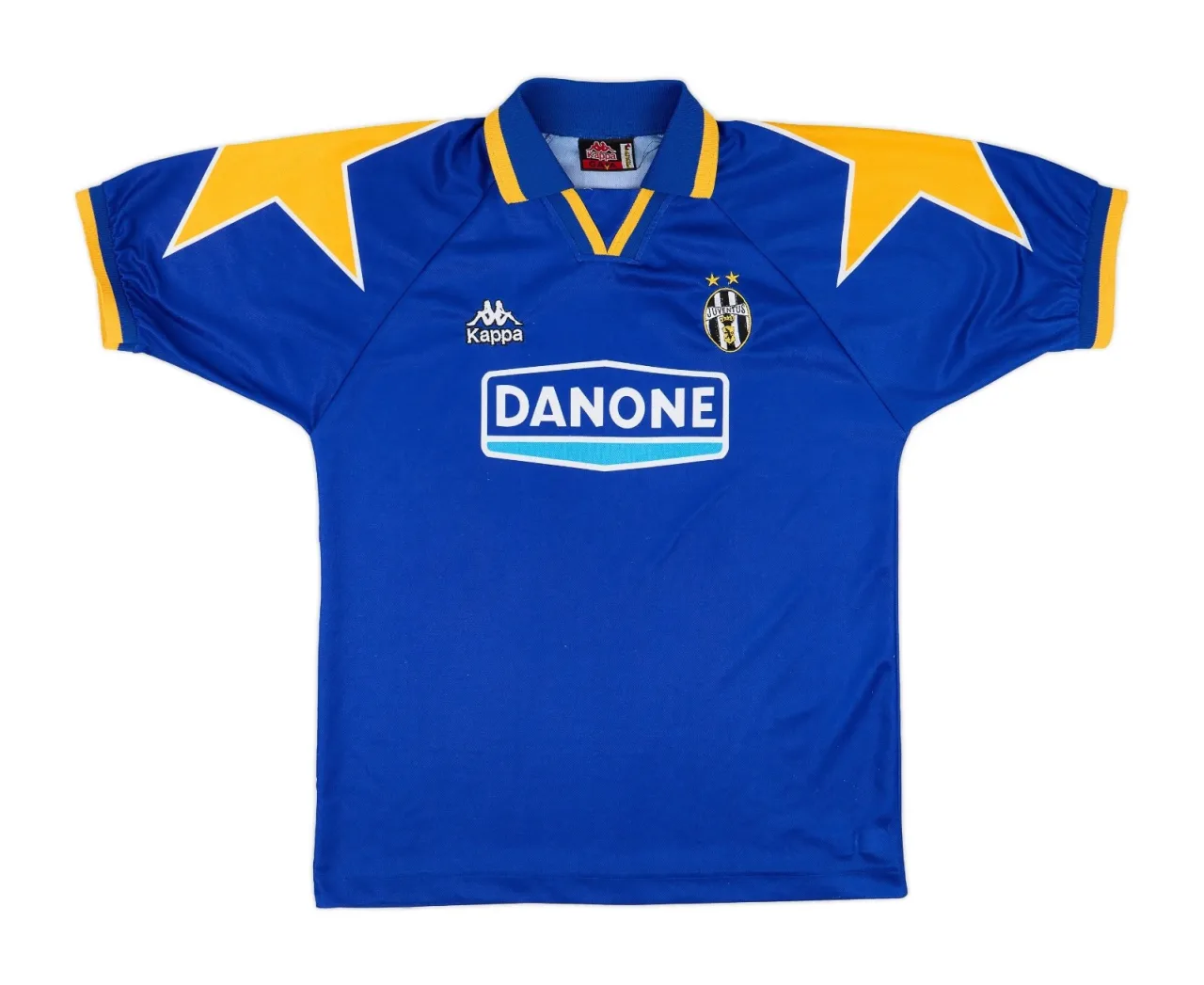
The 1993-94 away, a deep red with black detail, worn during a Scudetto-winning season. The 1994-95 away, a cooler grey-green tone that aged into something almost militaristic. And then the 1995-96 away, the one that collectors return to again and again: azure blue with gold stars on the shoulders, worn in the Champions League Final in Rome, where Juventus beat Ajax on penalties.
Del Piero. Ravanelli. Vialli. Pessotto. All of them in that blue shirt, in Rome, lifting the biggest trophy in club football. If you were designing a moment to make a shirt immortal, you could not have scripted it better.
The Omini
You cannot talk about Kappa without talking about the logo.
The Omini, two seated figures facing away from each other, has been Kappa's mark since 1969. The story behind the image has become part of the brand's mythology. Whether the mythology is entirely accurate is beside the point. The logo works because it is instantly recognisable and refuses to explain itself.
On a Juventus shirt in the 1990s, the Omini sat on the right chest, balancing the Juventus crest on the left. It was an unusual arrangement. Most kit manufacturers placed their mark in a secondary position, deferring to the club badge. Kappa's logo, because of its shape and visual weight, sat as an equal. That confidence turned out to be exactly right for both parties.
Collectors who know Kappa know the logo before they know the brand name. It is the kind of mark that you recognise on a shirt across a room at a car boot sale, and your pulse goes up slightly before your brain has caught up.
The Kombat
The partnership changed in 1996. Kappa introduced the Kombat shirt: a skin-tight, compression-fit design that replaced the traditional loose polyester cut with something that looked more like a second skin than a football jersey.
Juventus wore it. Some players loved it, citing the reduction in shirt-grabbing during matches. Others visibly hated it. The footballing public's reaction ranged from fascinated to horrified, often within the same household.
From a collector's perspective, the Kombat shirts occupy a strange space. They are undeniably significant. They represent a moment when a kit manufacturer tried something genuinely different and persuaded one of the world's biggest clubs to go along with it. But they are not comfortable to wear casually, which limits their practical value as collectibles.
What the Kombat era proved, regardless of aesthetics, was that Kappa had the confidence and the institutional trust to take real risks. That is not nothing. Most kit partnerships produce safe iterations on a template. Kappa looked at the Juventus shirt and tried to reinvent the object itself.
What Kappa is worth today
The secondary market for 1990s Kappa shirts tells you everything about where the brand sits in collector culture.
A Juventus 1995-96 home shirt in XL, good condition, no name and number: €120 to €180. The 1995-96 away in the azure blue, match-worn or with a Ravanelli print: significantly more, sometimes reaching €400 for a clean example in a larger size. The demand is consistent and has been rising steadily since 2020.
Beyond Juventus, Kappa's work for other clubs from the era is equally sought after. The 1992-93 Barcelona away in fluorescent orange. The Roma shirts from the mid-1990s. Lazio. Fiorentina. Kappa dressed a significant portion of Italian football during its peak years, and collectors who focus on Serie A from that era find themselves building an almost entirely Kappa wardrobe.
The brand never disappeared from football. They still supply clubs across Europe, still use the Omini, still make shirts that are recognisably theirs. But the 1990s Juventus era is the one that elevated them from sportswear manufacturer to cultural reference point.
Why it still matters
The Kappa-Juventus partnership is worth understanding not just as a piece of nostalgia but as a case study in how a kit relationship can do more than supply shirts.
Kappa brought craft and precision to a club whose visual identity is both simple and impossible to get wrong. In return, Juventus gave Kappa the most visible stage in world football during the sport's first era of serious global television. Both parties came out of it transformed.
The shirts they made together, particularly between 1993 and 1996, are among the finest football garments ever produced. That is not a collector's bias speaking. It is the simple conclusion you reach when you hold one and pay attention to the weight of the fabric, the accuracy of the construction, and the quiet confidence of the design.
They were made to be worn by the best team in the world. You can feel that in them.